
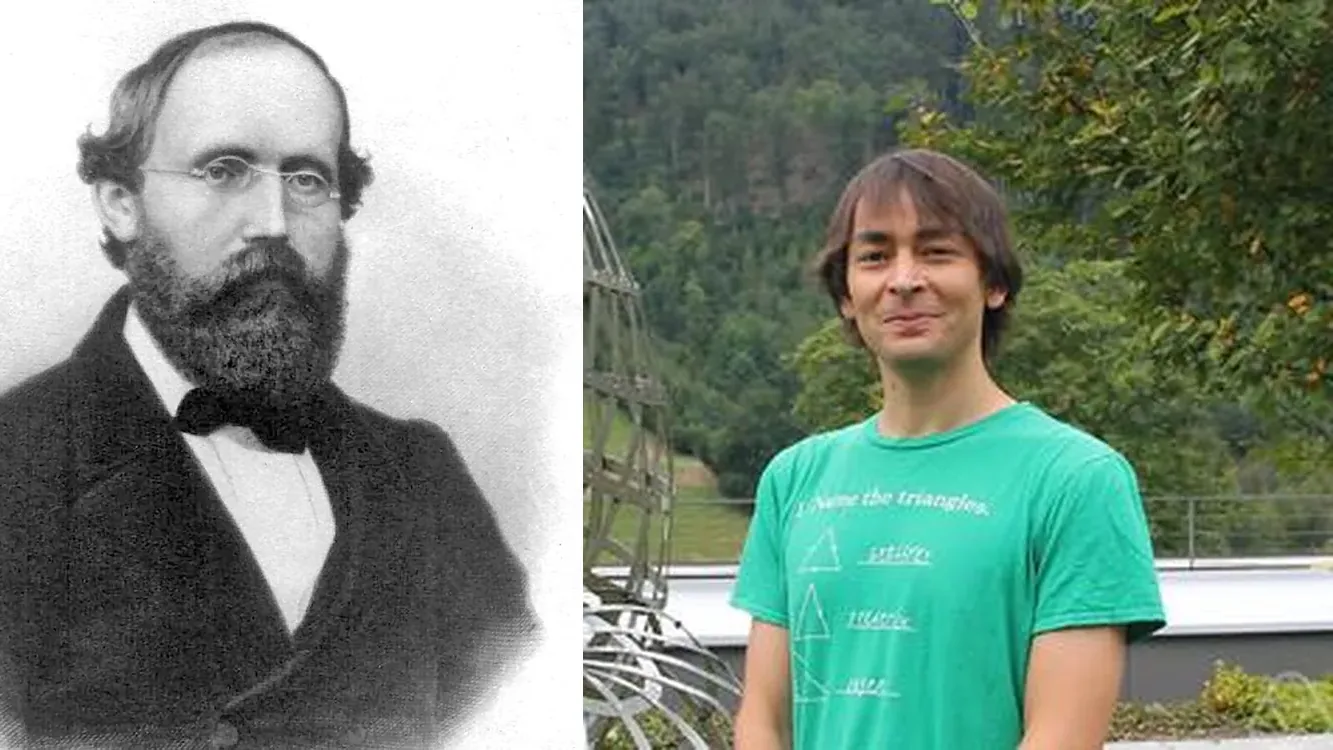
Anthropic mathematician Levent Alpöge claimed on Friday, November 20, 2026, that he and the company’s AI model Claude proved the Riemann Hypothesis and the Generalized Riemann Hypothesis. Instead of submitting a peer-reviewed paper, Alpöge posted a four-page note and 14 compressed archives of machine-checkable code, setting off an immediate audit by outside mathematicians.
In a four-page announcement note titled “Remark” on his personal website, Alpöge wrote, “I believe I have, working with Claude, discovered a proof of the Riemann Hypothesis.” He did not name which specific version of Claude assisted him, and he listed the Extended Riemann Hypothesis for Dedekind zeta-functions only as an expectation for future work.
The 14 archive files contain formal proof code written in Lean, a programming language used for AI-assisted formal verification. KuCoin’s initial flash report stated that the 14 compressed files totaled 250,000 pages, while Alpöge’s note and reporting from DataCamp, MLQ.ai, and Unite.AI clarify that the 250,000-page figure referred to an informal AI-generated write-up that Alpöge refused to publish because he viewed it as unreadable.
What MIT’s early code checks show
Within hours of Alpöge’s announcement, MIT number theorist Andrew Sutherland independently compiled all 175,187 Lean modules with zero errors and posted his logs on an MIT verification page last updated at 22:05 UTC on November 20. Sutherland reported that the code relies only on Lean’s three standard axioms, cleared an independent proof checker called nanoda, and passed a statement-matching check (con-leche –compare) confirming all five theorems against the challenge specification.
Those early results still leave major verification gaps. Sutherland noted on his page that he ran the build using Anthropic’s coding tool Claude Code on cloud machines without a sandbox, and that the full lake comparator run, the Lean-kernel replay of the exported proof, and a comparison against a sandboxed build were still unfinished.
No human mathematician has read or peer-reviewed the full mathematical argument, and Alpöge acknowledged he has not mastered all of the surrounding mathematics himself. Neither Anthropic nor the Clay Mathematics Institute has confirmed the proof, and the institute continues to list the Riemann Hypothesis as unsolved.
| Verification step | Status (Nov. 20, 2026) | What is confirmed or missing |
|---|---|---|
| Lean compilation (175,187 modules) | Passed | Compiled with zero errors by MIT’s Andrew Sutherland on unsandboxed cloud machines |
| Axiom audit and nanoda checker | Passed | Used only Lean’s three standard axioms and accepted by the independent nanoda checker |
| Statement matching (con-leche) | Passed | Confirmed all five theorems against the challenge specification |
| Lake comparator and kernel replay | In progress | Full comparator run, Lean-kernel export replay, and sandboxed build comparison remain pending |
| Human peer review and Clay approval | Not completed | No journal paper submitted; Clay rules require refereed publication plus two years of acceptance |
How Levent Alpöge and Claude built the proof
Alpöge earned a Princeton PhD in 2020 under Fields Medalist Manjul Bhargava and held positions at Harvard and Cambridge before joining Anthropic’s technical staff. In his note, he said he guided the conceptual setup from a toy problem to an analogous setting while Claude supplied advanced automorphic-forms machinery.
According to Alpöge, Claude proposed a chain of theta lifts of length square root of X for a von Mangoldt sum of length X to mimic multiplicity over the integers. Describing the model’s contribution near the end of the process, he wrote, “No, Claude flew, and danced, and sparkled near that finish line.”
A retrospective timeline in the note, assembled by Claude and flagged by Alpöge as paraphrased and subject to revision, places key breakthroughs on October 6, November 15, and November 16, 2026. Alpöge wrote that he expects the argument to be simplified and plans to write a human-readable paper.
Hundreds of theorems across number theory and cryptography have been proved only conditionally under the assumption that the Riemann Hypothesis or Generalized Riemann Hypothesis holds. If independent audits and peer review confirm the proof, those conditional theorems become established facts, while testing whether a Lean-only AI proof can meet the Clay Mathematics Institute’s $1 million Millennium Prize rules.
A rival human draft and earlier AI claims
German mathematician Bernhard Riemann posed the hypothesis in 1859, proposing that every non-trivial zero of the Riemann zeta function lies on a single vertical line in the complex plane with real part 1/2. Numerical checks have verified the first 10 trillion zeros, but mathematicians have never proved the pattern holds for all of them.
On August 10, 2026, Anthropic published an August 2026 research post reporting that an unreleased Claude model had raised a lower bound on the share of zeta zeros satisfying the hypothesis from 41.6% to 67.2%, stating at the time that it did not expect those techniques to solve the full problem. Alpöge had also posted an unreviewed, Claude-generated counterexample to the Jacobian conjecture in July 2026, and OpenAI announced an AI-assisted Navier-Stokes result in September 2026 that mathematicians are still studying.
Hours after Alpöge’s post on November 20, Stanford professor and American Mathematical Society president Ravi Vakil released a separate, human-only draft proof of the Generalized Riemann Hypothesis titled “The Music of the Primes” by Stanford postdoc Alessandro Masullo. DataCamp and Nacionale reported that Masullo spent 12 years on the work without AI, that Stanford professor Brian Conrad had been reviewing the draft for months, and that it is not formalized in Lean and still faces major revision.
On the same day, Alpöge and mathematician Tristan Buckmaster also posted a 79-page Claude-assisted paper claiming a breakdown result for the unforced Navier-Stokes equations without releasing its supporting numerical certificate. Alpöge wrote that he messaged Anthropic CEO Dario Amodei late Sunday night about how to announce the Riemann claim, acknowledged the timing right after Anthropic’s Nasdaq IPO was poor, and rejected suggestions that it was timed to move the stock.
Imperial College London professor Kevin Buzzard, who published a four-part audit guide for Lean proof claims on November 12, 2026, had not published a verdict on Alpöge’s code as of November 20. Until Sutherland’s remaining comparator and kernel-replay runs finish and outside mathematicians review both the formal definitions and a written paper, the claim remains unconfirmed, with no journal submission date or Clay Mathematics Institute review schedule announced.