
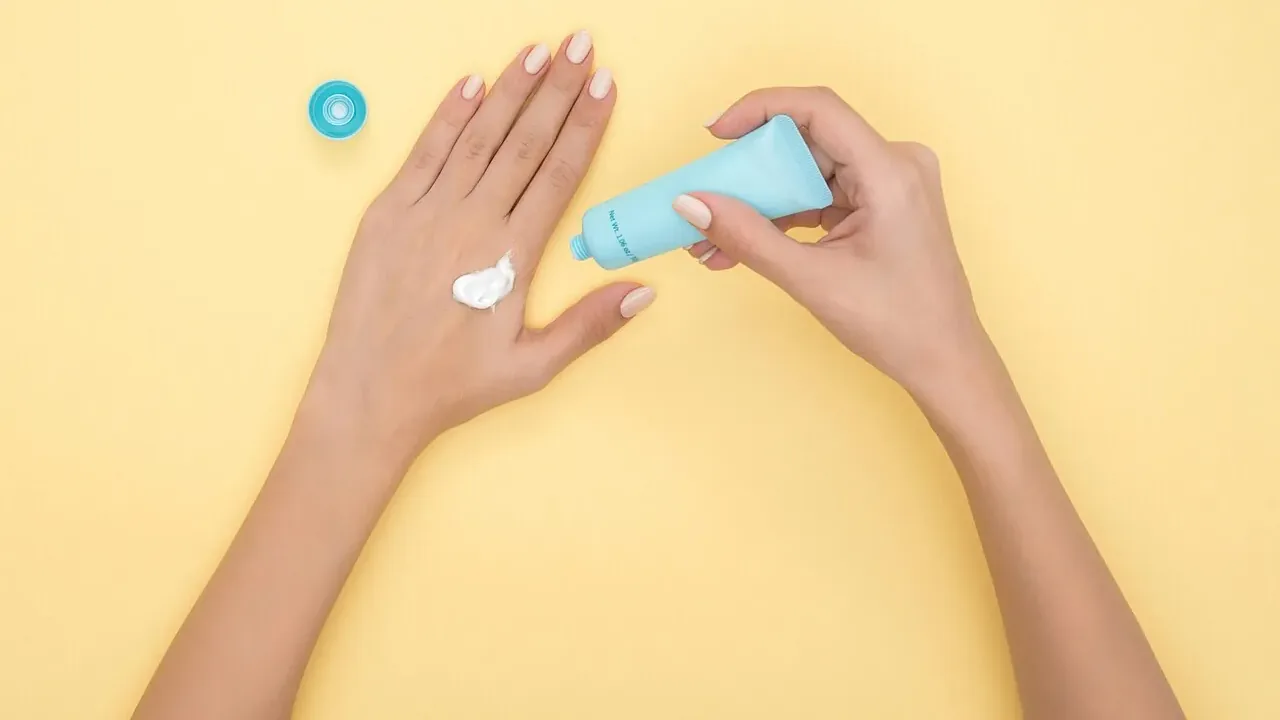
Cold winter air holds far less water vapor than warm air, so heating it inside your home causes indoor humidity to drop sharply. That dry air pulls moisture from your skin and stops static charge from draining away, triggering winter dry skin and static shocks. Keeping indoor humidity between 30% and 50%, or lower in deep freezes, eases both.
ContentsToggle
Why does heated winter air get so dry?
Your furnace does not actually remove moisture from indoor air the way an air conditioner or dehumidifier does. Instead, cold outdoor air leaks into your home through doors, windows, and vents, carrying very little water vapor to begin with.
Relative humidity measures how much water vapor air holds compared to the maximum it could hold at that exact temperature, according to the NOAA NESDIS humidity explainer (updated 2025). Because warm air holds far more water vapor than cold air, heating frigid outside air to room temperature expands its moisture capacity while the actual water content stays low.
NOAA NESDIS (2025) illustrates the gap with a simple weather comparison: a 30°F winter day at 100% relative humidity still contains less water vapor and feels drier than an 80°F summer day at 50% relative humidity.
That shift applies to almost anyone living or working in a heated building during winter. Even if it is snowing or damp outside, warming that cold air indoors can leave living rooms and bedrooms feeling desert-dry.
How dry air triggers winter skin flaking and static shocks
When indoor air is starved for moisture, it draws water out of the stratum corneum, the outer barrier layer of your skin. According to the American Academy of Dermatology (2023), falling temperatures and low humidity weaken the skin’s ability to hold moisture, leading to itching, rough patches, cracked lips, and more noticeable fine lines.
Harvard Health Publishing (2018) notes that as dead skin cells dry out, they clump and flake, and severe dryness can cause visible cracks in the outer barrier. In dermatology studies, moisture escaping across the skin is tracked as transepidermal water loss, or TEWL. A 2022 peer-reviewed review archived by the National Library of Medicine notes that many studies measure higher TEWL in cooler, lower-humidity seasons, though exact changes vary by age, body site, and local environment.
Static shocks ramp up at the exact same time because dry air disrupts how electrical charges balance out. Walking across carpet or rubbing clothing layers creates friction that transfers electrons from one surface to another, the Library of Congress explained in 2019.
In humid summer weather, water molecules in the air help spread those extra charges out and neutralize surfaces before you feel a zap, according to Northeastern University physics guidance featuring professor Ivana Dimitrova (2025). Without enough airborne moisture in winter, excess electrons stay trapped on your body until you touch a metal doorknob, light switch, or pet and discharge a sudden spark.
What indoor humidity range eases dry skin and static?
Major health and safety agencies agree on a clear general baseline. The U.S. Environmental Protection Agency (2026), the Mayo Clinic humidifier guide (2026), the U.S. Consumer Product Safety Commission (2012), and Health Canada all recommend keeping indoor humidity between 30% and 50%, and never above 60%.
Pushing humidity past 50% to 60% creates new problems inside your home. Damp indoor surfaces can begin growing mold within 48 hours, according to both the EPA (2026) and Health Canada, and high moisture levels encourage dust mites.
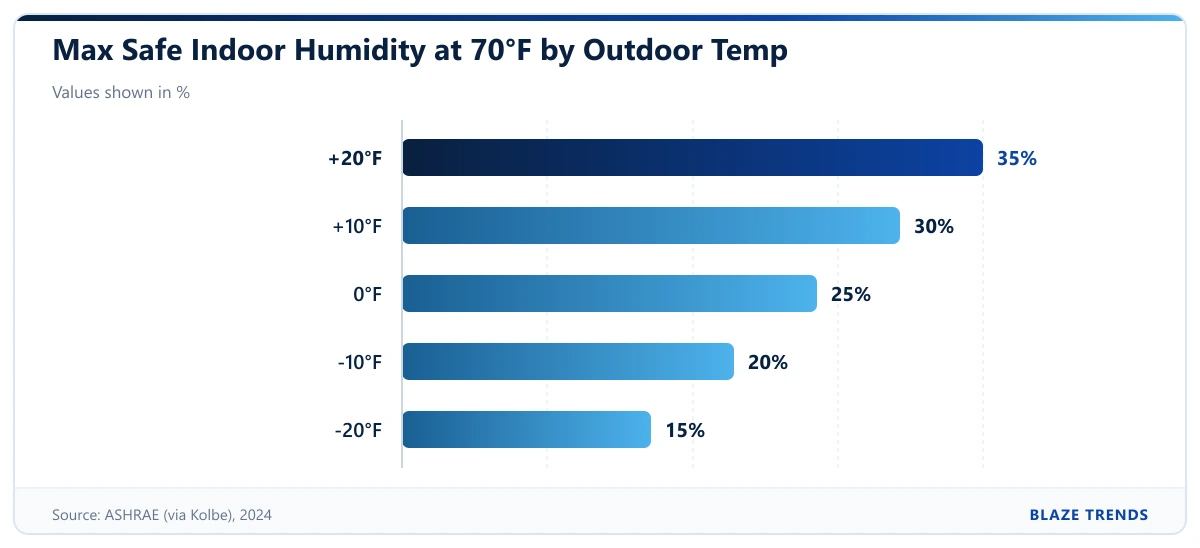
During sub-freezing cold snaps, that 30% to 50% rule needs an adjustment. Holding 40% to 50% humidity inside when temperatures plunge outside causes warm indoor moisture to condense on cold windowpanes and inside exterior walls. University of Minnesota Extension (2023) recommends dropping closer to 25% in winter for cold-climate homes, and ASHRAE’s cold-weather table (published in Kolbe’s 2024 homeowner condensation guide) lowers safe maximum indoor humidity at 70°F in 5-percentage-point steps as outdoor air cools.
| Indoor relative humidity | What usually happens | When it applies |
|---|---|---|
| Below 30% | Dry skin, chapped lips, itchy eyes, nosebleeds, and frequent static shocks | Common in heated homes during cold weather (Mayo Clinic, 2026) |
| 30% to 50% | General comfort zone that eases dryness while limiting mold growth | Year-round U.S. and Canadian baseline when outdoor weather is mild (EPA, 2026; Health Canada) |
| 15% to 35% | Lower ceiling that prevents window frost and hidden wall condensation | Sub-freezing cold snaps from 20°F down to -20°F at 70°F indoors (ASHRAE via Kolbe, 2024) |
| Above 50% to 60% | Window condensation, dust mites, and mold growth within 48 hours on damp surfaces | Too high for indoor spaces; avoid humidifying past 50% (EPA, 2026; CPSC, 2012) |
Your building’s construction also affects where condensation starts. Single-pane windows chill faster than double- or triple-pane glass, and the EPA (2026) advises against humidifying buildings that lack an adequate vapor barrier.
How to raise humidity safely and protect your skin
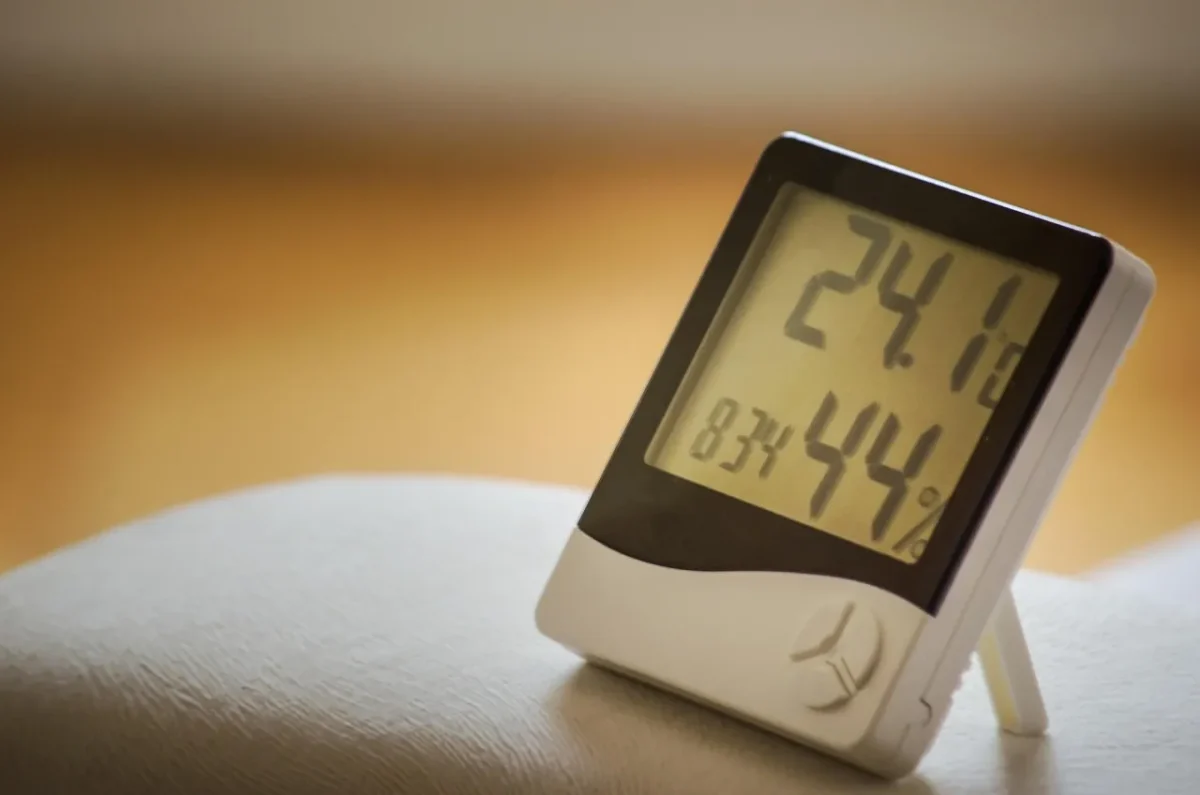
Before running a humidifier, check your home’s actual moisture level with a digital hygrometer, a small gauge that reads relative humidity, or use a unit with a built-in humidistat. Place the gauge away from direct mist so you get an accurate room reading.
- Set your humidistat to 30% to 40% when outdoor temperatures stay above 20°F, and dial down toward 15% to 30% during deeper freezes whenever condensation beads on your windows in the morning (ASHRAE via Kolbe, 2024; EPA, 2026).
- Fill portable humidifiers with bottled distilled or demineralized water instead of tap water to reduce mineral scale and airborne white dust (EPA, 2026; Mayo Clinic, 2026).
- Unplug, empty, dry, and refill portable tanks every day so standing water cannot grow bacteria or fungi (Mayo Clinic, 2026; CPSC, 2012).
- Clean portable units every three days using a 3% hydrogen peroxide solution or manufacturer-approved disinfectant, then rinse thoroughly before refilling (Mayo Clinic, 2026; EPA, 2026).
- Keep curtains, rugs, and nearby walls dry, and lower the setting or move the unit if surrounding surfaces feel damp (EPA, 2026; Mayo Clinic, 2026).
- Support your skin barrier directly by limiting showers to 5 to 10 minutes in warm rather than hot water, gently patting dry, and applying a heavy fragrance-free cream or ointment onto damp skin (American Academy of Dermatology, 2023).
Humidifier style affects maintenance and safety. In its 2026 guide on the “use and care of home humidifiers,” the U.S. Environmental Protection Agency notes that ultrasonic and impeller cool-mist models disperse the most microorganisms and mineral dust if neglected. Steam vaporizers disperse less dust but heat water to boiling, creating burn hazards around children, while dermatologists often favor filtered cool-mist units for bedrooms (AAD, 2023).
Know when home adjustments are not enough. Mayo Clinic (2026) advises checking with a healthcare professional before using a humidifier if you have asthma or allergies, because added moisture can trigger mold and dust mites. Stop using a humidifier and seek medical advice if you develop new coughing or flu-like respiratory symptoms while running it (EPA, 2026; CPSC, 2012).
See a board-certified dermatologist or doctor if dry skin becomes painfully cracked, inflamed, or unresponsive to consistent moisturizing and humidity control. Persistent winter dryness can point to atopic dermatitis, psoriasis, or underlying medical conditions such as hypothyroidism, diabetes, or kidney or liver disease that require proper medical evaluation (AAD, 2023; Harvard Health Publishing, 2011).
Frequently asked questions
How can you stop winter static shocks right away?
Northeastern University physics professor Ivana Dimitrova (2025) recommends touching metal doorknobs or switches first with a key, a coin, or your knuckle, since knuckles have fewer nerve endings than fingertips. Wearing natural fibers like cotton, wool, silk, or linen instead of synthetic nylon or polyester also reduces static buildup on your clothes.
Why do bottled spring and mineral waters still leave white dust in humidifiers?
Unlike distilled water, bottled spring, artesian, and mineral waters still contain dissolved minerals, according to the EPA (2026). Ultrasonic and impeller humidifiers aerosolize those minerals into fine white dust that settles on furniture and can be small enough to enter the lungs, the CPSC noted in 2012.
Should you still run bathroom exhaust fans in winter?
Yes. Health Canada recommends running bathroom exhaust fans for at least 30 minutes after showers to clear heavy local steam before mold can grow on walls and ceilings within 48 hours. Keeping curtains open during the day also lets warm indoor air reach window glass and limits condensation.