
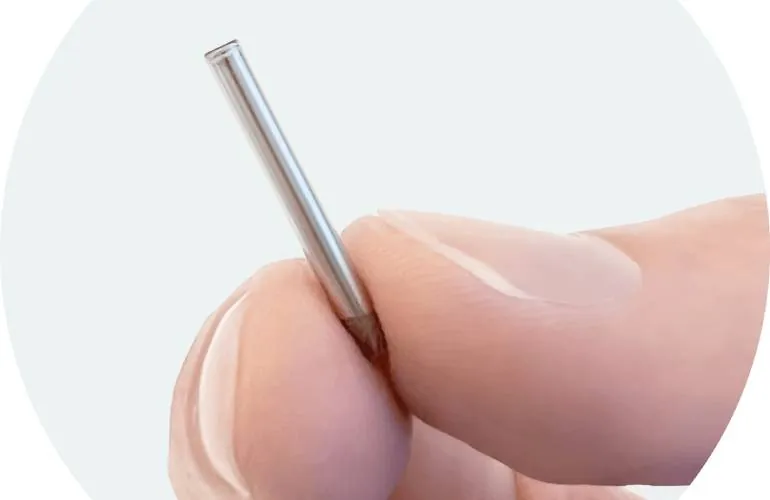
The next breakthrough in weight management is not a better pill or a less painful needle. It is a miniature, matchstick-sized implant designed to sit quietly under the skin. On July 11, Vivani Medical confirmed it fully enrolled its first-in-human Phase 1 clinical trial for the NPM-115 implant. The goal? Treat obese and overweight adults without the burden of weekly injections.
The obesity drug market is booming. But adherence remains a persistent hurdle. Patients frequently stop taking GLP-1 receptor agonists like Wegovy and Ozempic due to gastrointestinal side effects and severe injection fatigue. Vivani’s new NanoPortal technology aims to solve this by providing steady, continuous delivery of GLP-1 medications for up to six months. Wall Street analysts project that global GLP-1 sales could approach $190 billion by 2035, according to CNBC, placing an immense financial premium on finding ways to keep patients on their treatment plans.
The science backing the platform shows clear results in preclinical models. Vivani tested a concurrent semaglutide implant, designated as NPM-139. That specific implant drove approximately 20% weight loss, and test subjects maintained that reduction for over 231 days from a single administration. The ongoing Phase 1 human trial, named LIBERATE-1, will first evaluate the safety and pharmacokinetics of the device over a shorter 9-week duration to ensure the medication releases without triggering sudden, severe clinical bursts of side effects.
Why Novo Nordisk Is Paying Attention
The most telling validation of Vivani’s hardware comes directly from the top of the industry. Novo Nordisk, the pharmaceutical company responsible for developing the semaglutide active ingredient, recently signed a non-exclusive agreement to formally evaluate Vivani’s NPM-139 implant platform.
This partnership isolates the main bottleneck in the current market. Drug manufacturers can formulate highly effective weight loss solutions, but they cannot force people to tolerate strict weekly dosing routines over a lifetime. By removing the patient from the dosing equation entirely, a six-month implant guarantees perfect adherence during its lifespan. If these early human trials mirror the preclinical weight loss figures, the delivery standard for chronic weight management will eventually move out of the home and into the outpatient clinic.