
Every spring, NFL teams draft dozens of college players. The moment those names are called, a highly structured financial system kicks in. The NFL Rookie Wage Scale controls exactly how much incoming players get paid. This system protects a franchise’s overall salary cap from the unpredictability of unproven prospects.
How the NFL Rookie Wage Scale Works
Within every team’s overall salary cap sits a specific sub-category called the “Rookie Cap.” This specific pool of money is reserved exclusively for signing drafted rookies and undrafted free agents. Add up every franchise’s Rookie Cap, and you get what the league calls the “Entering Player Pool.”
Draft position is everything. A player’s exact slot in the draft dictates predetermined contract values. According to an analysis by Karl Rasmussen at Sports Illustrated, this rigid structure removes the prolonged holdouts that used to plague training camps.
The length of these deals is also strictly locked down. Drafted rookies always receive four-year contracts. Undrafted free agents generally sign three-year deals.
While the base salaries are slotted, signing bonuses remain a massive component of player compensation. Teams pay these bonuses upfront in cash. For salary cap purposes, the cap hit is prorated. The front office spreads that bonus money evenly over the length of the deal.
Why Teams Use the “Rule of 51” to Manage Cap Space
Fans often panic when they see their favorite team has only a few million dollars in cap space before the draft. They wonder how the team will afford a dozen new rookies. The answer is the Rule of 51.
During the offseason, NFL teams carry up to 90 players on the roster. Managing a hard cap with 90 active salaries is impossible. The league solves this by mandating that only the top 51 highest-paid players count against the team’s salary cap during the spring and summer.
Incoming rookies typically sign deals with low base salaries. They often start at the league minimum. Because of this, newly drafted players usually slot in near the bottom of the top 51 or fall completely outside of it. The incoming class rarely causes an immediate negative impact on a team’s available offseason cap space.
The Fifth-Year Option Advantage
First-round draft picks come with a unique contractual tool. Teams hold an automatic fifth-year option on these players. This team-controlled extension provides a massive roster-building advantage.
The exact payout for this option relies on performance. The NFL uses a tiered system based on snap counts and Pro Bowl selections during a player’s first three seasons. A player who achieves multiple Pro Bowl nods earns an option equal to the franchise tag value for their specific position.
Teams must make their decision early. They must exercise this option before May 1 of the player’s fourth league year. Once exercised, the official NFL contract language guarantees the entire fifth-year salary.
Hitting on a highly productive player on a slotted rookie contract is the ultimate front office prize. A starting quarterback on a rookie deal frees up tens of millions of dollars. Front offices use this surplus to aggressively acquire premium veteran free agents. The financial flexibility is somewhat similar to how NBA contract extensions dictate team salary caps and roster rules, though football relies on a much harder cap system.
Famous Examples from Major Draft Classes
To understand why the current system exists, you have to look back at the financial chaos of the late 2000s. Before 2011, top draft picks negotiated astronomical contracts before ever playing a single professional snap.
The breaking point arrived in 2010. The St. Louis Rams drafted quarterback Sam Bradford at No. 1 overall. He signed a six-year, $78 million contract featuring $50 million in guaranteed money. According to historical reporting from CBS Sports, this remains the largest rookie deal in league history. The sheer size of these unearned contracts paralyzed team building.
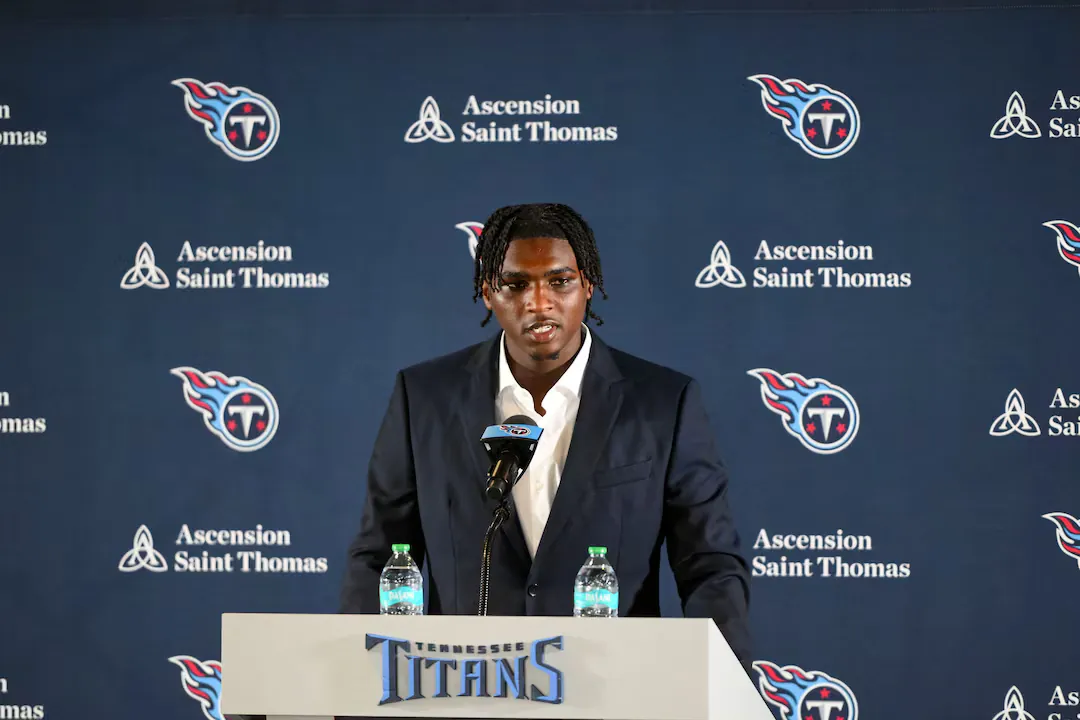
The 2011 collective bargaining agreement introduced the modern wage scale. Fast forward to 2025. No. 1 overall pick Cam Ward signed a four-year, $48.7 million contract with the Tennessee Titans. This included a $32.1 million prorated signing bonus and a league-minimum base salary of $840,000 for his rookie year. Projections for the 2026 draft show the No. 1 pick receiving a fully guaranteed contract worth roughly $54.565 million.
The financial drop-off through the draft rounds is steep. The 32nd pick in the 2026 first round is projected to earn $16.1 million. The 257th pick at the very end of the draft will receive around $4.359 million over four years.
Common Misconceptions About Offset Language and Dead Money
A widely held misconception is that all drafted rookies get guaranteed money. They do not.
First-round picks generally receive fully guaranteed deals. Second-round picks occasionally get full guarantees. Players drafted in the later rounds receive only partially guaranteed contracts. Undrafted rookies typically sign deals with zero guarantees.
If a drafted player is released before their contract ends, things get complicated. “Offset language” is a major sticking point in contract negotiations. If a released player signs with a new team, offset clauses allow the original team to deduct the new salary from the guaranteed money they still owe the player.
Without offset language, a busted prospect could double-dip. They would collect full paychecks from two separate organizations simultaneously. Franchises demand offset clauses to protect their salary cap from excessive dead money.