
Major League Baseball’s pre-arbitration bonus pool distributes $50 million each season to the league’s top-performing young players who do not yet qualify for salary arbitration. Established under the 2022–2026 Collective Bargaining Agreement (CBA), the fund first pays fixed bonuses to eligible players who win or place in major end-of-season awards, up to $2.5 million for an MVP or Cy Young Award. Whatever money remains in the $50 million pot is then divided proportionally among the top 100 pre-arbitration players ranked by a custom Wins Above Replacement (WAR) formula jointly created by MLB and the MLB Players Association (MLBPA).
Under MLB reserve rules, rookies and second-year players cannot negotiate their salaries on the open market and generally do not reach salary arbitration until they accrue three full years of Major League service time (172 days on the active roster counts as one full year). That leaves many of the game’s best young stars playing for near the league minimum salary, which was set at $760,000 in 2025 and $780,000 in 2026. MLB and the players’ union created the bonus pool in March 2022 so breakout performers could earn seven-figure payouts immediately rather than waiting years for arbitration.
Which players qualify for the MLB pre-arbitration bonus pool?
Eligibility depends on how much Major League service time a player has accrued entering the season. Nearly every player needs three full years of service to reach salary arbitration, except for a group known as “Super Two” qualifiers. Each offseason, the top 22% of players who have accrued between two and three years of service (and at least 86 days in the immediately preceding season) qualify for arbitration a year early.
If you enter the season below that offseason’s Super Two service-time cutoff and are not yet eligible for arbitration, you qualify for the pre-arbitration bonus pool. Because the Super Two threshold depends on the service time of the active player pool each winter, the exact cutoff changes slightly from year to year. Entering the 2022 season, the cutoff was 2 years and 228 days of service, while it shifted to 2 years and 118 days in 2024 and 2 years and 132 days in 2025, according to Associated Press data.
One major exception applies to international signings. Players who entered MLB through the domestic amateur draft or as international amateur free agents qualify for the pool, whereas older players who signed as foreign professionals (such as stars arriving from Japan’s Nippon Professional Baseball or the Korea Baseball Organization under international professional free agency rules) are excluded.
How are award bonuses and WAR payouts calculated?
The $50 million pool is paid out in two steps after the regular season ends, with all checks payable by December 15 under the 2022–2026 CBA rules. Before any statistical formulas run, fixed dollar bonuses are deducted from the $50 million fund for eligible pre-arbitration players who win or place near the top of major postseason award ballots:
- Winning an American League or National League Most Valuable Player (MVP) or Cy Young Award pays $2,500,000, with “$1.75 million for second in the voting, $1.5 million for third, $1 million for” fourth or fifth place, according to the Associated Press.
- Making the All-MLB First Team pays $1,000,000, while an All-MLB Second Team selection pays $500,000.
- Winning the AL or NL Rookie of the Year Award pays $750,000, and finishing second pays $500,000, with smaller bonuses extending down to $150,000 for fifth place.
Once all fixed award bonuses are subtracted from the $50 million pool, every remaining dollar is distributed among the top 100 eligible pre-arbitration players ranked by WAR. Rather than relying solely on public leaderboards from FanGraphs or Baseball-Reference, a joint management-union committee built a custom WAR formula specifically for the CBA.
Under the joint MLB/MLBPA WAR formula, position players are graded on park-adjusted weighted on-base average (wOBA) weighted by plate appearances, baserunning, and fielding measured by Statcast Outs Above Average (OAA) for infielders and outfielders. Pitchers are evaluated using an equal blend of actual runs allowed per nine innings and Fielding Independent Pitching (FIP, which isolates outcomes a pitcher controls like strikeouts, walks, and home runs), along with a game-situation adjustment that credits relief pitchers for working in close, late-inning spots.
Each player in the top 100 receives a share of the remaining pool that matches their percentage of the group’s combined WAR. If the top 100 pre-arbitration players combine for 300 total WAR and you produced 6.0 WAR, you collect 2% of whatever money is left in the pot after the award bonuses are paid.
What fans often get wrong about the bonus pool
Because players can win multiple awards and finish high on the WAR leaderboard in the same season, a few rules trip up casual fans tracking the payouts each winter.
First, players cannot stack multiple fixed award bonuses in the same year. Under the CBA, an eligible player can collect a bonus for only one award per season—whichever single honor pays the highest dollar amount. However, a player who collects a fixed award bonus still receives their full proportional share of the remaining WAR pool if they finish among the top 100 players in WAR.
Take Pittsburgh Pirates ace Paul Skenes in 2025. Skenes won the NL Cy Young Award ($2.5 million tier) and was also voted to the All-MLB First Team ($1 million tier). Because of the anti-stacking rule, he could not combine both award bonuses for $3.5 million; instead, he received the higher $2.5 million Cy Young bonus. He then added $936,343 from the WAR distribution for a record single-season payout of $3,436,343—nearly four times his $875,000 base salary, and lifting his two-year bonus pool earnings to $5,588,400. A year earlier in 2024, Kansas City Royals shortstop Bobby Witt Jr. topped the pool at $3,077,595.
Second, more than 100 players can get paid in a single season. The WAR allocation covers exactly 100 players, but an eligible player can win a postseason award bonus without cracking the top 100 in WAR. In 2023, 101 players received checks because Cleveland Guardians closer Emmanuel Clase made the All-MLB Second Team ($500,000) while ranking outside the top 100 in pre-arbitration WAR. The total hit 101 players again in 2025 when Washington Nationals outfielder Daylen Lile earned $150,000 for finishing fifth in NL Rookie of the Year voting despite falling outside the top 100 in WAR.
Third, signing a multi-year contract extension does not disqualify a young star from the pool. Eligibility is determined strictly by Major League service time, not by how much guaranteed money a player has on a future contract. When Seattle Mariners outfielder Julio Rodríguez topped the 2023 bonus pool at $1,865,349, he collected the full payout even though he had already signed a long-term extension with Seattle.
How is the bonus pool funded across all 30 MLB teams?
Individual ballclubs do not pay out of pocket when their own rookies break out. Instead, the $50 million comes from central baseball funds, and every team’s Competitive Balance Tax payroll is charged an equal 1/30th share (exactly $1,666,667 per club each season), regardless of how many bonus winners play on its roster.
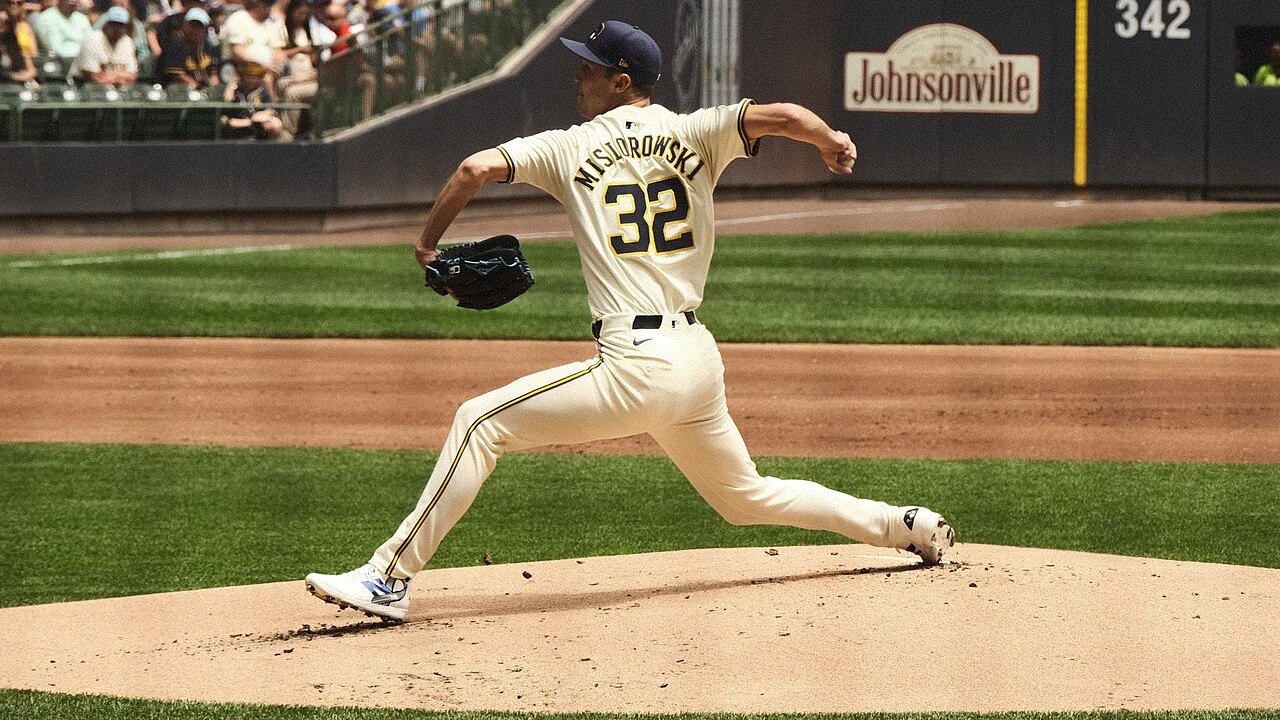
Structuring the pool as an equal league-wide charge prevents low-budget teams from holding back top prospects or limiting a rookie pitcher’s innings late in the year just to avoid triggering a multimillion-dollar bonus. In 2025, a record 10 Milwaukee Brewers players qualified for the pool and took home a combined $4,742,392, while six Pittsburgh Pirates players combined for $4,362,309, yet both franchises were charged the same $1,666,667 toward the luxury tax as a team with zero qualifiers.
Because the $50 million pool size was set specifically for the 2022–2026 CBA cycle, both the total dollar figure and the award tiers are subject to change in subsequent labor agreements. During November 2026 collective bargaining negotiations for the agreement beginning in 2027, MLB proposed expanding the pre-arbitration bonus pool by 30% to $65 million in 2027 and up to $75 million over the life of the next contract. You can check current annual pool totals and midseason WAR projections through Associated Press bonus pool reports and official MLBPA releases each winter.