
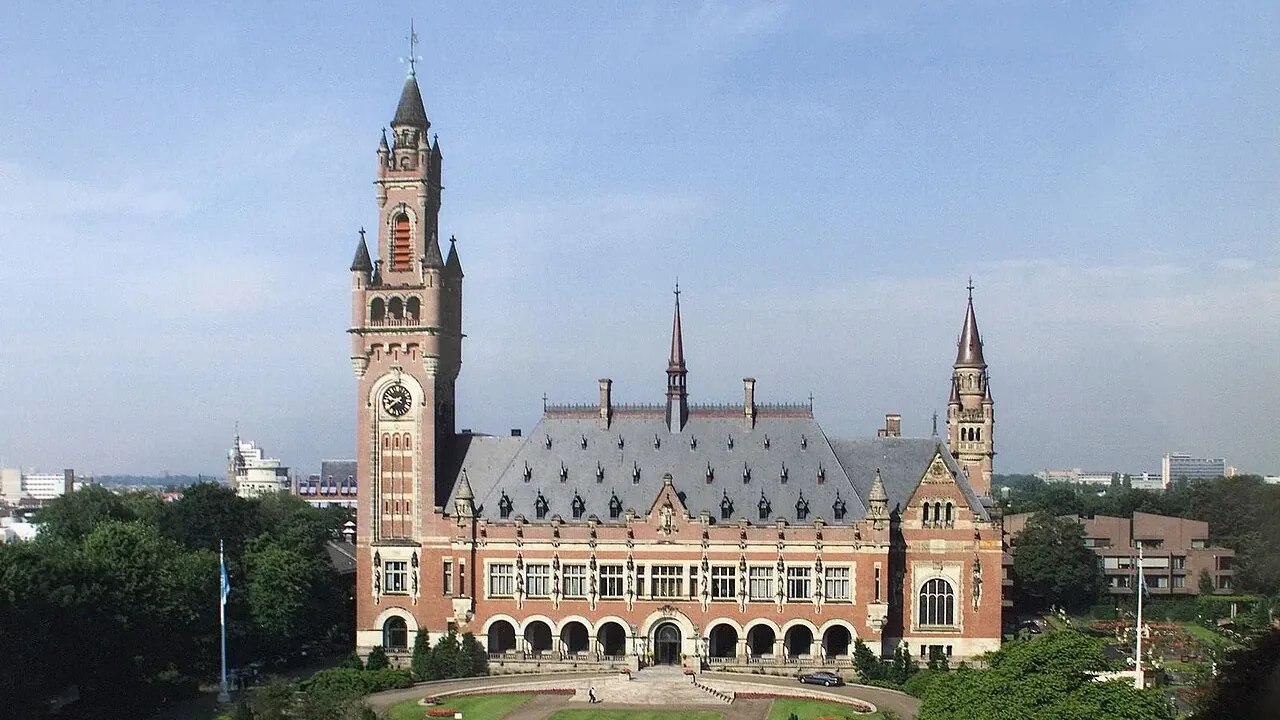
On Thursday, November 19, 2026, the International Court of Justice ruled that Myanmar committed genocide against its Rohingya Muslim minority during military operations in northern Rakhine State. Reading the judgment at the Peace Palace in The Hague, Court President Yuji Iwasawa of Japan also declared that Myanmar failed to prevent and punish genocide, in a 9-6 vote reported by CBS News and EJIL: Talk!.
It is the first time in the court’s 80-year history that it has held a state directly responsible for committing genocide, according to UN News. Reuters reported that it is only the fourth time since the Nazi Holocaust that an international court has found that genocide occurred.
The decision is final, legally binding, and cannot be appealed. It places Myanmar under international legal orders to halt abuses, facilitate the safe return of more than 1 million displaced Rohingya refugees living mostly in Bangladesh, and pay reparations.
What the judges ordered
Judges concluded that Myanmar’s government and security forces violated Articles II(a), II(b), and II(d) of the 1948 Genocide Convention, covering killing members of a group, causing serious bodily or mental harm, and imposing measures intended to prevent births, Just Security reported. The court held that the “only reasonable inference” from the evidence was that officials acted with specific intent to destroy a substantial part of the Rohingya population in northern Rakhine State.
Iwasawa stated that the military campaign followed anti-Rohingya hate speech portraying the community as “sub-human” and “a violent threat”, NPR reported. The judgment also legally classified the Rohingya as a distinct ethnic group, rejecting Myanmar’s longstanding description of them as “Bengalis” or foreign migrants, according to The Guardian.
The court ordered Myanmar to provide restitution and reparations, including enabling the safe, voluntary, and dignified return of refugees, restoring or replacing property, offering physical and mental rehabilitation, and taking steps to prevent further violations, according to the Associated Press and The Guardian. Exact compensation amounts and how payments will be administered were not resolved in Thursday’s reading, Diplomacy and Law reported.
Immediate diplomatic and survivor reactions
Britain responded within hours of the verdict by increasing diplomatic pressure on Myanmar’s military government. UK Foreign Secretary Ed Miliband announced the expulsion of Myanmar’s defence attaché, said London would summon Myanmar’s chargé d’affaires, and requested an urgent UN Security Council meeting, Anadolu Agency reported.
“The UK is determined to act and ensure accountability for these appalling crimes,” Miliband said. He added, “We must ensure the Court’s ruling sends a clear message that such crimes cannot be committed with impunity.”
UN Secretary-General António Guterres described the decision as a “powerful recognition of the Rohingya victims of genocide. It is a demonstration of international justice and a reaffirmation that impunity for such horrific acts must not stand.” In an official statement reported by the Times of Israel, Guterres said “Myanmar must act in accordance with its obligation to comply with the Court’s decision” and permit “the safe, voluntary and dignified return to their place of residence and reunification of families.”
Norwegian Foreign Minister Espen Barth Eide wrote on X that the ruling was “very serious” and “a clear recognition of injustices suffered,” adding that “all states are obliged to prevent and punish genocide.” In London, British lawmakers Rushanara Ali and Jeremy Hunt, co-chairs of the All-Party Parliamentary Group on Burma, urged the UK government to resume regular sanctions against Myanmar’s military and table a UN Security Council enforcement resolution, Reuters reported.
Rohingya survivors and advocacy groups welcomed the verdict while warning that justice remains incomplete. Yousuf Ali, a Rohingya survivor who travelled to The Hague, told The Guardian the judgment brought relief and hope for younger generations, though he added that the struggle is not finished. Nay San Lwin, co-chair of the Arakan Rohingya National Council, told Reuters that accountability requires restoring citizenship, recognizing Rohingya identity, and ensuring safe returns.
Maria Elena Vignoli, senior international justice counsel at Human Rights Watch, said, “The International Court of Justice’s landmark ruling is long-awaited recognition of the suffering the Rohingya have endured from Myanmar’s military.” Amnesty International stated, “We hope this ruling marks the beginning of a long overdue process of accountability in Myanmar,” and called for investigations into war crimes, apartheid, and other crimes against humanity.
Ko Ko Hlaing, Myanmar’s Union Minister for the Ministry of the President’s Office, attended Thursday’s reading in The Hague, the Associated Press reported, though Myanmar’s military government had not issued an immediate post-verdict statement. During public hearings in January 2026, Ko Ko Hlaing rejected the genocide allegations, arguing the 2017 operations targeted insurgents after attacks on security personnel and stating, “Myanmar was not obliged to remain idle and allow terrorists to have free rein.”
How the case reached The Hague
The dispute stems from sweeping military “clearance operations” launched in northern Rakhine State in August 2017, which forced more than 700,000 Rohingya to flee into neighboring Bangladesh, according to Human Rights Watch. More than one million Rohingya refugees now live in camps in Cox’s Bazar, The Daily Star reported.
The Gambia filed the case in November 2019 with backing from the 57-member Organization of Islamic Cooperation, becoming the first country without a direct connection to the alleged crimes to invoke Article 9 of the Genocide Convention. Eleven states later intervened in the proceedings: Canada, Denmark, France, Germany, the Netherlands, the United Kingdom, Maldives, Slovenia, the Democratic Republic of Congo, Belgium, and Ireland.
Judges issued provisional protection measures in January 2020 and rejected Myanmar’s jurisdictional objections in July 2022, after Myanmar’s military overthrew the elected government in a February 2021 coup. Final hearings on the merits ran in The Hague from January 12 to January 29, 2026.
Enforcement hurdles and what comes next
Although the judgment binds Myanmar under international law, the ICJ has no direct enforcement mechanism beyond reporting noncompliance to the UN Security Council, the Associated Press reported. Implementation inside Rakhine State faces an additional hurdle because the Arakan Army, an armed opposition group that Human Rights Watch says has also committed abuses against Rohingya, now controls most of the state.
Before Thursday, the ICJ had decided only two merits cases under the Genocide Convention, Bosnia v. Serbia in 2007 and Croatia v. Serbia in 2015, confirming genocide at Srebrenica in 1995 without finding a state itself directly liable for committing genocide. Legal analysts are watching how the court’s reasoning on genocidal intent affects pending ICJ genocide cases brought by South Africa against Israel, which Israel denies, and by Ukraine against Russia, according to the Associated Press.
Miliband said Britain plans to announce additional measures against Myanmar in the coming days alongside its push for an urgent UN Security Council session. Separate criminal accountability tracks remain active, including International Criminal Court proceedings and 2025 arrest warrants issued by an Argentine court under universal jurisdiction against junta leader Min Aung Hlaing and other officials, Amnesty International noted.