
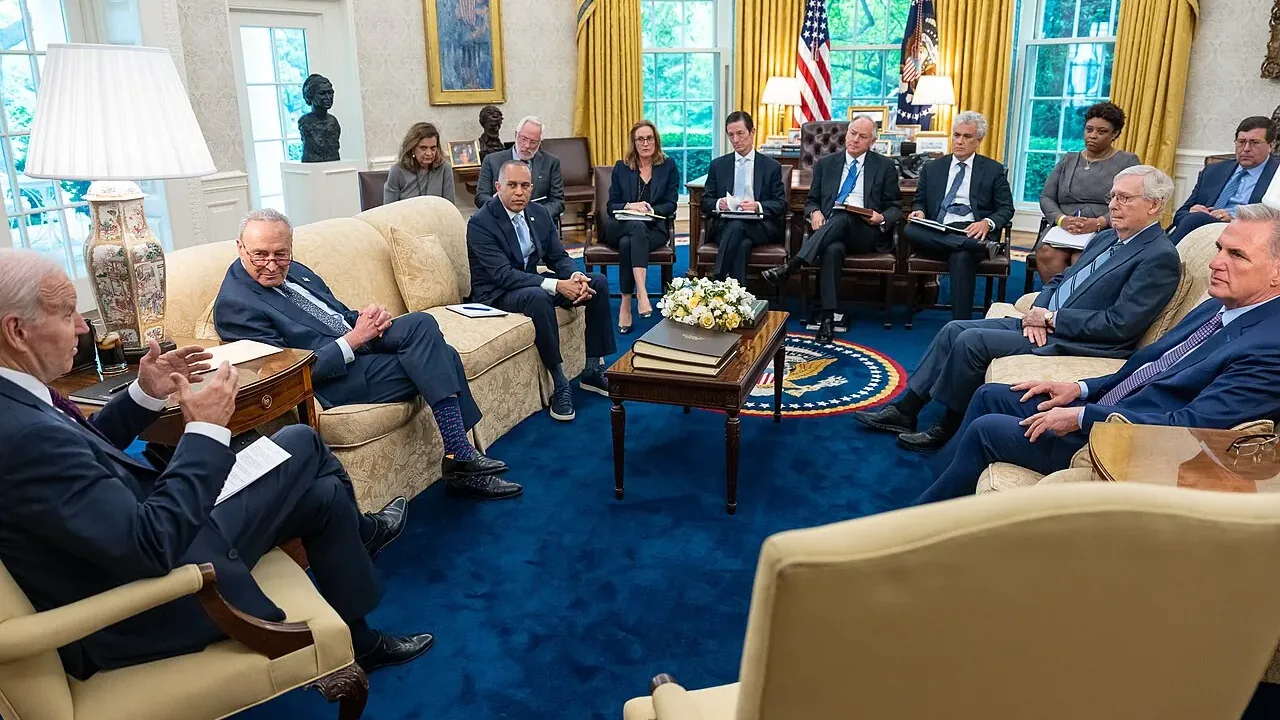
House Democrats voted 251-11 behind closed doors at the U.S. Capitol on Wednesday to nominate Rep. Hakeem Jeffries of New York for Speaker of the House, putting him in line to become the first Black lawmaker to hold the gavel when the new Congress convenes on Jan. 3, 2027.
Jeffries ran unopposed in the caucus election and cleared the 218-vote threshold he will need on the full House floor in January, according to the Associated Press. Five Democrats from across the caucus formally nominated him, including former Majority Whip James Clyburn of South Carolina. The 262 ballots cast on Wednesday included returning lawmakers, dozens of newly elected members casting the first votes of their congressional careers, and non-voting House delegates.
The vote positions Democrats to take control of the House floor agenda for the final two years of President Donald Trump’s term after voters ousted the Republican majority in the Nov. 3 midterm elections. Following those elections, Jeffries said on Nov. 4 that Democrats expected to win at least 255 seats, CBS News reported.
Leadership trio set for historic firsts
Jeffries advanced alongside the rest of the current Democratic leadership team, who also ran unopposed on Wednesday. Rep. Katherine Clark of Massachusetts is set to become the first female House majority leader, and Rep. Pete Aguilar of California is in line to become the first Latino House majority whip.
Jeffries, Clark and Aguilar rose together as the new generation of party leaders after former Speaker Nancy Pelosi of California, former Majority Leader Steny Hoyer of Maryland and Clyburn stepped aside from the top three posts. While the trio led House Democrats in the minority, the upcoming session will be their first time managing the floor in the majority.
Progressive newcomers explain 11 dissenting votes
Seven incoming Democratic members-elect, several backed by the Democratic Socialists of America, publicly confirmed they were among the 11 caucus members who voted against nominating Jeffries. The joint statement was signed by Representatives-elect Darializa Avila Chevalier of New York, Adam Hamawy of New Jersey, Frederick Haynes of Texas, Melat Kiros of Colorado, Donavan McKinney of Michigan, Chris Rabb of Pennsylvania and Claire Valdez of New York.
“Whether on Medicare for All, stopping ICE terror, getting money out of politics, or ending the genocide in Gaza, our constituents sent us to Congress with a mandate on these issues,” the seven lawmakers-elect wrote, referring to U.S. Immigration and Customs Enforcement. “We have worked to secure commitments from Leader Jeffries in good-faith conversations.”
In their statement, the group wrote, “While we have seen meaningful progress, there is still work to be done,” according to The Guardian. “Those conversations are ongoing. As such, our vote in caucus today was no,” they added.
In the days before the caucus ballot, Jeffries met face-to-face with uncommitted incoming members as well as the Congressional Progressive Caucus, the New Democrat Coalition and the Blue Dog Caucus. “I embrace those conversations,” Jeffries told reporters ahead of Wednesday’s vote. During a Democratic conference in Denver on Friday, Nov. 13, where protesters heckled him, Jeffries announced his support for lowering the Medicare eligibility age, establishing universal health coverage for children, and adding dental, vision and hearing benefits to Medicare, CNN reported.
Outside pressure and the Jan. 3 floor vote
Democratic offices fielded a wave of phone calls and social media messages from constituents demanding a leadership shakeup ahead of Wednesday’s meeting. An online campaign urged Rep. Ayanna Pressley of Massachusetts to challenge Jeffries, though Pressley ruled out a bid during a town hall on Monday, Nov. 16. “I do not need to be the speaker of the House to speak for the people,” Pressley said, according to TIME.
Rep. Emily Randall of Washington told the Associated Press that constituents had raised questions about the leadership vote at district town halls and in her Instagram direct messages. “People have messaged me asking if Bernie Sanders could be the speaker of the House,” Randall said, referring to the independent senator from Vermont who caucuses with Democrats. “Technically yes, and it would be probably difficult.”
The full House can elect someone outside the chamber as speaker, though Sanders already holds his seat in the Senate. Rep. Alexandria Ocasio-Cortez of New York also addressed constituent questions in a livestream explaining how the speakership works. “There is one candidate in this race: Hakeem Jeffries,” Ocasio-Cortez said at the Capitol. “I think that everyone is far more concerned what that leadership means, what is it promising.”
Jeffries will face a formal roll-call vote of the entire House of Representatives to claim the speaker’s gavel when the new Congress convenes on Jan. 3, 2027.