
You might see them as nuisances pecking at discarded fries on a city sidewalk, but your ancient ancestors saw them very differently. A groundbreaking new study published in the journal Antiquity this May reveals that the tangled relationship between humans and pigeons dates back significantly further than archaeologists previously believed. The discovery pushes the timeline for pigeon domestication back by nearly a full millennium.
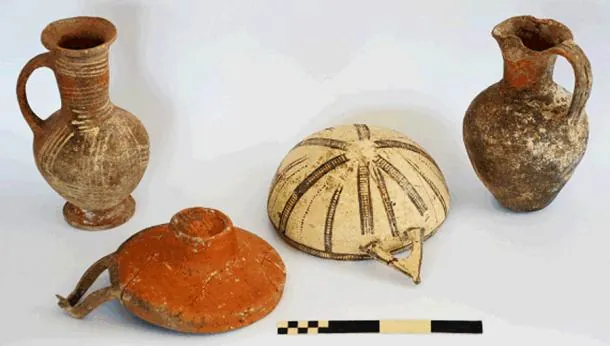
A Dutch-led research team examined 159 ancient pigeon bones unearthed at the Hala Sultan Tekke archaeological site in south-east Cyprus. By conducting biometric and isotopic analysis—specifically extracting collagen to measure nitrogen and carbon ratios—the team made a startling discovery. These Bronze Age pigeons, dating to between the 13th and 14th centuries BC, shared a diet almost identical to the local human population. This dietary overlap strongly suggests these birds were fully domesticated around 1,400 BC, long before the giant stone nesting structures previously considered the earliest evidence of domestication.
More Than Just Urban Scavengers
Before this discovery in Cyprus, the historical record largely tied the earliest concrete evidence of pigeon domestication to massive stone dovecotes found in Greece dating to roughly 300 BC. But this new data from the shores of the Larnaca salt lake changes the narrative entirely. It suggests a much earlier, deeper integration of the rock dove into human civilization across the Mediterranean.
According to a detailed report summarizing the Antiquity study, the modern perception of pigeons as “dirty pests” is actually a very recent historical anomaly. For thousands of years, these birds were essential to human survival and societal function. They provided a crucial source of meat and highly prized fertilizer, featured prominently as religious symbols, and eventually became indispensable as reliable messengers across vast empires.
It was only the technological boom of the Industrial Revolution that severed this ancient bond. The invention of the telegraph and telephone effectively put messenger pigeons out of a job. Left to their own devices in rapidly expanding urban centers, the birds adapted by scavenging. The very species humans spent millennia domesticating and relying upon quickly became a nuisance, leading to the widespread adoption of anti-pigeon architecture in modern cities.
What This Means for Archaeological Science
This discovery at Hala Sultan Tekke fundamentally alters how scientists view Bronze Age agriculture and urbanization in the Mediterranean. If complex domestication practices for non-livestock animals were already in place by 1,400 BC, it indicates a highly organized, resource-intensive society operating on the shores of Cyprus far earlier than some models suggest. It also highlights the power of modern isotopic analysis to rewrite history, proving that the chemical signatures left in ancient collagen can provide a more accurate timeline of human development than architectural ruins alone.