
SpaceX just executed the largest financial event in history, and the resulting capital is sparking an intense scientific crisis. On Friday, June 12, 2026, the company debuted on the Nasdaq at $150 a share, securing a valuation over $2 trillion to fund its xAI data center buildout. The historic offering officially made CEO Elon Musk the world’s first trillionaire. But that unprecedented influx of cash is directly funding an infrastructure project that has the global astronomical community on high alert.
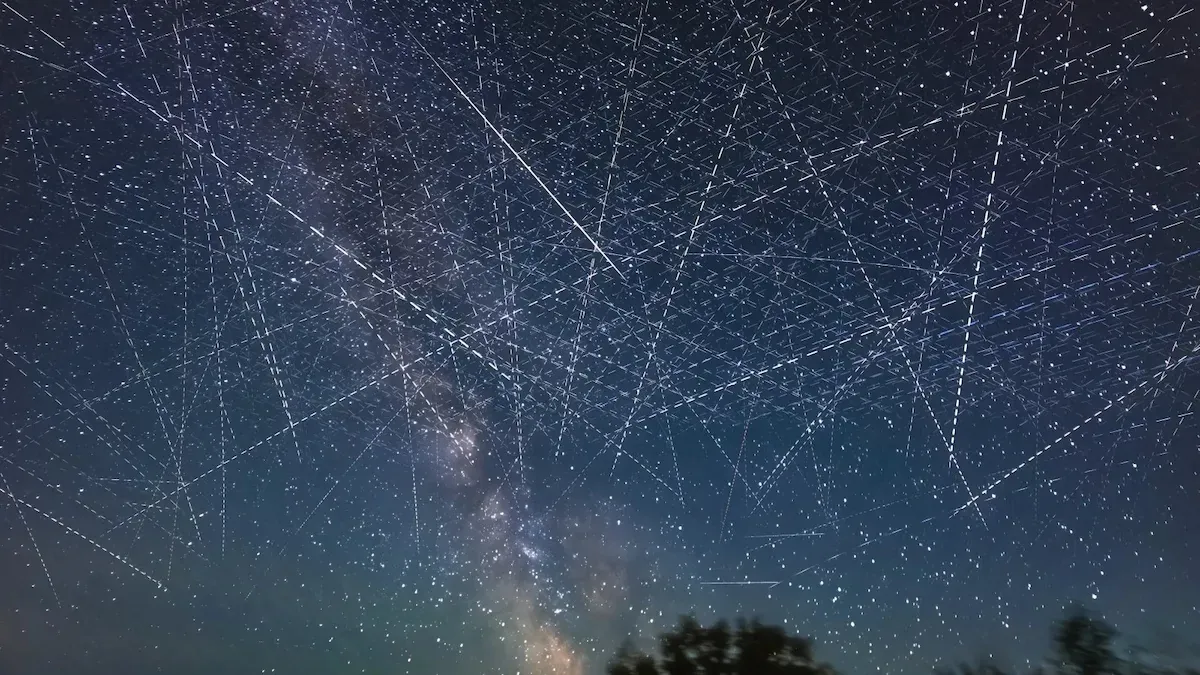
SpaceX intends to use this financial runway to launch 1 million new satellites into low Earth orbit to serve as space-based AI data centers. Astronomers are actively warning that a constellation of this scale will fundamentally alter human observation of the cosmos. Calculations released this weekend show the proposed network could ruin up to 10% of the unrecoverable data gathered by major terrestrial observatories like the Very Large Telescope.
The scientific pushback is organizing rapidly. Major groups including the Royal Astronomical Society and the European Southern Observatory have drafted formal letters to the FCC, opposing the 1 million AI satellites and the resulting light pollution. They argue the constant bright streaks across telescope imagery will make deep-space observation nearly impossible.
The consequences stretch beyond ruined photographs. Biologists are pointing out a startling secondary effect regarding the sheer volume of artificial light reflecting off these orbital servers. Researchers warn this planetary-scale lighting could severely disrupt nocturnal ecosystems, altering bird migration patterns and confusing insect populations.
The aerospace company already operates over 10,000 Starlink satellites, giving it control over two-thirds of all active spacecraft. With the backing of the FCC, SpaceX’s dominance over low Earth orbit is nearly absolute, raising systemic concerns over this unprecedented capital influx and the lack of regulatory checks on commercial space infrastructure.
How a 1-Million Satellite Network Breaks Ground-Based Astronomy
Until now, light pollution was primarily a terrestrial problem managed by building observatories in remote, high-altitude locations like the Atacama Desert. The deployment of 1 million orbital AI data centers moves the light source into the atmosphere itself, making it impossible to escape anywhere on Earth.
This proposed expansion is a fundamental escalation from the initial 2019 Starlink launches. For scientists studying near-Earth objects or faint deep-space phenomena, the constant streak of commercial satellites across long-exposure images means critical data is lost before it can even be analyzed. The resulting friction between private space enterprises and international scientific bodies is forcing regulatory agencies to decide who actually holds the rights to a naturally dark sky.