
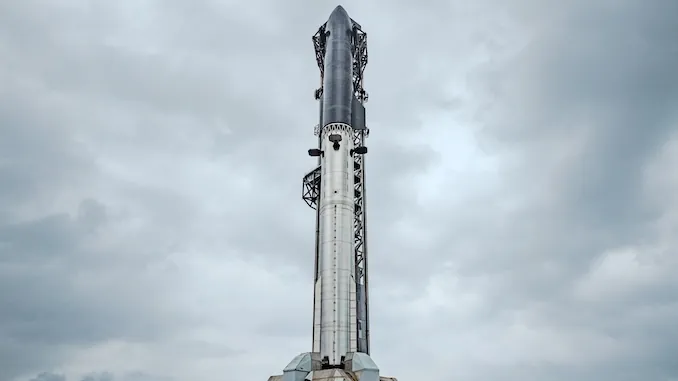
SpaceX’s highly anticipated 13th test flight of its Starship megarocket came to a screeching halt directly on the launch pad. On July 16, just as the Super Heavy booster’s first-stage Raptor engines began to ignite at the Starbase facility in South Texas, an automated safety system triggered an emergency shutdown.
The sudden anomaly could not be resolved within the 90-minute launch window. This forced mission controllers to cancel the day’s attempt and immediately initiate the cryogenic propellant offloading process, according to Space.com reporting confirming the last-second abort of Starship Flight 13 due to engine startup issues.
International coverage quickly confirmed that the automated scrub will postpone the mission by at least 24 hours. SpaceX engineers are now working to investigate the exact cause of the automated shutdown during engine startup.
The timing of the scrub carries a distinct historical weight. The launch attempt occurred exactly on the 57th anniversary of NASA’s historic Apollo 11 moon mission. But instead of flying, the ground teams are left reviewing data logs.
This particular flight features the upgraded Starship Version 3 (V3) hardware. The engineering goal is to rectify specific physical issues from the May Flight 12 test, which suffered from a botched flip maneuver and failed engine relights during its descent.
Federal regulators had just greenlit this mission after accepting SpaceX’s root cause analysis of the Flight 12 failures, which identified thermal exposure and erroneous engine alarms as the culprits. Regulators at the FAA formally cleared the mission only after mandating four major hardware and software corrective actions and approving the planned deployment of 20 operational Starlink V3 satellites.
Why Flight 13 Marks Starship’s Operational Shift
Moving beyond the dummy payloads used in previous tests, this mission officially marks Starship’s transition from an experimental test vehicle to a functional commercial transport platform. By attempting to deploy real Starlink V3 satellites into orbit, SpaceX is testing new solar array deployment mechanisms and inter-satellite laser communications for the first time on this rocket architecture.
The mission also acts as a critical catalyst for the aerospace company following its recent IPO. Capital markets are closely watching for proof of Starship’s commercial and operational viability. Securing a successful orbital deployment is a major technical milestone ahead of the company’s first post-listing earnings report and upcoming lock-up expiration window.