
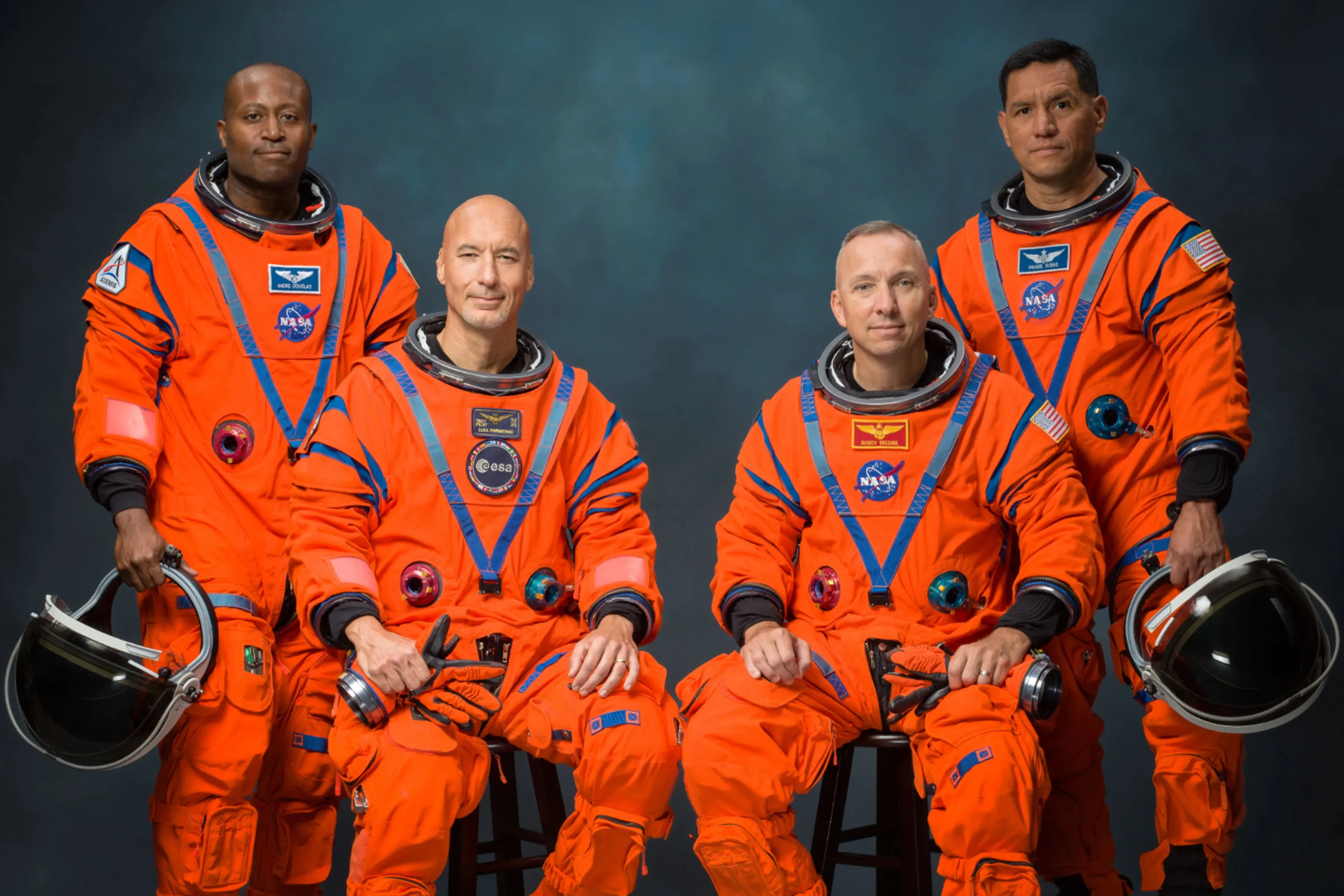
NASA officially named the four astronauts who will fly the Artemis III mission, setting the roster for a highly anticipated 2027 spaceflight. The agency selected Commander Randy Bresnik, European Space Agency Pilot Luca Parmitano, and Mission Specialists Frank Rubio and Andre Douglas. Veteran astronaut Bob Hines will train alongside them as the backup crew member.
This flight takes place amid an intense international space race, as the United States accelerates its space program to beat China back to the moon. Under a revised mission architecture announced earlier this year, this specific four-person crew will not travel to the lunar surface. Instead, they will launch aboard the Orion spacecraft atop the Space Launch System rocket and remain in low Earth orbit to perform rendezvous operations, according to National Geographic.
Historic Milestones for the Crew
The selected astronauts bring several historical records to the Orion cabin. Rubio currently holds the United States record for the longest single spaceflight, having spent 371 consecutive days in orbit. Bresnik offers legacy operational experience as a Space Shuttle veteran. Douglas is preparing for his first spaceflight and will become one of roughly two dozen African Americans to travel to space, a demographic milestone highlighted in a detailed Al Jazeera report.
During their roughly two-week stay in orbit, the four men will test the spacesuit life-support systems and spacecraft integration required for deep-space travel. NASA explicitly designed this flight to reduce risk and standardize docking approaches before attempting an actual human landing on the subsequent Artemis IV mission in 2028.
Why the Commercial Lander Docking Tests Are Crucial
The primary goal of Artemis III is to test the commercial hardware that will eventually put human boots on lunar soil. The crew will run complex in-space docking tests with two distinct lunar landers developed by private industry: SpaceX’s Starship and Blue Origin’s Blue Moon.
This public-private partnership structure is entirely different from the Apollo era. NASA is relying on these commercial entities to have their respective landers ready for the 2027 orbital rendezvous. Agency leadership maintains confidence in the timeline despite recent hardware hurdles, including an uncrewed Blue Origin New Glenn rocket anomaly in May 2026. Proving that Orion can safely dock with both commercial vehicles in Earth orbit is the final mandatory requirement before NASA clears a human crew for a lunar descent.