
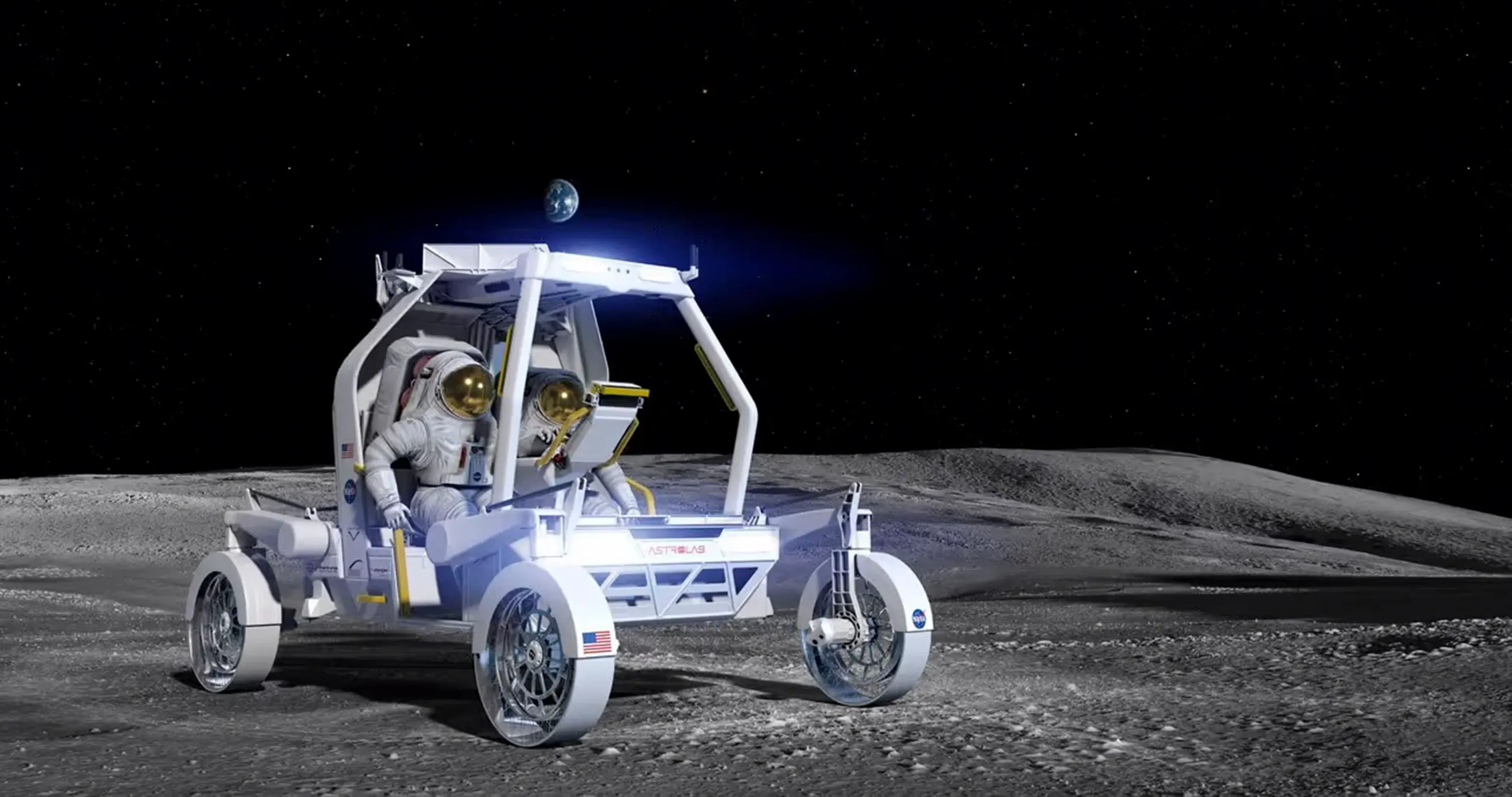
NASA officially selected Lunar Outpost and Venturi Astrolab on Tuesday to develop the next-generation Lunar Terrain Vehicles for the Artemis missions. The space agency announced the decision at its Washington D.C. headquarters following the successful Artemis II mission.
This vehicle contract is a logistical necessity for the broader Artemis program. The campaign operates as the primary United States geopolitical push to maintain space superiority, establish a permanent active Moon base by 2030, and test deep-space technologies for future crewed missions to Mars.
Lunar Outpost secured its spot with a rover named “Pegasus.” The vehicle carries two astronauts side-by-side and is built to survive the rugged terrain, prolonged darkness, and extreme temperature swings of the lunar South Pole. Lunar Outpost is developing the Pegasus through a commercial partnership with Leidos, The Goodyear Tire & Rubber Company, and General Motors.
The project brings General Motors back to lunar engineering. The automaker adapted its electric vehicle battery and chassis technology for the new rover, returning to a role it held 50 years ago when it designed the wheels, suspension, and drivetrain for the original Apollo-era rovers.
The final selection of Lunar Outpost and Venturi Astrolab means Intuitive Machines did not secure a final LTV spot. NASA previously selected Intuitive Machines in 2024 as a third competitor for the multibillion-dollar contract.
Both of the selected rovers feature highly flexible operation modes. Astronauts can drive them manually on the surface, ground teams can drive them via remote teleoperation, or the vehicles can function entirely autonomously.
How the Autonomous Rovers Alter Artemis Landing Logistics
NASA scheduled at least one of these new LTVs to land on the Moon before the Artemis IV crew arrives in 2028. Artemis IV is currently targeted as the first human landing at the lunar South Pole.
Because the rovers feature autonomous driving capabilities, NASA can use them to prepare the landing zone before humans arrive. The vehicles will navigate the South Pole craters to move equipment and map the surface terrain while the area is still empty.
This operational sequence allows the space agency to set up the foundation of the 2030 Moon base remotely, limiting the time astronauts need to spend doing heavy logistical work in an extreme environment.