
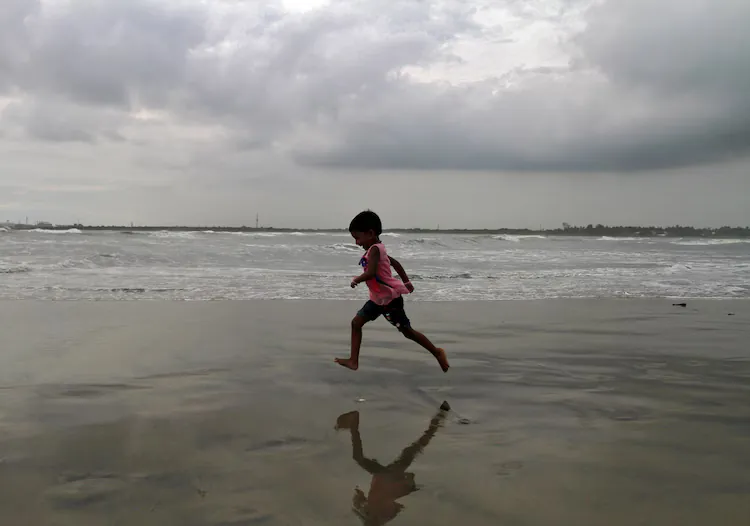
It is completely fascinating how the mechanics of our atmosphere are rewriting themselves right above us. Global warming is raising summer temperatures across the Indian subcontinent and fundamentally altering how weather systems form. As heat forces low-pressure systems to develop earlier over land, the traditional June 1 arrival of India’s southwest monsoon is fading away.
A fascinating new study published in the Journal of Agrometeorology gives us a deep look into the numbers. Lead researcher P.S. Biju of the India Meteorological Department (IMD) teamed up with scientists from Amrita Vishwa Vidyapeetham to crunch an incredible 156 years of weather data stretching from 1870 to 2025. Their findings show the monsoon onset is accelerating. Since the year 2000 alone, the monsoon arrived in May 14 times. You can read the original IMD study findings detailing the shifting monsoon onset and extreme rainfall paradox in Kerala for all the complex meteorological data.
The researchers uncovered a wild weather paradox inside Kerala. The state’s overall southwest monsoon rainfall is actually dropping at a rate of 26 centimeters per decade. But at the exact same time, the intensity of isolated extreme downpours is going up. The rain falls in shorter, heavier bursts, which significantly elevates the risk of severe flooding in the central and northern districts bordering the Western Ghats.
The current weather patterns are proving the study’s point in real time. The wind and moisture systems are already in motion, and the early advancement of the 2026 southwest monsoon into the Arabian Sea and Bay of Bengal occurred in mid-May.
The IMD is fighting back with incredible new technology to track these erratic storm systems. They are rolling out a system that relies on decades of historical data and machine learning. This involves the IMD unveiling a new AI-driven block-level forecasting system to handle volatile weather and map out the monsoon’s precise geographical arrival.
Why District-Level Climate Planning Replaces State-Wide Forecasts
The shifting precipitation patterns identified in the 156-year dataset directly trigger an urgent need for policy action. Central and northern Kerala can no longer rely on generalized weather models. The IMD researchers explicitly call for district-specific climate adaptation strategies, overhauled flood management systems, and climate-resilient agricultural planning. Because the rain is falling in concentrated bursts rather than a steady seasonal shower, local reservoirs and agricultural sowing windows require completely different management protocols to prevent rapid water runoff and protect local farming cycles.
IMD forecast for Kerala monsoon onset
This short video from the official IMD channel visually explains the current forecast and conditions for the monsoon’s early arrival over Kerala.