
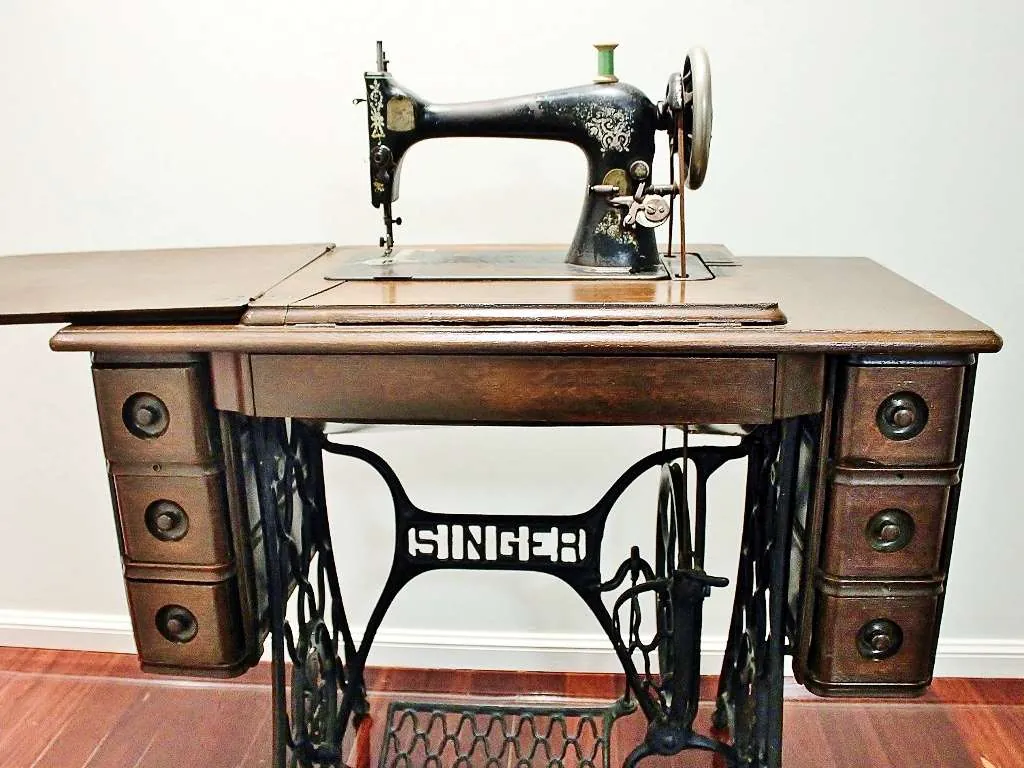
A foot-pedal sewing machine, universally known as a treadle, converts your leg power into mechanical energy to drive a sewing needle. You place both feet on a wide metal pedal situated at the base of the cabinet. By rocking your feet back and forth, you generate a continuous up-and-down motion. This physical movement powers the entire machine without a single drop of electricity. It is a completely mechanical process relying on human kinetic energy, cast-iron linkages, and a leather belt to create tight, consistent stitches.
The system relies on basic engineering principles to turn the reciprocating up-and-down motion of your feet into rotational energy. This design transformed domestic life in the nineteenth century and continues to see active use today among off-grid homesteaders, vintage restorers, and tailors in developing regions. Understanding how these machines operate requires looking under the wooden table and examining the heavy metal components that bring the needle to life.
The Core Mechanics Explained
The operation of a treadle machine is entirely visible. Unlike a modern appliance hidden inside a plastic shell, you can watch every moving part work together in real time. The process begins at the floor and moves up to the needle through a series of specific, interconnected parts.
The Treadle Pedal
This is the wide, cast-iron grate located near the floor. The operator sits in front of the machine and places both feet flat on this pedal. By alternately pressing down with the toes and then the heels, the operator creates a rocking motion. This is the sole power source for the entire sewing process.
The Pitman Arm and Crankshaft
Connected to the back of the treadle pedal is a vertical metal rod called the pitman arm. As the pedal rocks up and down, the pitman arm moves with it. The top of this arm connects to a crank. This mechanical linkage is responsible for translating your linear foot action into a circular motion, spinning a large, heavy metal flywheel mounted near the bottom of the cabinet.
The Drive Belt
According to a tutorial by Seamwork, a long leather belt loops around this large bottom flywheel. This belt stretches up through holes in the wooden tabletop and wraps around a much smaller handwheel on the right side of the actual sewing machine head. The leather belt is usually held together at its ends by a simple metal staple.
Needle and Bobbin Operation
As you pedal, the large bottom wheel turns the belt, which then spins the top handwheel. This top wheel drives the internal horizontal shafts of the machine. These shafts simultaneously force the needle bar up and down through the fabric while engaging the bobbin mechanism underneath the feed dogs. The top thread and bottom bobbin thread catch each other to lock into a straight stitch.
Mastering the Treadle Rhythm
Operating a treadle machine requires a specific physical rhythm. It is very different from simply pressing an electric foot pedal and letting a motor do the work. The movement acts similarly to a playground swing. You cannot just mash your feet down and expect the machine to go.
To start sewing, you must reach up and manually pull the top handwheel toward yourself to initiate the forward momentum. Once the wheel is moving, your feet take over to maintain that exact rhythm. You have to sync the rocking of your feet with the rotation of the wheel. If you pedal out of sync or hesitate, the heavy flywheel will stall out entirely or, worse, spin backward. A backward spin causes the thread to tangle and snap almost instantly.
Some modern hobbyists have actually modified their vintage treadle setups to avoid this stalling issue. They replace the traditional leather belt and pitman arm linkage with bicycle chains and freewheels. This adaptation allows for smoother, unidirectional pedaling, ensuring the machine never accidentally starts in reverse.
Why Modern Sewists Still Use Them
You might assume these machines are just museum pieces, but they remain highly functional tools. Their entirely mechanical nature makes them completely independent of the power grid. They operate exclusively on human kinetic energy, making them highly valuable for tailors working in areas without reliable electricity, as well as eco-conscious sewists looking for a zero-carbon hobby.
Beyond off-grid capabilities, vintage treadle machines offer extreme durability. Modern domestic sewing machines frequently rely on internal nylon or plastic gears to keep costs and weight down. Antique treadles are built entirely from cast iron and forged steel. Because there are no plastic gears to strip or slip under pressure, these machines excel at punching through heavy, stubborn materials like thick leather, denim, and heavy canvas. As long as you use a proper heavy-duty needle, the machine handles thick layers without the motor strain associated with modern consumer models.
They also provide absolute stitch control. Because the machine is powered directly by your legs, it stops the exact millisecond you stop pedaling. An electric machine often takes a stitch or two to spin down after you release the pedal. On a treadle, you can easily sew at a crawl, taking incredibly precise, stitch-by-stitch turns around tight corners or delicate appliqués.
History and Development
The technology behind the treadle did not appear overnight. Looking at historical timeline data, English inventor Thomas Saint designed a sewing device in 1790. Decades later, Elias Howe patented a highly practical lock-stitch machine in 1846. But the real breakthrough for home use happened in 1850. Isaac Merritt Singer successfully combined these prior mechanical concepts with the foot-pedal cabinet, resulting in the mass-produced treadle machine that revolutionized domestic clothing production.
Inventors continued to tweak the design throughout the late nineteenth century. Various add-ons were patented to improve the basic mechanism. For example, the Bradbury Automatic Foot Rest provided a more ergonomic posture for the operator. The Hall Treadle Attachment introduced specialized gearing between the foot pedal and the flywheel, specifically engineered to prevent the machine from accidentally starting in the wrong direction.
According to historians at Durham Museum, the industry eventually saw a transition toward smaller hand-crank machines before electric motors became the household standard. But the heavy cast-iron treadle base remained a staple in homes well into the twentieth century.
Common Upkeep and Troubleshooting
A purely mechanical, belt-driven system requires heavy and consistent upkeep. You cannot just leave a treadle in a closet for a year and expect it to run perfectly the next day.
The operator must frequently oil every moving metal component. These machines have dozens of small oiling ports across the top of the machine head and underneath the bed. The pitman arm joints and the large flywheel bearings also require regular greasing to keep the metal-on-metal friction low. If the machine feels sluggish or your legs are burning after just a few minutes of sewing, the machine usually needs oil.
The leather drive belt is the most common point of failure. Leather naturally stretches out over time with continuous tension and changes in ambient humidity. When the belt gets too loose, it slips right over the handwheel instead of turning it. Fixing a loose belt is a standard maintenance task. You use a pair of pliers to pry open the small metal staple connecting the ends of the belt. Then, you use scissors or a sharp knife to cut off a tiny fraction of an inch of the stretched leather. You punch a new hole with an awl and squeeze the metal staple back into place. This restores the tight tension needed to transfer power from the floor to the needle.
Practical Drawbacks to Keep in Mind
Maintaining the continuous rhythm required to drive the flywheel demands physical exertion. You are entirely powering a heavy cast-iron mechanism with your calves and thighs. Over long sewing sessions, this physical demand often leads to knee strain, back discomfort, and overall fatigue.
Speed is another major limitation. A human-powered treadle cannot match the raw efficiency of modern manufacturing equipment. A standard electric direct-drive motor can comfortably sew thousands of stitches every minute. A treadle operator is strictly limited by their own physical pedaling speed, making large, long-seam projects much more time-consuming.
Finally, vintage mechanical treadles lack stitch variety. They are almost universally designed for one single function: the straight stitch. They cannot produce modern zig-zags, they cannot sew decorative embroidery patterns, and they cannot produce automated buttonholes. If a project requires a stretch stitch for knit fabrics, a vintage treadle is simply not the right tool for the job.