
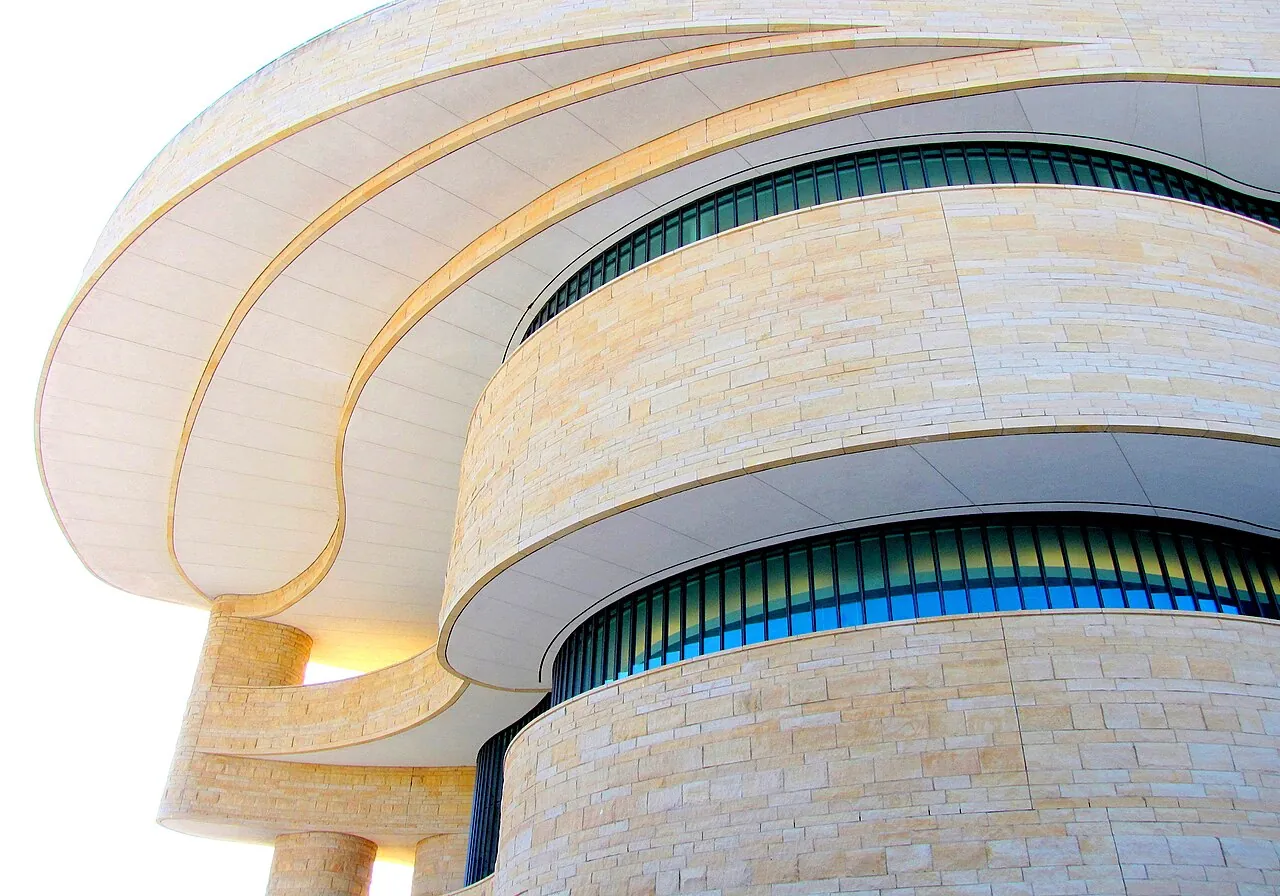
If you are looking into how the Smithsonian Institution repatriates Native American artifacts under the Native American Graves Protection and Repatriation Act (NAGPRA), the first thing to know is that NAGPRA does not legally apply to the Smithsonian. Instead, the institution returns Indigenous ancestral remains and cultural items under a separate, parallel federal statute enacted in 1989: the “National Museum of the American Indian Act” (NMAIA), codified at 20 U.S.C. 80q.
Through dedicated repatriation offices at the National Museum of Natural History (NMNH) and the “National Museum of the American Indian” (NMAI), the Smithsonian inventories its collections, consults with tribal governments, and evaluates formal return requests. When a claimant establishes lineal descent or cultural affiliation by a preponderance of the evidence, the museum deaccessions the human remains, funerary objects, sacred objects, or objects of cultural patrimony and transfers them back to the requesting community at no cost to the tribe for the museum’s administrative review.
Why is the Smithsonian exempt from NAGPRA repatriation rules?
When Congress passed NAGPRA (25 U.S.C. 3001) on November 16, 1990, lawmakers wrote an explicit exemption for the Smithsonian into the statute. According to 2024 compliance guidance from the National Park Service, the legal definitions of both a federal agency and a museum under NAGPRA exclude the Smithsonian Institution.
That exclusion exists because Congress had already created a Smithsonian-specific repatriation law a year earlier. Enacted on November 28, 1989, Public Law 101-185 established the NMAI on the National Mall, authorized the transfer of roughly 800,000 objects from the George Gustav Heye Foundation in New York, and ordered the Smithsonian to inventory and return Native American human remains and funerary objects across its collections, according to a 2024 report on the “Repatriation of Native American Remains and Cultural Items” by the Congressional Research Service (CRS).
Because the Smithsonian is organized as a federal trust instrumentality governed by its own Board of Regents rather than the Department of the Interior, its repatriation work is split between two internal departments with separate holdings and procedures:
- The Repatriation Office at the National Museum of Natural History (NMNH), which manages historical anthropological, archaeological, and physical anthropology collections acquired by the Smithsonian and transferred from the U.S. Army Medical Museum.
- The Repatriation Department at the National Museum of the American Indian (NMAI), which handles cultural items and ancestral remains from the former Heye Foundation collection and subsequent museum acquisitions.
Which Native American artifacts and remains qualify for return?
Not every Native American object in a Smithsonian display case or storage vault is eligible for statutory repatriation. When the NMAI Act first passed in 1989, it covered only human remains and funerary objects. On October 9, 1996, Congress passed the National Museum of the American Indian Act Amendments of 1996 (Public Law 104-278), adding new categories under 20 U.S.C. 80q-9a(a) to bring the Smithsonian’s obligations in line with NAGPRA, according to the CRS (2024).
Under the amended law and the 2014 NMAI Repatriation Policy, you can request repatriation only for items that fall into one of five specific legal categories:
- Human remains: the physical body of a Native American individual, including bones and teeth. Under the 2014 NMAI policy, naturally shed parts or hair freely given and woven into functional items like ropes or nets do not count as human remains, whereas human remains incorporated into cultural objects are evaluated case by case.
- Associated funerary objects: items reasonably believed to have been intentionally placed with individual human remains at the time of death or later as part of a death rite or ceremony, where the Smithsonian holds both the remains and the objects.
- Unassociated funerary objects: burial items intentionally placed with human remains during a death rite or ceremony, where the museum holds only the objects and not the corresponding human remains.
- Sacred objects: specific ceremonial items that traditional Native American religious leaders need for the present-day practice of traditional Native American religions by current adherents.
- Objects of cultural patrimony: items that have ongoing historical, traditional, or cultural importance central to the Native American group or culture itself, rather than property owned by an individual. To qualify, the object must have been inalienable, meaning no individual member had the legal or traditional authority to sell or give it away at the time it left the group, according to the University of Michigan’s 2024 NAGPRA guidance and the 2014 NMAI policy.
Secular tools, everyday clothing, beadwork, or artwork that an individual tribal member legitimately made for sale or traded away as personal property do not meet the legal threshold for cultural patrimony or sacred objects unless they also served as funerary items or ceremonial necessities.
How does a tribe or descendant file a Smithsonian repatriation claim?
To file a statutory claim under the NMAI Act, a requester must have legal standing as a direct lineal descendant of a named individual, an authorized representative of one of the federally recognized tribes in the United States, or a Native Hawaiian organization, according to the CRS (2024). If you are a tribal member researching family or community items, ask your tribe’s Tribal Historic Preservation Officer (THPO) or designated repatriation representative before contacting the museums, as statutory cultural affiliation claims must come through the tribal government unless you are proving direct lineal descent from a known ancestor.
Both NMNH and NMAI follow a five-stage verification and consultation sequence to process returns:
- Inventory and summary distribution: The museum compiles item-by-item inventories of human remains and associated funerary objects, along with collection-level summaries of unassociated funerary objects, sacred objects, and potential cultural patrimony, and sends those records to potentially affiliated tribes and Native Hawaiian organizations.
- Archival review and consultation: Tribal delegates request catalog cards, field notes, accession records, and donor histories from the NMNH or NMAI repatriation office, then meet with museum staff in Washington, D.C., at the Cultural Resources Center in Suitland, Maryland, or remotely to share oral history, traditional knowledge, and geographic context.
- Written claim submission: The lineal descendant, tribal government, or Native Hawaiian organization submits a formal written request identifying the specific catalog numbers or collection summaries being claimed and stating which of the five statutory categories applies.
- Evidence evaluation and staff report: Museum anthropologists and historians review the museum’s provenance records alongside the claimant’s evidence (weighing geographical, kinship, biological, archaeological, linguistic, folklore, and oral tradition factors) to determine whether cultural affiliation and category definitions are met by a preponderance of the evidence (meaning more likely than not).
- Formal determination, deaccessioning, and transfer: Museum leadership reviews the repatriation report and issues a formal decision letter to the claimant; once approved, the items are legally deaccessioned from the national collection, and the museum coordinates physical handover or shipping according to the community’s cultural protocols.
As of February 2024, the Smithsonian Institution still held the skeletal remains of more than 30,000 individuals across its museums, with the vast majority housed at NMNH, according to Smithsonian Magazine (2024). To speed up returns, the Smithsonian’s Human Remains Task Force issued a January 2024 report recommending that the institution conduct proactive outreach to descendant communities and streamline its internal deaccessioning policies rather than waiting for tribes to initiate every claim.
How do rules differ across museums and international borders?
Because the U.S. system divides repatriation between two separate laws and sets of institutional rules, the procedures, deadlines, and geographic eligibility vary depending on where an artifact is held.
| Feature | Smithsonian Institution (NMNH and NMAI) | Other U.S. Museums and Federal Agencies |
|---|---|---|
| Governing statute | National Museum of the American Indian Act of 1989 (20 U.S.C. 80q) and 1996 amendments | Native American Graves Protection and Repatriation Act of 1990 (25 U.S.C. 3001; 43 CFR Part 10) |
| Oversight body | Smithsonian Board of Regents and independent NMAIA Repatriation Review Committee (20 U.S.C. 80q-10) | Secretary of the Interior, National Park Service, and NAGPRA Review Committee |
| Eligible statutory claimants | Lineal descendants, federally recognized U.S. tribes, and Native Hawaiian organizations | Lineal descendants, federally recognized U.S. tribes, and Native Hawaiian organizations |
| International Indigenous returns | Permitted case by case at NMAI under its internal restitution policy | Not covered by NAGPRA statute; governed by voluntary museum policies or foreign treaties |
For federally funded non-Smithsonian museums—such as university museums, state historical societies, and municipal collections—the NAGPRA repatriation process enforces strict federal regulatory countdowns updated by the Department of the Interior in 2024. Under 43 CFR 10.9, a non-Smithsonian museum must respond to a written consultation request within 30 days, approve or reject a formal repatriation request within 90 days, submit a Notice of Intended Repatriation to `[email protected]` for publication in the Federal Register within 30 days, and issue a final repatriation statement within 90 days after the notice is published, according to the National Park Service (2024). Institutions that fail to comply face civil penalties from the Secretary of the Interior.
At the Smithsonian, those fixed 30-day and 90-day Department of the Interior deadlines do not apply, and disputes are reviewed by an independent five-member Repatriation Review Committee established under 20 U.S.C. 80q-10 rather than the Interior Secretary. Within the Smithsonian itself, international eligibility also differs by museum. While the 1989 statute only mandates returns to U.S. federally recognized tribes and Native Hawaiian groups, NMAI adopted an internal policy that allows case-by-case international returns to First Nations and Indigenous communities throughout the Western Hemisphere. In August 2021, for example, NMAI used that policy to repatriate two sacred ceremonial items to the Siksika Nation, a Blackfoot First Nation in Alberta, Canada, according to Hyperallergic (2021).
Frequently asked questions
Does the Smithsonian use DNA or destructive testing to identify remains?
No. Under the ethical principles published in the Smithsonian’s January 2024 Human Remains Task Force Report, museum staff are prohibited from using destructive analysis—such as bone sampling for ancient DNA or isotope testing—to identify descendants or descendant communities. Any destructive testing for other scientific purposes requires the prior informed consent of the verified descendants or affiliated community.
What happens if a tribe disagrees with a Smithsonian repatriation decision?
If a claimant disputes how NMNH or NMAI identifies an object, assesses cultural affiliation, or determines whether an item qualifies as sacred or cultural patrimony, the tribe can appeal to the Smithsonian’s independent Repatriation Review Committee under 20 U.S.C. 80q-10. The committee reviews the evidence from both sides and issues non-binding findings to the Secretary of the Smithsonian to resolve the disagreement.
Can state-recognized or unrecognized U.S. tribes file statutory claims?
The NMAI Act and its 1996 amendments define an eligible Indian tribe using the federal recognition standard, meaning automatic statutory standing is limited to federally recognized tribes, Native Hawaiian organizations, and individual lineal descendants, according to the 2014 NMAI policy. State-recognized or non-federally recognized groups frequently partner in coalition claims with culturally affiliated federally recognized tribes or work with NMAI under its broader discretionary stewardship guidelines.