
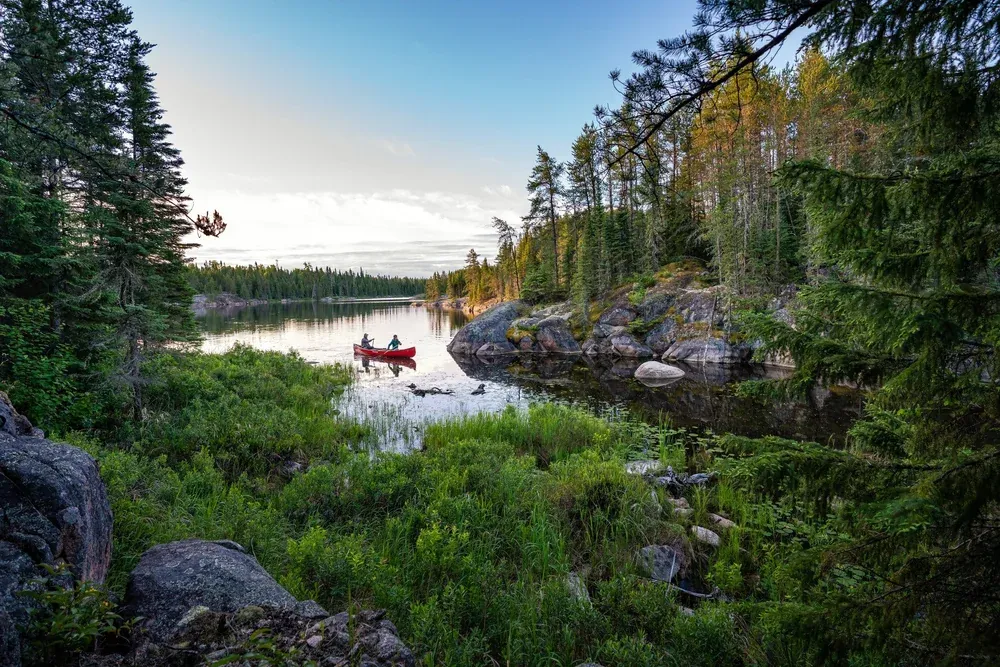
Seventeen lightning-caused wildfires are rapidly spreading through the remote Boundary Waters Canoe Area Wilderness in northeastern Minnesota. Superior National Forest rangers estimate that between 6,000 to 10,000 people were inside the 1.1-million-acre wilderness area when the emergency began. Because the region is primarily accessible by water, officials are coordinating complex boat and canoe rescue operations to get campers to safety.
Heavy smoke from the blazes is now blanketing the surrounding region. Unhealthy air quality warnings currently stretch from Minnesota through Toronto, New York, and Maine. The most intense plumes are projected to reach as far south as Washington, D.C., by midday Thursday.
Rescue Logistics and Rising Heat
The Boundary Waters Canoe Area Wilderness officially closed to the public on Tuesday to facilitate the emergency evacuations, according to a situation update published by the Associated Press. Officials reported that approximately 90% of visitors were safely evacuated by Wednesday.
The logistics are complicated by a severe regional heat wave. Temperatures in the affected Midwest areas are expected to exceed 90 degrees Fahrenheit (32 C) for the remainder of the week. Similar to the recent 43.6C heat dome in Delhi, these soaring temperatures force residents to choose between cooling their homes and keeping windows shut against the hazardous smoke.
But this specific crisis in Minnesota is part of a much broader meteorological event. Currently, more than 100 wildfires are burning across Canada. South of the border, the U.S. National Interagency Fire Center reports about 48 active large fires burning across 15 states.
Looking Ahead
The underlying driver of this extreme fire activity is a prolonged, severe drought combined with record low winter snowpack levels across North America. Dan Westervelt, an associate professor at Columbia University’s Climate School, explicitly identified the drought and extreme heat as a “perfect storm” that provides vast amounts of dry fuel for these blazes.
Because the environmental conditions remain incredibly dry, Minnesota state officials warn that these fires could continue burning throughout the entire summer until the first snowfall. The Minnesota Pollution Control Agency and the National Weather Service are maintaining widespread indoor advisories until the particulate matter clears.
The Verdict
Hazardous air quality will dominate the Midwest and Northeast through at least Thursday evening. Residents in the direct path of the smoke plumes should remain indoors with windows closed, especially those without air conditioning. Anyone with planned travel to the Superior National Forest region must cancel their itineraries until the official closure order is fully lifted.