
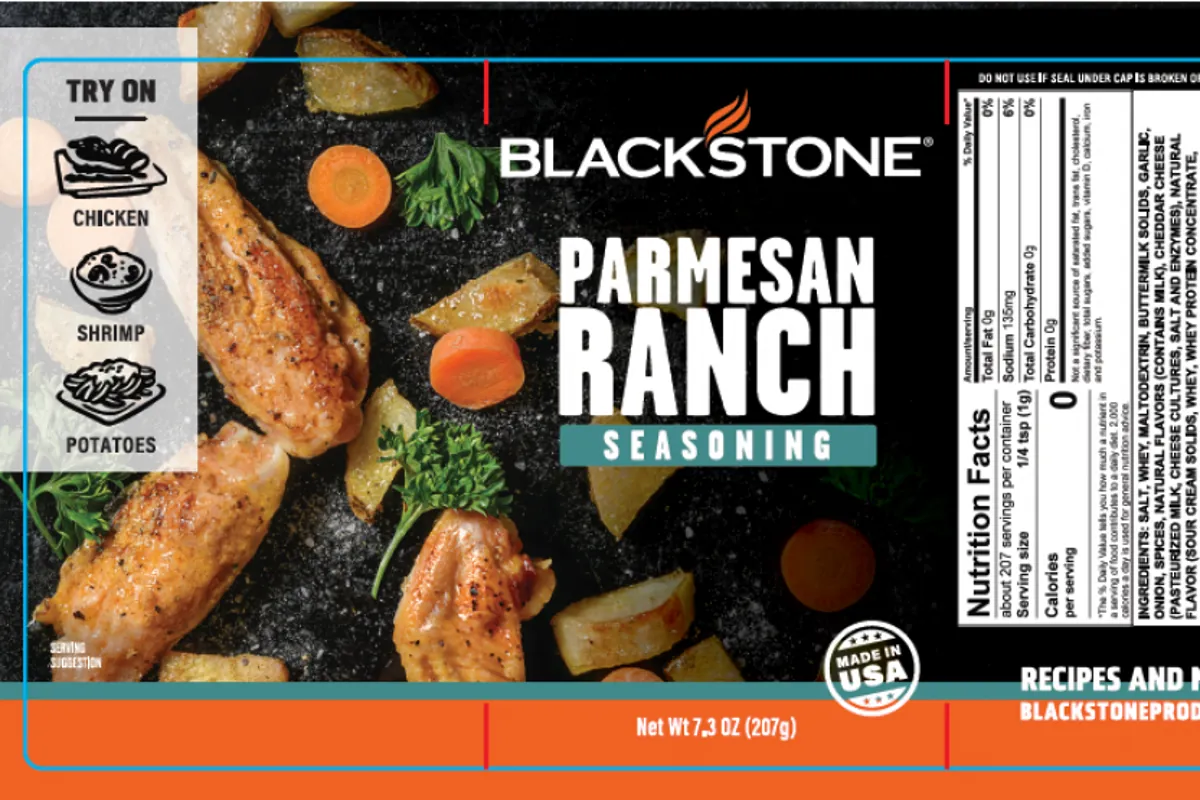
You might want to check your spice rack before firing up the grill this weekend. Blackstone Products issued an immediate recall for its Parmesan Ranch Seasoning sold at Walmart stores nationwide and online due to potential Salmonella contamination. The company took the step after discovering a base ingredient might carry the bacteria. No consumer illnesses or adverse reactions have been reported yet, but health officials are urging buyers to stop using the blend right away.
The recall affects the 7.3-ounce bottles, labeled as item number 4106. You need to look for three specific lot numbers printed on the packaging, according to the details provided in the federal safety warning: 2025-43282 with a best-by date of July 2, 2027, lot 2025-46172 expiring August 5, 2027, and lot 2026-54751 expiring August 12, 2027. If you have one of these bottles, throw it out or contact Blackstone Products at 1-888-879-4610 for a free replacement.
How a Third-Party Milk Powder Triggered the Blackstone Recall
The contamination did not actually originate on Blackstone’s own assembly lines. The company initiated the pull after receiving an emergency notification that a third-party supplier had issued an independent recall for its dry milk powder, a core ingredient mixed into the ranch seasoning. Blackstone’s internal testing had not detected the bacteria, but the supply chain warning forced the immediate retail withdrawal.
Food safety experts frequently point out that dry goods require careful handling because they do not undergo the washing or cooking processes that kill pathogens on fresh produce. Salmonella can survive for unusually long periods in low-moisture environments, meaning the bacteria can remain active in a contaminated seasoning bottle for years.
What the Cascading Ingredient Crisis Means for Your Pantry
This situation highlights a growing vulnerability in modern grocery production known as the cascading recall. When a single base ingredient like milk powder or flour gets contaminated at a large centralized facility, it forces dozens of separate consumer brands to pull their finished products off store shelves simultaneously. You might buy a seasoning blend thinking it comes from one specific company, but the raw materials often share the exact same origin point as competing brands.
The main takeaway for home cooks is to take dry-good recalls seriously. People often assume that powders and spices are immune to bacterial growth because they sit at room temperature without spoiling. Because Salmonella does not always change the smell or appearance of a spice blend, relying on the printed lot numbers is the only guaranteed way to keep your kitchen safe.