
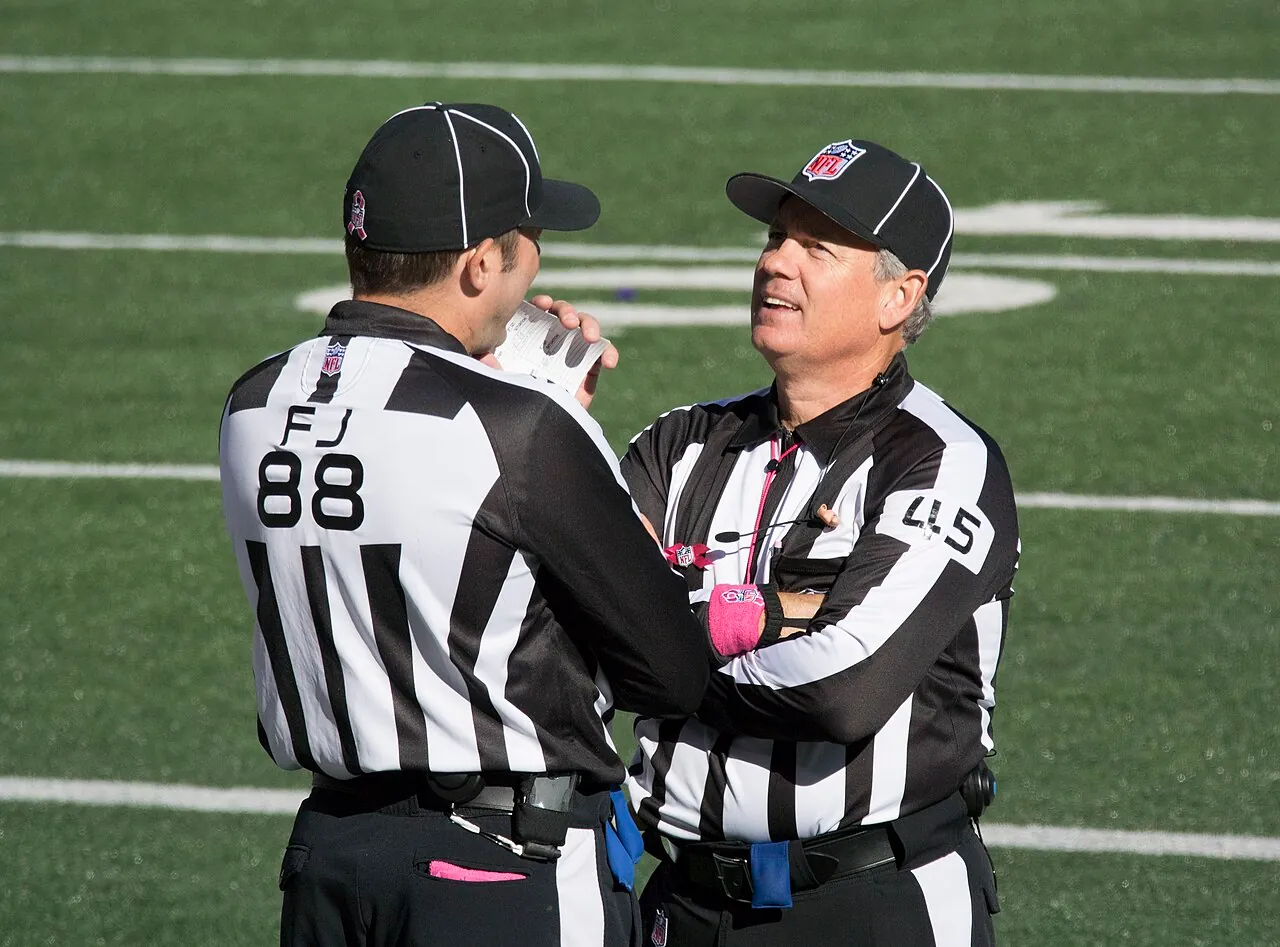
NFL unsportsmanlike conduct ejections happen automatically when a player or coach commits two qualifying fouls before or during the same game: throwing a punch or kick, using abusive language or gestures, or taunting. Officials can also eject someone on a single flagrant foul. Afterward, the league office reviews the play separately for fines or suspensions.
ContentsToggle
Which flags trigger NFL unsportsmanlike conduct ejections?
Under Rule 12, Section 4, Article 1 of the 2026 NFL Rulebook, a player faces automatic disqualification after committing two qualifying unsportsmanlike conduct fouls in the same game. Those fouls do not have to be identical, so mixing one taunting flag with one abusive-language flag still ends a player’s afternoon.
Only three subsections of Rule 12, Section 3 count toward that automatic two-foul threshold:
- Throwing a punch or forearm, or kicking at an opponent, even if the swing misses and makes no contact (Rule 12-3-1(a))
- Using abusive, threatening, or insulting language or gestures toward opponents, teammates, game officials, or league representatives (Rule 12-3-1(b))
- Baiting or taunting through words or actions that stir up ill will between teams (Rule 12-3-1(c))
Both fouls must belong to the same individual, and the count starts before kickoff. If a player draws a qualifying flag during pregame warmups, that penalty carries into the game as their first strike.
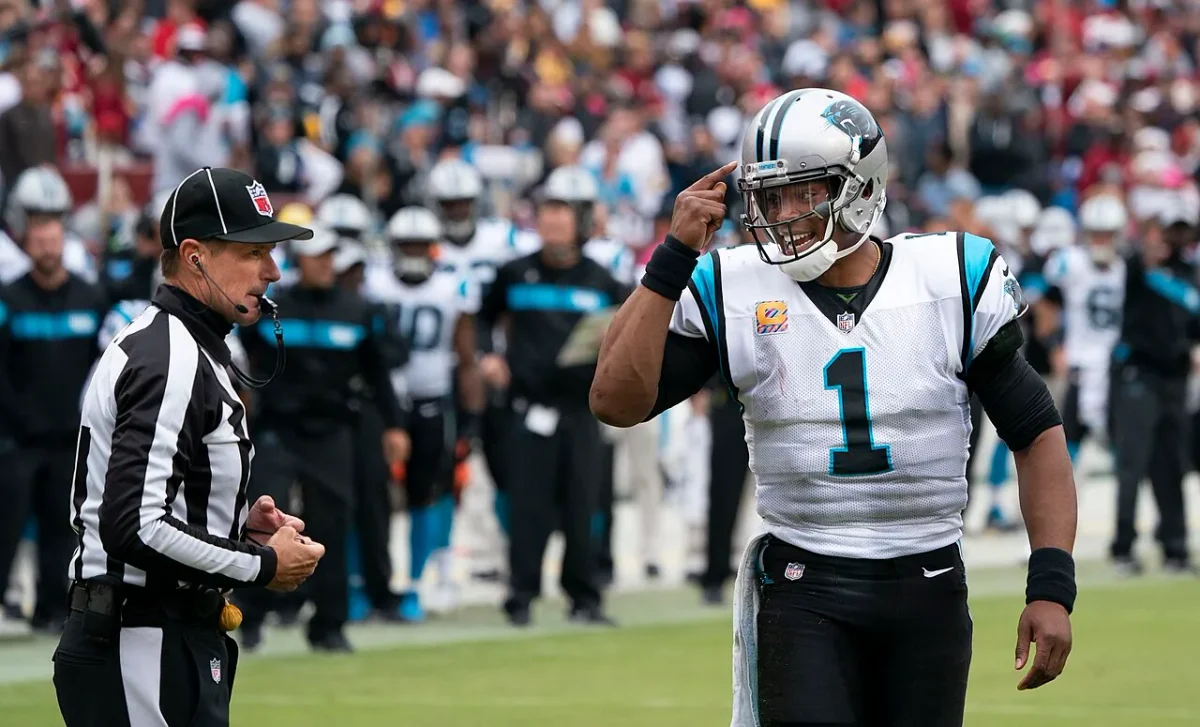
NFL owners first passed the two-foul rule as a one-year trial at the March 2016 annual meeting, then voted in March 2017 to make it permanent. In July 2017, the league added a note to Rule 12, Section 4 extending the same automatic ejection rule to head coaches, assistants, and other non-player team personnel.
New York Giants center Weston Richburg became the first player disqualified under the two-foul rule on September 25, 2016, during Week 3 of its trial season, according to officiating site Football Zebras. Since then, officials track qualifying flags individually throughout every game rather than waiting for a major brawl.
Which 15-yard penalties do not count toward an automatic ejection?
Broadcasts often leave viewers thinking any two 15-yard flags force a player to the locker room, but the rulebook draws a strict line. Rule 12, Section 3 lists more than 20 different unsportsmanlike conduct fouls, and most of them do not count toward the two-foul ejection counter.
Flags for prolonged celebrations (12-3-1(f)), using a ball or pylon as a prop (12-3-1(g)), removing a helmet in the field of play (12-3-1(h)), leaping and related fouls on kicks (12-3-1(o) and (p)), and trying to call an illegal timeout to freeze a kicker (12-3-1(v)) all cost 15 yards without triggering automatic disqualification under Rule 12, Section 4. The same goes for personal fouls under Rule 12, Section 2, such as unnecessary roughness, roughing the passer, or grabbing a facemask. A defender can draw one unnecessary roughness flag and one taunting flag in the same game and stay on the field.
That does not give anyone a free pass on a single bad act. Officials always keep the authority to eject a player or coach immediately for a single foul they judge to be flagrant, including unnecessary physical contact with an official under Rule 12-3-1(e). The NFL rulebook’s preface also clarifies that an act can be ruled flagrant even without proof of malice or an intent to injure.
Starting in 2026, on-field crews also have wider backup from the league office. Under an update to Rule 19-2 in the 2026 NFL Rulebook, league personnel can consult with on-field officials about a potential disqualification for both flagrant football acts and flagrant non-football acts, even if no referee threw a flag during live play.
What happens after an ejection and how much are the fines?
Every qualifying unsportsmanlike conduct foul carries a 15-yard penalty, and the ejection still stands even if the opposing team declines the yardage to keep the result of a big play. Once disqualified under Rule 3, Section 7, a player cannot take part in the rest of the game, must head to the dressing room within a reasonable period of time, and cannot return to the sideline in uniform or enter any non-spectator area.
Money comes into play later in the week, when the league office reviews game footage and hands out fines under its accountability rules. Under the 2026 NFL fines schedule, first-offense penalties climb quickly when a player fights or confronts an official, and repeat offenses jump even higher.
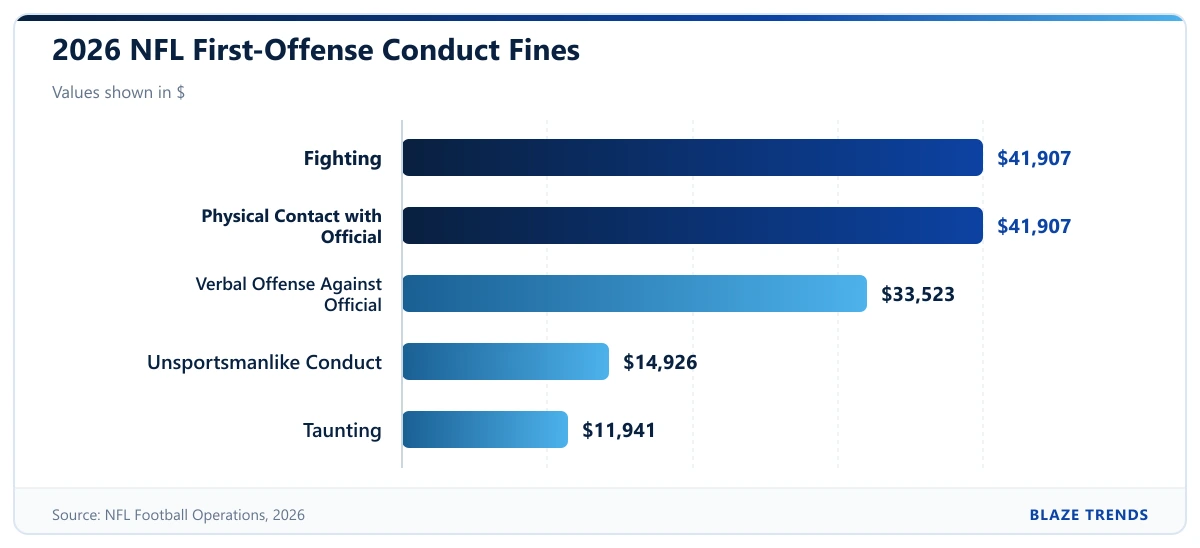
As of the 2026 NFL season, baseline fine amounts for conduct offenses are set at these exact figures (always check NFL Football Operations for annual adjustments):
- Fighting: $41,907 for a first offense, $83,815 for a second offense
- Physical contact with an official: $41,907 for a first offense, $83,815 for a second offense
- Verbal or other non-physical offense against an official: $33,523 for a first offense, $67,053 for a second offense
- Unsportsmanlike conduct: $14,926 for a first offense, $20,897 for a second offense
- Leaving the bench area during a fight: $12,537 for a first offense, $18,507 for a second offense
- Taunting: $11,941 for a first offense, $17,911 for a second offense
- Throwing a football into the stands: $8,357 for a first offense, $14,328 for a second offense
The league does not keep that money. According to NFL Football Operations, collected fines have averaged roughly $4 million per year since 2011 and are donated to the Professional Athletes Foundation to help former players in need and the NFL Foundation for health and safety programs.
How do NFL ejection rules compare to college and high school football?
Football’s three major American rulebooks share the basic idea that two unsportsmanlike conduct fouls send someone to the locker room, but they treat contact fouls and postgame discipline very differently. If you watch Saturday college games or Friday high school games alongside the NFL, a few key rules change from level to level.
| Rule detail | NFL (2026 rules) | College (2026 NCAA rules) | High school (NFHS rules) |
|---|---|---|---|
| Two-foul ejection trigger | Two violations of Rule 12-3-1(a), (b), or (c) by one player or coach | Two unsportsmanlike conduct fouls (Rule 9-2-1) by one player or coach | Two non-contact unsportsmanlike conduct fouls by any player or non-player |
| Combining with personal fouls | Not allowed for automatic ejection | Not allowed for automatic ejection | Not allowed; personal contact fouls stay separate |
| Helmet-contact / targeting ejection | No automatic targeting ejection; flagrant hits can still draw ejection | Automatic ejection on upheld targeting fouls | Disqualification only if judged flagrant |
| Postgame discipline | Separate league-office review for fines or suspensions | Suspensions only (no player fines); experimental 2026 targeting carryover tiers | State-association suspension rules (no fines) |
Under the 2026 NCAA Football Rules, Rule 9-2-1 specifically flags simulated gun violence or brandishing gestures as unsportsmanlike conduct and enforces pregame unsportsmanlike flags on the opening kickoff. College football also separates itself through targeting: under an experimental 2026 NCAA rule, a player’s first targeting ejection of the season no longer carries a first-half suspension into the next game, while a second targeting foul adds a next-game first-half suspension and a third brings a full-game suspension.
High school football draws the sharpest boundary between conduct and contact. The NFHS football officiating manual classifies unsportsmanlike conduct strictly as non-contact dead-ball fouls, meaning officials cannot pair an illegal personal contact foul with a taunting penalty to trigger an automatic disqualification.
Frequently asked questions
Does an NFL unsportsmanlike conduct ejection automatically carry a suspension?
No. An ejection removes the player or coach for the remainder of that game under Rule 3, Section 7, while a separate postgame NFL review determines whether a fine or suspension follows.
Can replay officials eject an NFL player if no flag was thrown on the field?
Yes, through consultation under the 2026 update to Rule 19-2. League personnel can now consult with on-field officials on potential disqualifications for both flagrant football and flagrant non-football acts even when no penalty was called live.
Do pregame unsportsmanlike conduct flags count toward an NFL ejection?
Yes. Rule 12, Section 4 covers qualifying unsportsmanlike conduct fouls committed before or during the game, so a warmup flag counts as the first of two strikes once kickoff begins.