
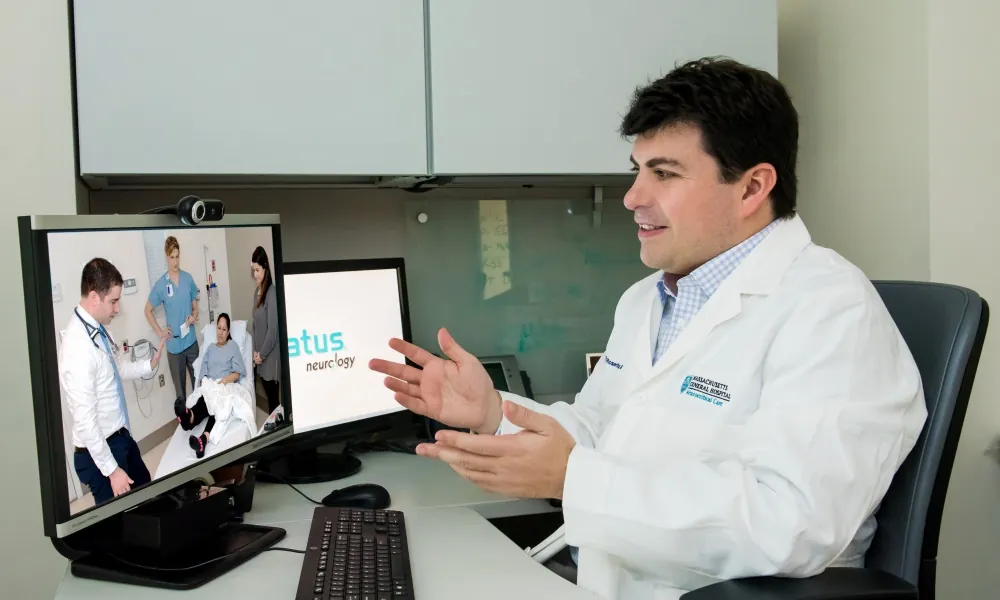
The waiting room experience is a known frustration. Doctors are buried in charts, typing furiously while trying to maintain eye contact. Artificial intelligence is actively rewriting that script. Rather than replacing human clinicians, the technology is stripping away the administrative heavy lifting that keeps doctors glued to screens.
The focus is shifting directly back to patient care. Recent presentations from leading medical professionals highlight exactly how machine learning is moving out of the theoretical space and into daily hospital operations, tackling everything from early disease detection to complex genetic science.
The Dual Lantern Approach
During a June TED Talk, Dr. Eric Rosenthal laid out the current reality of neuro-artificial intelligence. As an assistant neurologist at Massachusetts General Hospital and director of the Brigham NeuroAI Center, he described the technology as “two lanterns.” One lantern focuses on interpreting complex patient signals, while the other orchestrates the actual delivery of care.
This approach is fundamentally altering how hospitals operate, according to a detailed overview published in Forbes on Wednesday.
Five Concrete Medical Shifts
The integration of these systems breaks down into five distinct areas of medical science:
- Patient Analysis and Documentation: Systems now listen to doctor-patient conversations in real-time, instantly transcribing and organizing medical records so physicians can look at their patients instead of a monitor.
- Neurological Speech Tracking: Software is actively analyzing speech patterns and motor skills to detect the earliest signs of neurological conditions before standard physical symptoms appear.
- Advanced Medical Imaging: Algorithms scan X-rays and MRIs to spot microscopic anomalies that human eyes might miss during a long shift.
- Surgical Precision: Surgeons are using algorithmic guidance systems to navigate complex procedures with higher accuracy.
- Accelerated Drug Discovery: Researchers deploy neural networks to map genetic structures and model potential cancer treatments at previously impossible speeds.
The most immediate impact isn’t just in the lab. Industry leaders, including AdventHealth chief AI officer Robert Purinton, emphasize that the true value of these tools lies in reducing burnout. By automating the bureaucratic workload, hospitals are returning time directly to clinicians. The goal is to restore the compassionate, human-centric element of medicine that often gets lost in paperwork.
The Shift From Reactive to Predictive Treatment
For the average patient, this technological integration means the end of purely reactive medicine. Historically, a person visits a doctor only when they feel sick. By analyzing subtle vocal changes or minor motor skill degradation over time, these new systems allow physicians to identify conditions before they cause physical distress.
When a neurologist can track early warning signs of cognitive decline through a standard conversation, treatment can begin months or years earlier than traditional diagnostic methods allow. The physical result is less invasive treatment and a higher quality of life for patients managing chronic conditions.