
Doctors usually tell patients with early-stage high blood pressure to start walking briskly or prepare to take daily medication. For decades, aerobic exercise has been the default medical prescription for vascular health. But a clinical trial in China shows that an ancient, slow-moving practice requires zero gym equipment and lowers blood pressure just as effectively as a traditional cardio routine.
The Baduanjin Lowering Elevated Blood PreSsure Study, known as the BLESS trial, tracked 216 adults over the age of 40 across seven communities. Each participant had stage 1 hypertension, meaning their top-number blood pressure readings sat between 130 and 139 mm Hg. Dr. Jing Li at Beijing’s National Center for Cardiovascular Diseases directed the year-long trial.
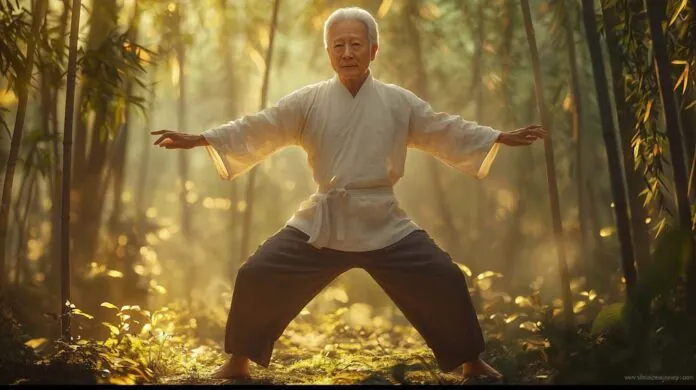
Researchers split the participants into three groups. One group practiced baduanjin five days a week, another walked briskly five days a week, and a third control group received standard advice to exercise on their own. Baduanjin, often translated as “eight pieces of brocade”, is a mind-body exercise that combines eight slow, structured postures with controlled breathing. A full session takes about 10 to 15 minutes.
To understand the long-term effects, researchers tracked the participants for a full year, as outlined in an Earth.com article detailing the BLESS study, its 52-week duration, and Dr. Krumholz’s quote on the findings. Dr. Harlan M. Krumholz of the Yale School of Medicine reviewed the data and noted the blood pressure effect size was similar to results seen in major drug trials, achieved without the cost or side effects of medication.
After three months, the baduanjin group saw their 24-hour blood pressure drop by about 3 mm Hg compared to the self-directed group. Office readings fell by roughly 5 mm Hg. These exact figures were formally documented in an American College of Cardiology summary of the BLESS trial published in JACC.
The blood pressure reductions achieved through the slow baduanjin postures were almost identical to the improvements seen in the brisk walking group. The control group, left to manage their own routines, saw almost no vascular improvement due to poor adherence. The gentle nature of the Chinese routine made it much easier for patients to stick with the program long-term, according to medical news outlet TCTMD, which verified the high patient adherence and sustainability advantages of baduanjin.
How Baduanjin Changes Standard Hypertension Prescriptions
For decades, brisk aerobic walking has been the default medical prescription for patients diagnosed with stage 1 hypertension. Doctors rely on aerobic exercise to get the heart rate up and improve vascular health. This trial proves a slow, indoor mind-body practice with zero elevated heart rate can match traditional aerobic exercise in measurable clinical efficacy.
Because baduanjin requires no equipment, gym memberships, or coaching, it directly provides community health programs with a standardized, low-cost alternative. Medical professionals can now prescribe this specific routine to patients who physically struggle with walking, experience joint pain, or refuse pharmaceutical interventions.