
To manage a first-team club in the top two divisions of almost any UEFA member nation, or to take charge of a full national team, a manager must hold the UEFA Pro Licence. It is the absolute highest coaching qualification available in European football. But earning this badge is far from a simple bureaucratic formality.
The Pro Licence operates less like a tactical workshop and more like an executive MBA for sports management. Coaches spend months locked into intensive residential blocks, continuous practical assessments, and international study trips. And because the governing bodies restrict access to keep standards high, just getting accepted into a course requires years of prerequisite work.
Here is exactly how the certification process works, what the syllabus covers, and why top-flight clubs pay massive fines when they try to bend the rules.
How The UEFA Pro Licence Works
You cannot skip steps in the European coaching ladder. Even former world-class players have to climb the ranks. The journey begins down at the grassroots level with the UEFA C Licence, before progressing to the B Licence, and eventually the A Licence. The completion of that entire prerequisite pathway routinely takes an aspiring manager between 8 and 12 years of continuous education and on-pitch application.
To even apply for the ultimate tier, candidates must currently hold a valid UEFA A Licence, according to The Football Association, and they must prove they have at least one to two years of high-performance coaching experience post-certification. National associations do offer a slight fast-track for the experience requirement if the candidate has at least five years of professional playing experience at a senior level, but the prerequisite licenses themselves are strictly mandatory.
Once accepted, the curriculum drastically shifts focus. Lower-tier licenses heavily emphasize on-pitch tactics, drill design, and player development. The Pro Licence assumes you already know how to run a training session. Instead, it targets executive management.
The syllabus covers high-performance workplace culture, sports psychology, elite performance analysis, media management, and club finance. Candidates learn via a blended structure of residential teaching blocks, online modules, and one-to-one coach development visits. Programs also generally require candidates to attend an overseas study trip to observe an international tournament, allowing them to study elite matchday operations in real time.
Depending on the specific national football association delivering the program, the course spans 12 to 18 months and requires up to 430 guided learning hours. There is no single written exam at the end. Assessors continuously evaluate candidates through modular tasks like live session observations and professional club work placements. To graduate, managers must complete a comprehensive final formative portfolio or an extensive written dissertation.
Why Teams Demand This Certification (And The Bottleneck)
The strict enforcement of the Pro Licence ensures a baseline of professional competency across Europe’s top leagues. UEFA mandates it for the top two tiers of domestic football, meaning any club harboring ambitions of promotion to a top-flight league must employ a certified manager. But finding one is harder than it looks.
National associations deliberately restrict the number of coaches who can earn the badge each year. Because the assessment relies so heavily on intensive one-on-one tutoring and live site visits by expert evaluators, cohort sizes are strictly capped. Most national FAs only admit 16 to 24 elite candidates per cycle.
This bottleneck creates intense competition for open slots. A manager might have the required A Licence and the necessary coaching experience, but still face years of rejection before securing a seat in a Pro Licence cohort.
Then there is the financial barrier. The cost of the course varies wildly depending on the geographic region administering it. The Malta Football Association charges around €6,000 for its program. Meanwhile, the FA of Wales charges a £12,000 tuition fee for candidates. For the 2026 intake, the Lithuanian Football Federation set fees at €10,000 for domestic citizens and up to €20,000 for international applicants.
When you combine those top-tier fees with the costs already spent securing the prerequisite C, B, and A licenses, a coach’s total educational investment easily ranges from €20,000 to over €40,000. That figure entirely excludes the substantial travel and accommodation expenses required for the residential blocks and overseas study trips.
Famous Examples From Major Leagues
Clubs occasionally try to bypass the regulations. They might appoint an uncertified former player as a caretaker manager and attempt to extend their stay, or they might hire an up-and-coming tactical prodigy who simply hasn’t finished their coursework yet. The governing bodies do not let this slide.
If a team fields a manager without a valid Pro Licence in a restricted competition, they face severe and compounding financial penalties. A prime example unfolded with AS Monaco in the French top flight.
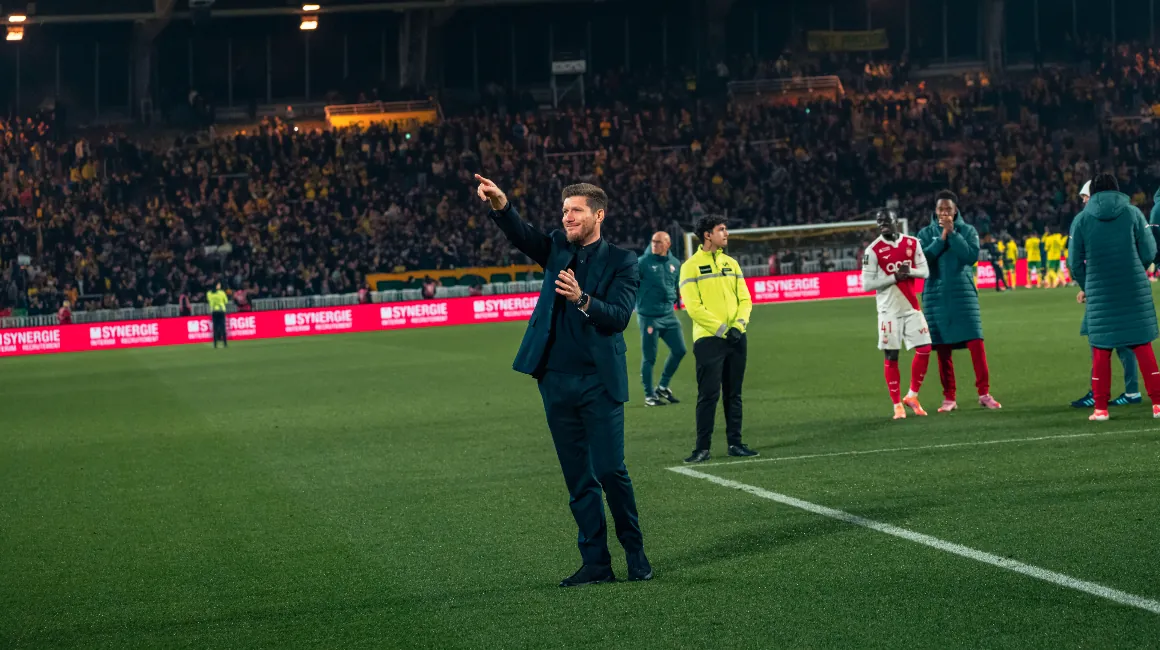
The club appointed Sébastien Pocognoli before he had officially secured his final UEFA certification. The league responded immediately. Monaco was forced to pay €25,000 for every single match he managed. By late 2025, those penalties accumulated into over €425,000 in fines, according to Extra Time Talk. This rigid enforcement mechanism prevents wealthy clubs from treating the certification as an optional suggestion.
Common Misconceptions About The Process
Casual fans often misunderstand what a coaching license actually tests. A common assumption is that an evaluator simply watches a manager run a tactical drill, grades their defensive shape, and hands them a diploma. The reality is far more administrative.
Tactics are the baseline. The Pro Licence focuses heavily on whether a candidate can handle the intense pressure of a press conference, manage a multi-million-euro departmental budget, and mediate conflicts between star players and club ownership. It is a test of organizational leadership.
Another frequent misconception involves former elite players. Fans often wonder why a legendary Champions League winner isn’t immediately allowed to manage a top club the day they retire. While UEFA does offer some fast-tracked exemptions for the experience requirements between licenses—allowing veterans with five years of senior pro experience to move through the gaps quicker—they cannot skip the courses themselves. They still must sit in the classrooms, write the dissertations, and pass the UEFA B and UEFA A courses before they can even apply for the Pro tier.
There are no shortcuts to the touchline. Every manager standing in the technical area of a top-flight European fixture spent years navigating the exact same regulatory gauntlet.