
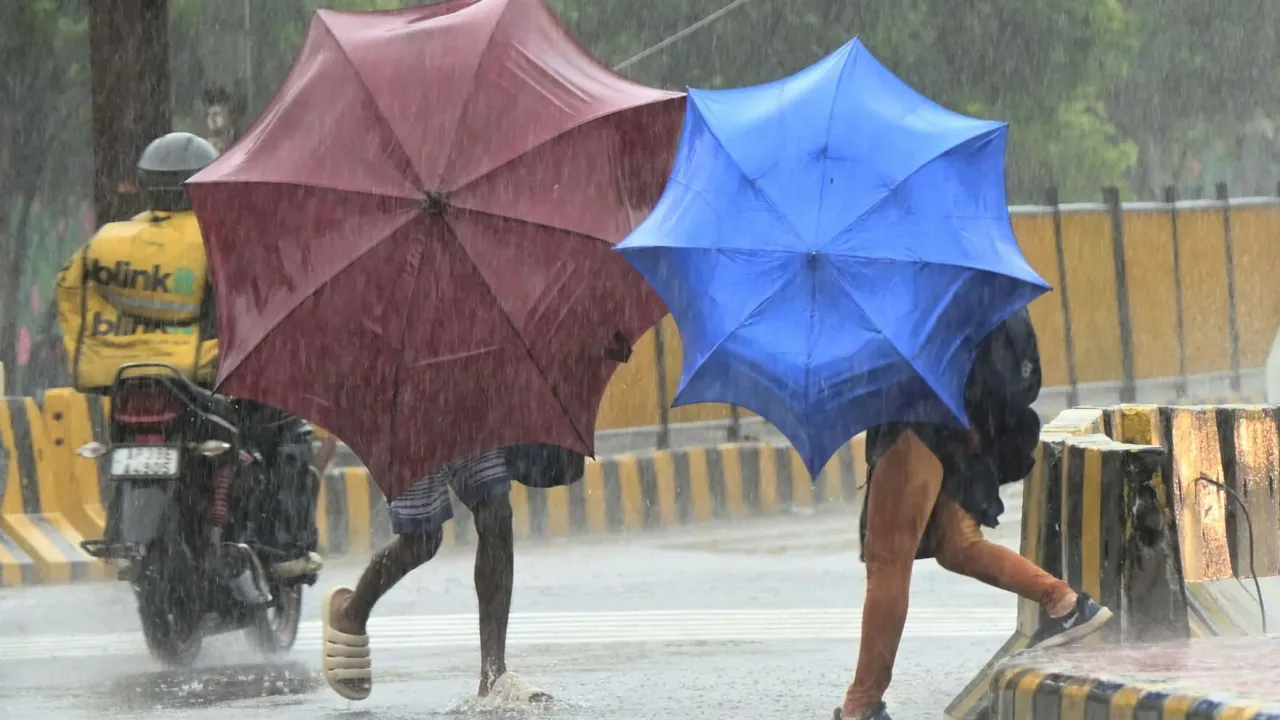
Indian authorities began evacuating low-lying coastal communities on Monday, November 2, after Severe Cyclonic Storm Murasu strengthened over the Bay of Bengal ahead of its projected landfall in Andhra Pradesh late Monday night or early Tuesday morning. Prakhar Jain, managing director of the Andhra Pradesh State Disaster Management Authority, told Reuters on Monday that officials had already evacuated around 2,000 residents and planned to move about 30,000 people in total as evacuations continued.
The mass relocations mark a sharp escalation since Cyclonic Storm Murasu formed over the Bay of Bengal on Sunday. According to an India Meteorological Department (IMD) bulletin issued at 2:30 a.m. IST on Monday and reported by LiveMint, the system moved northwestward at 20 km/h and intensified into a severe cyclonic storm over the west-central and adjoining southwest Bay of Bengal. At that time, the storm center sat near Latitude 13.6°N and Longitude 82.5°E, roughly 260 kilometers east-northeast of Chennai, 290 kilometers east-southeast of Nellore, and 330 kilometers southeast of Ongole.
Forecasters expect the system to cross the southern Andhra Pradesh coast between Nellore and Narsapur, close to Ongole in Prakasam district, between 11:30 p.m. IST on Monday, November 2, and 4:00 a.m. IST on Tuesday, November 3. At landfall, the IMD projects sustained wind speeds of 100 to 110 km/h, with gusts reaching 120 km/h. While most outlets citing the IMD bulletin place landfall within that overnight window, a summary from The Indian Express referenced landfall by late November 3 even as its main report placed the crossing in the early hours of Tuesday.
Severe Cyclonic Storm Murasu Path and Warnings
The IMD issued a red warning for coastal Andhra Pradesh and adjoining northern Tamil Nadu, forecasting extremely heavy rainfall and a storm surge of 1 to 1.5 meters above astronomical tide that could inundate low-lying coastal pockets. Outer rainbands reached northern coastal Andhra Pradesh on Monday morning. Data from the Andhra Pradesh Directorate of Economics and Statistics reported by The Hindu showed Kakinada (Rural) mandal recorded 51.75 millimeters of rain between 8:30 a.m. and noon on Monday, while Ongole remained dry as of 10:00 a.m.
For residents along the southeastern coast, the storm has already disrupted daily life and travel:
- Schools were closed on Monday, November 2, in Chennai in Tamil Nadu and across Palnadu district in Andhra Pradesh.
- Fishermen in Andhra Pradesh have been advised to stay in port until Wednesday, November 4.
- Emergency helplines 112 and 1070 have been activated in Andhra Pradesh as six National Disaster Response Force (NDRF) teams and seven State Disaster Response Force (SDRF) teams deployed to coastal districts.
Emergency Preparations Across Three States
Andhra Pradesh Chief Minister N. Chandrababu Naidu canceled his scheduled Monday visit to New Delhi to oversee disaster operations, directing state departments to pre-position rescue equipment and shift residents from unsafe structures. According to state health figures cited by Wikipedia, authorities in Andhra Pradesh have reported setting up 116 relief centers with 13,165 emergency beds, deploying 1,688 medical teams and 1,454 ambulances, and transferring 493 of the 6,870 pregnant women due between November 1 and November 10 to nearby health centers.
Farther north in Odisha, Chief Minister Mohan Charan Majhi and Revenue and Disaster Management Minister Suresh Pujari held a review meeting at the State Emergency Operation Centre in Bhubaneswar alongside Additional Chief Secretary Arabinda Padhee, IMD Bhubaneswar Director Manorama Mohanty, and Special Relief Commissioner Rajesh P. Patil. Odisha placed southern districts including Ganjam, Gajapati, Kandhamal, Koraput, Nabarangpur, and Malkangiri on high alert. In Nabarangpur, officials canceled government employees’ leave until November 5, and engineers at the Balimela reservoir opened one radial gate and two sluice gates to release about 6,000 cusecs of water ahead of heavy rain.
Second Cyclone on India’s East Coast in Four Days
Murasu—a name proposed by India under the North Indian Ocean cyclone naming system that means “war drum” in Tamil—originated as a low-pressure area over the Andaman Sea on October 29. It is the second cyclone to strike Andhra Pradesh in less than a week. Four days earlier, on October 28, Cyclone Arnab made landfall in the state with winds of up to 150 km/h, killing six people and damaging dozens of homes and agricultural fields, according to Reuters and The Indian Express.
Following its crossing near Ongole early Tuesday, the IMD expects Murasu to lose strength over land and weaken into a depression by Wednesday, November 4.