
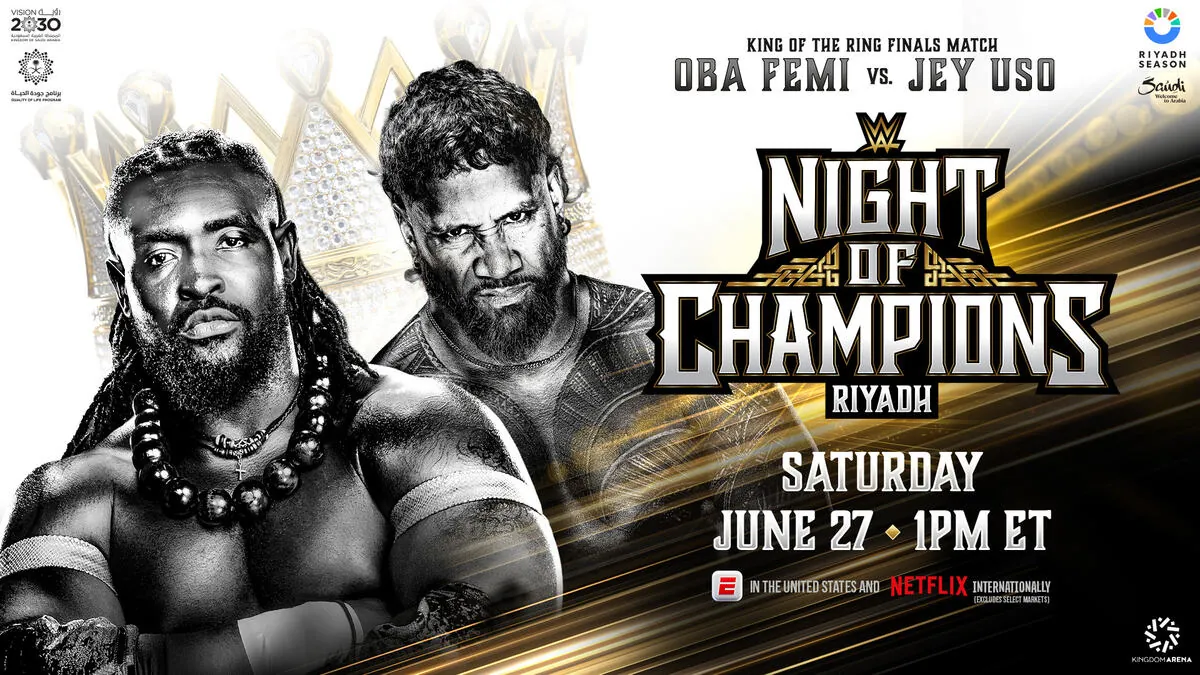
The WWE King of the Ring is a single-elimination professional wrestling tournament where 8 to 16 competitors wrestle through a bracket to win a world championship match or a regal crown. Management uses this format to test potential main-event stars and create new storylines. Don Muraco won the inaugural event on July 8, 1985. The tournament structure forces wrestlers to compete in multiple matches over a short period of time.
Wrestlers advance by winning their matches via pinfall, submission, count-out, or disqualification. The winner of the final match officially becomes the King of the Ring. The rules and scheduling of this tournament have changed heavily over the last four decades. Sometimes the entire bracket plays out over a month of weekly television. Other times, WWE holds the final rounds on a dedicated weekend broadcast. The format tests a wrestler’s endurance and crowd appeal.
How The King of the Ring Format Works
At its core, the King of the Ring relies on a standard single-elimination bracket. WWE typically selects 8 or 16 male wrestlers to compete. The tournament starts with first-round matches. The winners advance to the quarterfinals, then the semifinals, and finally the concluding championship bout. Losing a single match immediately removes a wrestler from the competition.
WWE occasionally alters the bracket structure to fit television schedules. For the 2026 tournament, WWE booked Fatal Four-Way matches in the first round instead of standard one-on-one bouts. The four winners of these multi-man matches bypassed the quarterfinals completely. They advanced directly to the semifinals. This abbreviated schedule allowed the company to finish the tournament faster.
The brand split also affects how the bracket operates. When WWE separates its roster into distinct Raw and SmackDown brands, the tournament must adapt. Some years feature a bracket entirely composed of wrestlers from one brand. The 2006 tournament only included SmackDown competitors. In other years, WWE builds two separate brackets for Raw and SmackDown. The winner of the Raw side wrestles the winner of the SmackDown side in an inter-brand final. In 2025, WWE mixed the brackets, resulting in two wrestlers from the same brand meeting in the final.
The rules inside the ring remain standard professional wrestling rules. Competitors must win by pinfall or submission inside the ring. Count-outs and disqualifications also eliminate competitors. If a match ends in a time-limit draw or a double disqualification, WWE normally eliminates both wrestlers from the bracket. This occasionally gives another competitor a free pass to the next round. Management uses these draw scenarios to protect popular wrestlers from taking a clean loss.
Wrestlers often suffer fatigue as the tournament progresses. Competing in two or three matches in a single week forces competitors to alter their in-ring strategy. A wrestler might win a quarterfinal match but sustain a storyline injury that hampers them in the semifinals. This creates a built-in narrative hook for the fans. The bracket format inherently builds anticipation because fans can see the potential final matchups weeks in advance.
Why Wrestlers Compete For The Crown
Winning the tournament historically provides a wrestler with a tangible championship opportunity or a completely new character direction. For most of the tournament’s history, WWE offered no physical prize beyond a trophy and the title of “King”. The winner simply gained bragging rights and a staged coronation ceremony. The winner sits on a throne placed on the entrance stage while an announcer formally crowns them.
That changed in 2002. WWE awarded the 2002 winner, Brock Lesnar, a guaranteed match for the WWE Championship at SummerSlam. Lesnar used this prize to defeat The Rock and win the title. Management revived this specific prize rule for the 2024 and 2026 tournaments. Winners now routinely receive a world championship match at WWE’s premier summer event.
The most common reason a wrestler wants to win is the gimmick change. A long-standing company tradition involves the winner adopting a regal persona immediately following their victory. The wrestler receives a physical crown, a scepter, and a heavy cape. They demand other wrestlers bow to them and refer to them as royalty. This gives a stale character an immediate refresh.
Harley Race became “King Harley Race” after his win. Randy Savage adopted the “Macho King” moniker, though he won his crown by defeating another king in a regular match. Booker T leaned heavily into this tradition and became “King Booker”. More recently, Bad News Barrett became “King Barrett”. These character changes give wrestlers fresh storylines and new ways to anger the audience. A mid-card wrestler can use the obnoxious royal gimmick to secure more television time.
The physical props of the crown and scepter often become weapons in future matches. A villainous king will frequently use the heavy metal scepter to hit opponents behind the referee’s back. The cape and crown also provide excellent visual merchandise opportunities. Fans buy replica crowns, boosting the wrestler’s merchandise sales.
Famous Examples from Major Tournaments
The King of the Ring has gone through several distinct eras of broadcasting and prestige. The tournament began during the house show era from 1985 to 1991. WWE held these early tournaments at non-televised local events in the Northeast United States. The goal was simply to boost local arena attendance. The 1985 event in Massachusetts featured Don Muraco defeating The Iron Sheik in the finals. Bret Hart won the final house show tournament in 1991.
In 1993, management turned the tournament into an annual pay-per-view broadcast. The King of the Ring ran every June. Fans considered it one of the company’s biggest events alongside WrestleMania, Royal Rumble, SummerSlam, and Survivor Series. Interestingly, it was the only major event of that era never hosted at Madison Square Garden. Bret Hart won the 1993 edition, making him the only two-time winner in history.
During the 1993 event, Bret Hart defeated Razor Ramon, Mr. Perfect, and Bam Bam Bigelow in a single night to win the crown. This grueling performance cemented his reputation as one of the best technical wrestlers in the world. The 1995 event saw Mabel win, which fans widely regard as one of the worst booking decisions in the tournament’s history. The crowd loudly rejected his victory.
The 1996 tournament produced the most famous outcome. “Stone Cold” Steve Austin won the final match and grabbed the microphone for his coronation speech. He mocked his opponent’s religious beliefs and coined the “Austin 3:16” catchphrase. This single unscripted speech launched Austin into superstardom. It remains the most successful use of the tournament in company history.
The modern era began after WWE retired the standalone pay-per-view in 2002. Management held the tournament sporadically on regular episodes of Raw and SmackDown. The company ran an inter-brand tournament on Raw in 2008 and 2010. Recently, the company revived the concept as a premium live event. WWE now combines the men’s bracket with the women’s bracket and hosts the final matches in international stadiums, such as venues in Saudi Arabia.
Common Misconceptions
Fans often misunderstand the historical rules of the tournament. A common misconception is that every King of the Ring winner automatically gets a world title match. This is false. Only a handful of winners received a guaranteed championship match. Owen Hart, Mabel, and Kurt Angle all challenged for a world title at SummerSlam after winning the crown, but only Brock Lesnar in 2002 received the shot as an official right. The 2024 and 2026 tournaments brought this specific stipulation back. Most historical winners simply received the crown and nothing else.
Another persistent myth is that the entire tournament happens on one night. While the early house show events did feature wrestlers competing multiple times in one evening, the television era changed this. During the 1990s, WWE aired the first-round and quarterfinal matches on weekly television programs. Only the semifinals and the final match took place on the Sunday pay-per-view broadcast. Today, the tournament spans several weeks of programming.
People also assume the tournament is strictly a men’s competition. WWE actually introduced a parallel women’s tournament in 2021. The company originally called it the Queen’s Crown. In 2024, management officially rebranded it as the Queen of the Ring. The women’s tournament uses the exact same single-elimination bracket format and carries the exact same world championship stakes as the men’s version.
Some viewers think winning the crown guarantees a successful career. Several wrestlers won the tournament and completely failed to connect with the audience. Mabel won in 1995 and Billy Gunn won in 1999. Neither man translated their tournament victory into a permanent spot in the main event. The crown gives a wrestler a temporary spotlight, but the wrestler must figure out how to keep the crowd interested.
Frequently Asked Questions
What is the prize for winning the WWE King of the Ring?
Historically, the only prize was the title of “King” and a royal coronation ceremony. Wrestlers used this to change their characters. During the 2002, 2024, and 2026 tournaments, WWE officially awarded the winner a guaranteed world championship match at the SummerSlam event.
Who won the very first WWE King of the Ring?
Don Muraco won the inaugural tournament on July 8, 1985. He defeated The Iron Sheik in the final match in Foxborough, Massachusetts.
Has anyone won the King of the Ring more than once?
Yes. Bret Hart is the only competitor to win the tournament twice. He won a non-televised tournament in 1991 and won the inaugural pay-per-view broadcast tournament in 1993.
When did women start competing in this format?
WWE launched a parallel women’s tournament in 2021 under the name “Queen’s Crown”. Management rebranded it as the “Queen of the Ring” in 2024. The women compete in the same single-elimination bracket format as the men.