
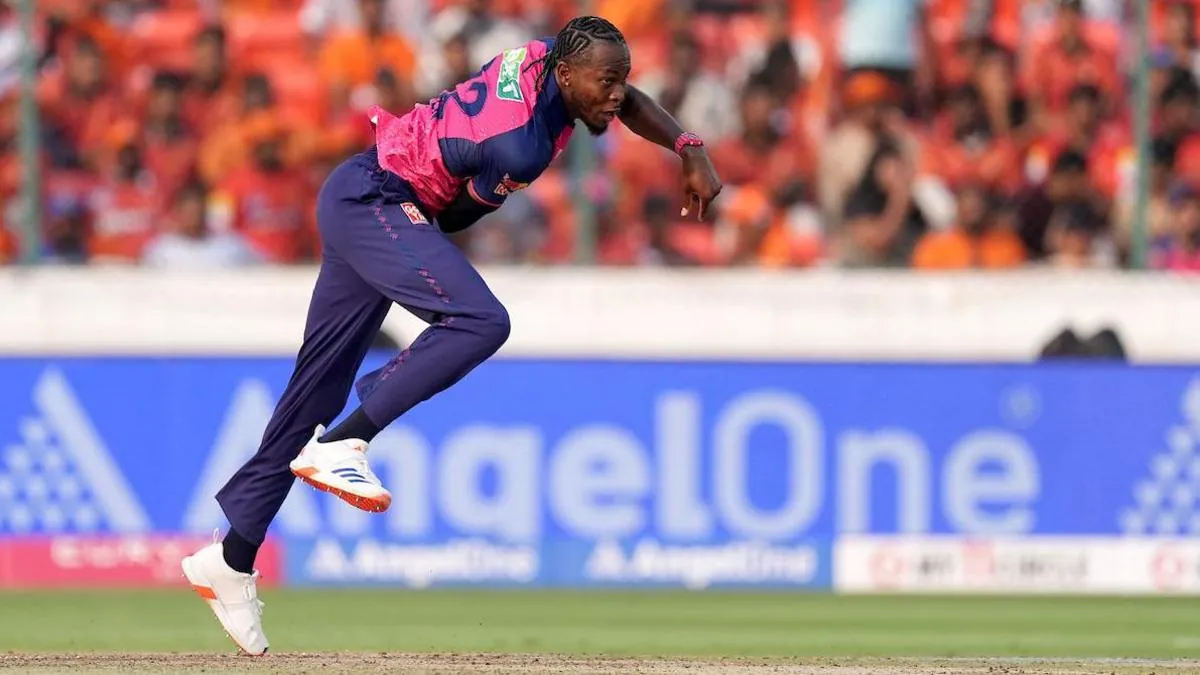
In a post-game interview following a high-stakes playoff match in the Indian Premier League, fast bowler Jofra Archer was asked if he had a secret plan for bowling to his 15-year-old teammate, Vaibhav Sooryavanshi, during practice. Archer simply smiled and replied, “Sometimes” when asked if he even bowls to him. The interviewer pressed him on exactly where he bowls to the teenager. Archer laughed and said, “I’ll tell you after the IPL.”
This brief exchange instantly took over social media. Fans loved the veteran bowler protecting the young hitter’s secrets. But to understand why the question was asked in the first place, you have to look at the mechanics of the game and what had just happened on the field.
How Cricket Matchups Work
The sport is played on a 22-yard rectangular strip of dirt located in the center of a large oval grass field. The bowler runs up to one end of the dirt strip and throws the ball at speeds often exceeding 90 miles per hour. The primary goal is to hit the three wooden stumps stuck in the ground behind the batter. The batter stands at the opposite end and uses a flat wooden bat to defend those stumps. If they hit the ball into the open grass field, they can physically run between the ends of the pitch to score runs.
In the modern Twenty20 format of the game, each team is only given 120 legal deliveries to score as many runs as possible. Because the number of balls is strictly limited, batters have very little time to get settled. They must score quickly. This format uses a metric called strike rate to measure efficiency. Strike rate calculates how many runs a batter scores per 100 balls faced. A strike rate around 130 is usually considered standard for professional play. During this specific game, the young teenager operated at a strike rate well over 300. He averaged more than three runs for every single ball thrown his way.
Professional teams spend countless hours analyzing these matchups to prevent that exact outcome. They use video software to find exact zones where a batter struggles to hit the ball. If a player cannot hit a ball thrown short and close to their body, opposing teams will instruct their fast bowlers to target that specific area repeatedly.
In this specific playoff game, known as the Eliminator, the Rajasthan Royals played the Sunrisers Hyderabad. An Eliminator is exactly what it sounds like. The losing team goes home immediately, while the winning team advances to the next round of the playoffs. The pressure is incredibly high.
Rajasthan batted first. Sooryavanshi opened the batting for Rajasthan and scored nearly 100 runs off just 29 deliveries. He hit 12 balls over the boundary rope without them bouncing. Each of these hits scores six runs, making it the cricket equivalent of a home run. This performance forced the opposing captain to constantly change his field placements and have long discussions with his bowlers. Nobody could find a weakness.
Why Teams Use The Keep Quiet Strategy
Sports teams hate giving away tactical information. If a player reveals a teammate’s weakness in an interview, every other team in the league will immediately use that information in the next game.
Archer plays on the same team as Sooryavanshi. They practice against each other in the batting nets. The “nets” are enclosed practice pitches where batters face their own team’s bowlers. The netting stops the ball, allowing batters to hit as hard as they want without needing fielders to chase it down.
Teams spend hours in these nets every single day. Bowlers run in and bowl just as fast as they would in a real match, but the pressure of a live crowd is removed. This environment is where teammates learn everything about each other’s games. A bowler will quickly figure out if a batter steps away from a fast ball aimed at their head, or if they struggle to hit a slow ball aimed at their toes.
Because Archer is one of the fastest and most skilled bowlers in the world, reporters logically assumed he had figured out the teenager’s weak spots during these practice sessions. But according to a post-match breakdown by the Times of India, Archer refused to expose any flaws, giving the viral response instead.
He kept the focus on the benefits of the teenager’s high scoring. “It was very exciting. The more runs he scores, the more runs we have to defend. He can get 150,” Archer added. Having a teammate who scores heavily takes the pressure off the bowlers. When batters put a huge number of runs on the board, the opposing team has to take wild risks to catch up.
This setup is especially important given the financial structure of the league. Franchises spend millions of dollars building their rosters in public auctions. Teams bid against each other for the best talent. For example, Rajasthan paid a premium to acquire their fast bowling leader, and according to NDTV Sports, Archer’s auction price was set at Rs 12.5 crore. When a high-priced bowler has a large run total to defend, they can bowl with much more freedom and aggression.
Famous Examples of Youth Dominance from Major Games
Seeing a 15-year-old dominate adult professional athletes is incredibly rare. The physical strength required to hit a heavy leather cricket ball over a 70-meter boundary usually takes years of adult muscle development. Most players at that age are still playing in junior leagues against their peers.
During this specific tournament season, Sooryavanshi routinely cleared the boundary ropes against fully grown international fast bowlers. He broke a major historical record previously held by West Indian power-hitter Chris Gayle. Gayle set the mark for the most sixes in a single season back in 2012. He was known for his sheer physical size and power. But a verified Times of India report confirms that the young teenager surpassed that milestone by reaching a total in excess of 60 sixes for the year.
The teenager’s success comes from a simple mental approach rather than just physical bulk. His teammate Dhruv Jurel explained to reporters that the young batter follows a basic rule: “watch the ball, not the bowler.”
Instead of getting intimidated by the fame or speed of the person throwing the ball, he simply reacts to where the ball is placed. Many young players get nervous when facing a bowler they grew up watching on television. By ignoring the bowler entirely and only focusing on the leather ball, the batter removes the mental pressure from the equation.
This fearless strategy resulted in a team total of well over 200 runs for Rajasthan. They won the game comfortably by a margin approaching 50 runs.
Common Misconceptions About Fast Bowling
A lot of casual fans think fast bowling is just about throwing the ball as hard as possible. The reality is much more complicated. A top-tier fast bowler uses variations in speed, swing, and seam to confuse the batter.
Fast bowlers achieve this swing by shining one side of the leather ball while letting the other side get rough and scuffed. As the ball travels through the air at high speed, the difference in air friction between the smooth side and the rough side causes the ball to drift sideways. A batter might think the ball is heading straight for their bat, only for it to curve at the very last fraction of a second and hit the wooden stumps instead. Seam refers to the ball changing direction abruptly after it hits the ground. The ball has a raised stitched seam running around its equator. If the bowler lands the ball perfectly on that raised seam, the ball can aggressively dart left or right off the dirt.
In the second half of this playoff game, Sunrisers Hyderabad had to chase the huge target set by Rajasthan. They had a lineup full of aggressive international batters. But raw pace combined with accuracy proved too difficult to handle.
Archer took the ball and immediately broke the game open during the most difficult phase for a bowler. This phase is called the powerplay. The powerplay consists of the first six overs of the innings. During these six overs, the rules heavily restrict where fielders can stand. Most of the team must stay inside a close inner circle, leaving the deep outfield completely empty. This is designed to let batters score boundaries easily and make the game entertaining.
Taking wickets during the powerplay requires immense skill because any slight mistake usually results in the ball going to the boundary for four runs. According to a match review by Daily Pioneer, Archer removed the destructive top-order trio of Abhishek Sharma, Travis Head, and Ishan Kishan inside this exact restricted period.
By getting those three players out early, he effectively ended the opponent’s chances of winning the game. You cannot chase a large total if your best hitters are sitting in the dugout before the seventh over even begins.
He finished his spell with three crucial wickets. His performance proved that while power hitting gets the highlight clips and the social media attention, elite fast bowling is still required to actually win playoff games. Opposing team owners even recognized the quality of the play. Sunrisers Hyderabad co-owner Kavya Maran was seen shaking hands with the 15-year-old batter at the boundary ropes after her team lost the match.
Frequently Asked Questions
Did Vaibhav Sooryavanshi score a century in this match?
No. He scored nearly 100 runs but was caught out just short of the milestone. He mistimed a shot after spotting a fielder and missed what would have been a record-breaking century.
Who holds the record for the most sixes in a single season?
As of this game, 15-year-old Vaibhav Sooryavanshi holds the all-time record. He broke the previous mark set by Chris Gayle over a decade prior.
How did Sunrisers Hyderabad perform in the run chase?
They failed to reach the target. They suffered an early collapse against the fast bowling attack and were entirely bowled out before completing their allotted 20 overs, ending their tournament run.