
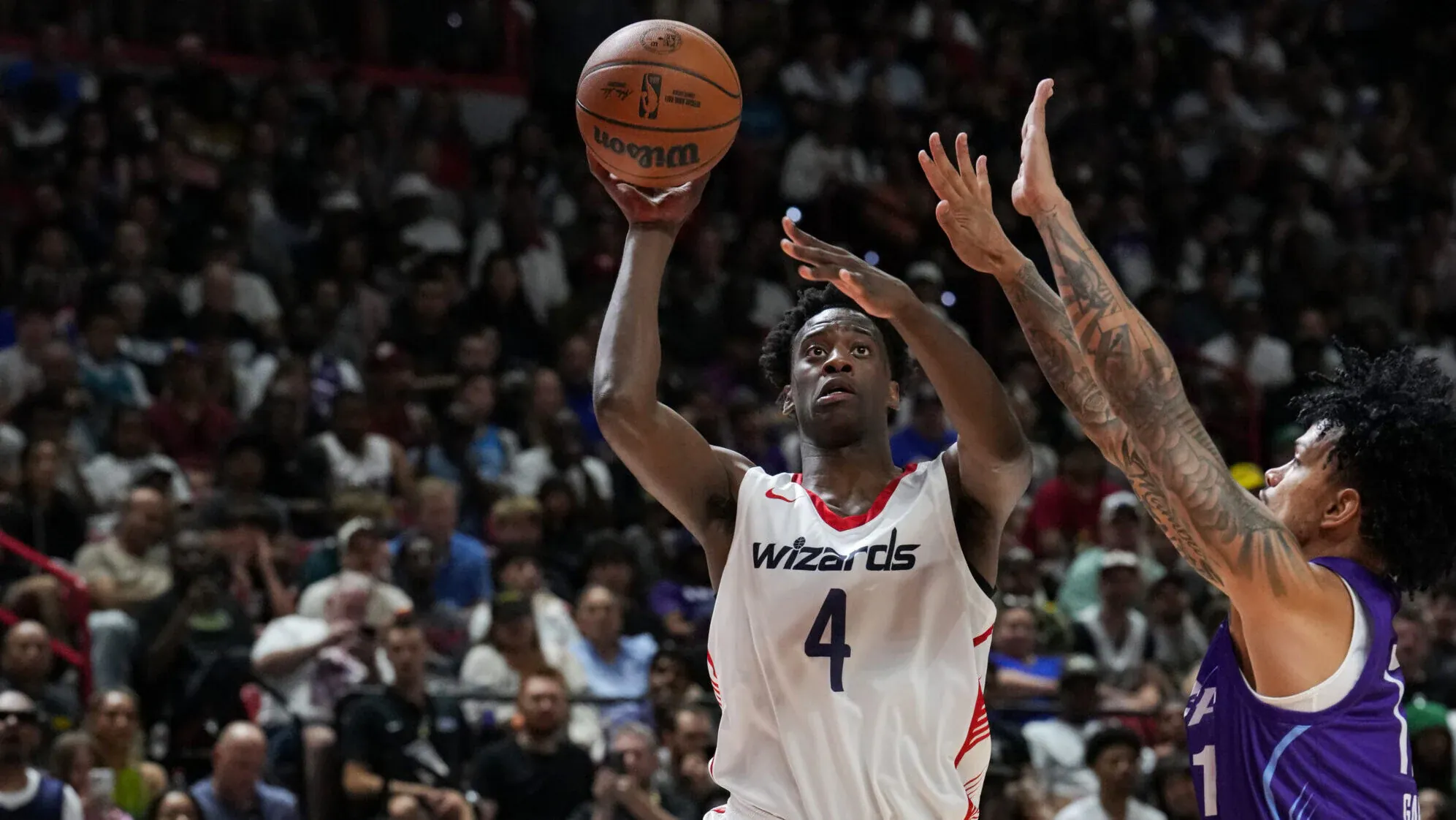
For a lottery pick, the NBA Summer League means absolutely nothing financially. Their rookie salaries are strictly locked in place the moment their name is called. But for second-round picks and undrafted players, these exhibition games are a high-stakes financial audition. They are fighting for Exhibit 10 deals, two-way contracts, and standard minimum salaries.
How Rookie Contracts Work
The National Basketball Association uses a predetermined scale set in its Collective Bargaining Agreement. First-round draft picks cannot negotiate their contracts. Their pay rate is tied directly to their draft slot, according to a detailed breakdown by Sanne Privé. A dominant or terrible performance in July changes nothing about their initial payout.
Things get complicated for the rest of the roster. Second-round picks and undrafted free agents rely on the Summer League to secure an Exhibit 10 contract. This is a one-year, non-guaranteed agreement at the league minimum. It gets a player into the team’s training camp.
These contracts include an optional bonus that routinely nears the six-figure mark. To get that money, a player must be waived before the regular season begins and then spend around two months playing for the franchise’s G League affiliate, based on the financial structures of Exhibit 10 contracts. Teams have until the final day of the offseason to convert that Exhibit 10 into a two-way contract. That simple paperwork change turns the bonus into a guaranteed salary.
Why Teams Use This / When It Applies
Front offices and coaches use the Summer League to evaluate fringe players. They need to figure out who belongs at the backend of the regular-season roster. Evaluators watch these games closely to see which prospects can adapt to the speed of professional basketball.
The financial reality for unsigned prospects is incredibly tough. Guys playing in the Summer League without a contract do not draw a standard salary. They typically receive covered travel expenses and a modest daily per diem for meals, based on historical data collected by researchers at Samford University. They are essentially playing for a job on an empty wallet.
Famous Examples from Major Games
Players constantly flip these exhibition spots into real NBA careers. Following the 2025 Summer League, Curtis Jones successfully converted an Exhibit 10 deal with the Denver Nuggets into a two-way contract. That allowed him to split his playing time between the main Denver roster and their G League affiliate without getting cut entirely.
The Nuggets used the same tactic the following summer. Undrafted rookie Aaron Nkrumah signed an Exhibit 10 deal with Denver in June of 2026, earning a spot on their Summer League roster and a chance to audition for a permanent job, according to an announcement by Tennessee State University Athletics.
And the most famous modern example goes back even further. Jeremy Lin went completely undrafted out of Harvard. He secured an invite to the 2010 Summer League with the Dallas Mavericks. He played well enough to secure a standard contract with the Golden State Warriors, launching a massive career.
Common Misconceptions
People often assume Summer League games are meaningless exhibitions that do not translate to actual NBA success. That is completely false.
A player’s statistical output in July strongly correlates with their competence and playing-time allocation once the real games start. An academic analysis published on ResearchGate looked at rookie data spanning over a decade. The study proved that Summer League metrics like points and win shares are highly predictive of a rookie’s regular-season proficiency. Good players look good early, and coaches trust the data.
Key Takeaways
- First-round draft picks do not negotiate based on exhibition play, as their contracts are permanently locked to their specific draft slot by the CBA.
- Unsigned prospects use the exhibition games to secure Exhibit 10 contracts, which offer substantial financial bonuses if they commit to playing for the team’s G League affiliate.
- Statistical success in the Summer League is a mathematically verified indicator of how many minutes a rookie will likely earn during the regular season.