
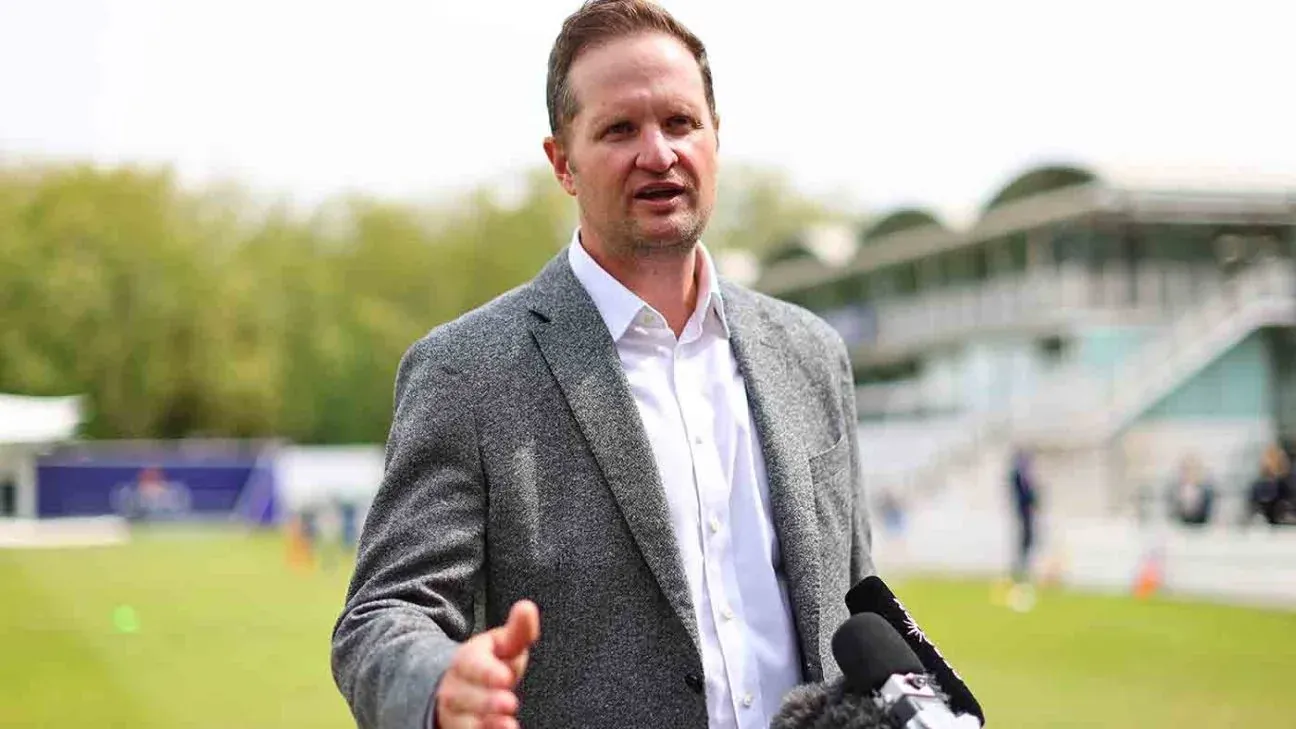
The England and Wales Cricket Board (ECB) selects its national head coach through a highly targeted, executive-led recruitment process. They do not use public application systems. Instead, the Managing Director of Men’s Cricket drives the search, builds a shortlist, and interviews candidates. Chief Executive Officer Richard Gould and Board Chair Richard Thompson provide the final oversight.
How the Recruitment Structure Works
The Managing Director handles the groundwork. In 2026, Rob Key holds this position. He evaluates team needs, contacts potential coaches, and narrows down the options. The Managing Director does not work alone. They report to the broader executive structure to finalize the hire.
Once appointed, the head coach becomes a direct employee of the ECB. They work alongside the National Selector and the rest of the coaching staff. Together, they manage the centrally contracted players across the national setup.
Why the ECB Uses Targeted Succession Planning
Sports organizations sometimes post vacancies publicly. The ECB avoids this approach. CEO Richard Gould confirmed that the board continually works on succession strategies behind the scenes. They maintain an active, rolling shortlist of potential future coaches long before a job actually opens.
When a vacancy occurs, the ECB acts immediately. For example, when the red-ball Test coach position opened in July 2026, the Managing Director moved quickly to contact individuals on the pre-established list. The goal is to avoid prolonged transition periods.
The Franchise Cricket Dilemma and Eligibility
Nationality is not a barrier. The ECB has a stated policy of being open to any outstanding candidate, whether they are English or not. But modern cricket creates a major logistical hurdle. The rise of lucrative franchise leagues, particularly the Indian Premier League (IPL) and The Hundred, complicates the hiring process.
The ECB is willing to hire coaches who hold concurrent franchise roles. The issue is timing. The IPL schedule overlaps directly with the early English summer season. This makes managing dual responsibilities incredibly difficult. Candidates frequently have to choose between their international duties and their IPL commitments.
Famous Examples from Recent Hiring Cycles
In 2022, the ECB selected New Zealander Brendon McCullum to lead the Test team. He partnered with captain Ben Stokes to introduce the aggressive “Bazball” style of play. McCullum managed the team for four years. In July 2026, he stepped down from the Test role but retained his position as the white-ball head coach. The board confirmed this 2026 transition and immediately began searching for his red-ball replacement.
Former England coach Andy Flower emerged as a top target on the ECB’s shortlist. Managing Director Rob Key opened discussions with him. Flower ultimately ruled himself out. He cited his comfort with his current roles and the impossibility of managing England while coaching the Royal Challengers Bengaluru in the IPL and the London Spirit in The Hundred. He explicitly pointed to his IPL scheduling conflicts as the deciding factor.
Following Flower’s withdrawal, the board adjusted its focus. Justin Langer, who previously dismissed the idea of coaching England in 2022, moved to the top of the list. The ECB targeted him directly, highlighting his sudden emergence as a candidate in the 2026 cycle.
Common Misconceptions
Fans often assume the ECB only wants English coaches for the national team. This is false. The board actively pursues international candidates, as seen with McCullum and Langer. Another misconception is that franchise coaching outright disqualifies a candidate. The ECB actually allows concurrent roles in theory. The practical reality of overlapping schedules is what forces coaches to decline.
Key Takeaways
- The Managing Director of Men’s Cricket leads a closed, proactive recruitment search rather than relying on public applications.
- The board evaluates candidates regardless of their nationality, prioritizing immediate tactical fit over geographic origin.
- Overlapping schedules with global franchise leagues heavily restrict the pool of available elite coaches.