
Picture a company announcing on Wednesday evening that it priced its initial public offering at $20 a share, only for your brokerage app to show the first trade going through at $24 on Thursday morning. That gap happens because IPO pricing involves two separate stages run by different players. The evening before listing, the company and its underwriting investment banks negotiate an offer price based on institutional demand gathered during a roadshow, a process called book building. Once the stock reaches the exchange the next morning, open-market buy and sell orders set a new opening trading price.
How do underwriters set an IPO pricing range?
In the United States, there is no fixed mathematical formula for setting an initial public offering price. Instead, the issuing company and its lead investment banks, known as bookrunners, test what large institutional buyers are willing to pay through a structured sequence regulated by the Securities and Exchange Commission (SEC) and the Financial Industry Regulatory Authority (FINRA).
- The company files a Form S-1 registration statement with the SEC, which includes a preliminary prospectus detailing its financials and risk factors. If the company submitted its initial draft confidentially, the filing must go public at least 15 days before the investor roadshow begins. Later amendments add an estimated price range benchmarked against comparable public companies, financial metrics, and prevailing market sentiment.
- Company executives, typically the CEO and CFO, then embark on nothing less than a sprint of institutional meetings—known as the roadshow—lasting one to two weeks in person across major financial hubs, or compressed into a few days in virtual and hybrid formats. During these pitches, bookrunners collect non-binding “indications of interest” specifying how many shares each fund wants and at what price, logging every order in a central book.
- Because indications of interest are non-binding, institutions sometimes inflate their requested order sizes when they expect cutbacks on a popular deal. Bookrunners weigh the quality and conviction of each buyer rather than taking raw order totals at face value. Under FINRA Rule 5131, adopted in 2010, the book-running lead manager must send the company’s pricing committee or board regular reports listing interested institutions, their requested share counts, and aggregate retail demand.
- After the roadshow wraps and the SEC declares the registration statement effective, underwriters recommend a final offer price, which can land inside, above, or below the initial range. According to the SEC Investor Bulletin on IPOs, the company itself makes the final pricing decision, balancing its goal of raising maximum cash against buyers’ desire for upside once trading starts.
- In a standard firm commitment offering, the banks then sign an underwriting agreement obligating them to buy the shares from the company at the offer price minus the underwriting discount and resell them to allocated investors. Share allocation is discretionary rather than proportional. The SEC does not regulate who receives IPO shares, and underwriters generally prioritize large institutions and wealthy accounts expected to hold stock beyond the opening session.
Why is the opening trading price different from the IPO price?
Only investors who received an allocation from the underwriting syndicate pay the IPO offer price. Everyone else buys in the secondary market once exchange trading begins, where supply and demand immediately take over.
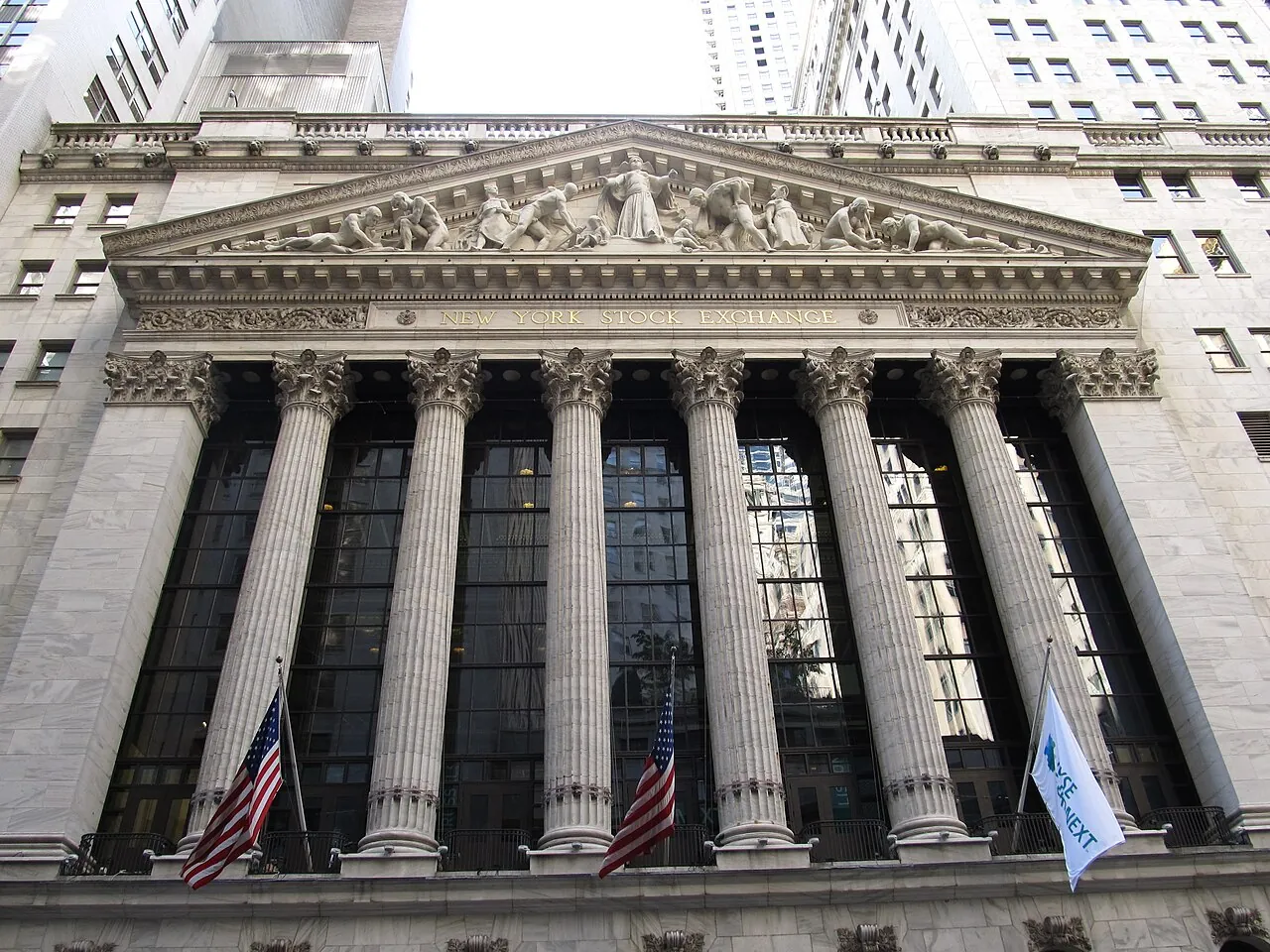
US stock exchanges run specialized opening auctions to establish that first public price. On the New York Stock Exchange (NYSE), a human-overseen Designated Market Maker (DMM) gathers pre-opening buy and sell interest to determine a single opening auction price. On Nasdaq, orders build during Display Only and Pre-Launch Periods until the deal’s stabilization agent confirms readiness to Nasdaq’s Execution Officer, triggering the Nasdaq IPO Cross (detailed in Nasdaq’s 2023 listing guide) to match orders at a single volume-maximizing price.
To keep early trading orderly, underwriting agreements typically include a 30-day overallotment clause known as a greenshoe option, named after the Green Shoe Manufacturing Company’s 1919 offering. As confirmed in standard SEC Form 8-K underwriting filings from 2025, this option lets banks buy up to 15% more shares from the company at the IPO offer price minus the underwriting discount.
Here is how the math works in plain numbers. Suppose a company sells 10 million shares at a $20 offer price, raising $200 million before underwriting fees. With a 15% greenshoe option, the underwriters can oversell by 1.5 million shares, distributing 11.5 million shares into the market and creating a 1.5 million-share short position for the syndicate.
- If strong demand pushes the stock up to $24 at the close of day one, the banks exercise the greenshoe within 30 days to buy 1.5 million shares directly from the company at $20 (minus the underwriting discount) to cover their short. Meanwhile, using the standard academic formula for “money left on the table” (first-day closing price minus offer price, multiplied by shares offered excluding the overallotment option), the issuer left $40 million on the table: ($24 minus $20) times 10 million shares.
- If the stock instead slips to $18 after listing, the banks skip the greenshoe and buy 1.5 million shares on the open market at $18 to cover their short. That open-market buying adds demand near the issue price to help stabilize the shares.
What do investors get wrong about IPO pops and risks?
Headlines about soaring day-one debuts often create the impression that IPOs are priced accurately by valuation formulas or that early jumps guarantee lasting gains. Historical data tells a much more mixed story.
Across US IPOs from 1980 through 2025, University of Florida finance professor Jay R. Ritter’s University of Florida dataset (updated May 2026) records a mean first-day return of 19.0% and a median of 7.0%. Those averages swing heavily with market appetite, climbing to 64.6% during the 1999 to 2000 dot-com boom and averaging 29.3% in 2025, up from 15.3% in 2024. Over the full 1980 to 2025 period, companies raised roughly $1.2 trillion in proceeds while leaving about $250 billion on the table.
A big first-day pop does not predict strong long-term returns. In Ritter’s 1980 to 2025 figures cited by Carson Group in 2026, unprofitable companies jumped an average of 26.7% on day one, more than double the 13.3% average for profitable debuts. Over the following three years, however, unprofitable IPOs averaged a -0.5% return, compared with +33.6% for profitable ones.
Structural supply limits also distort early trading. Because companies often float only a small portion of their total shares at listing, concentrated buying can push prices up rapidly. Later, when insider lock-up agreements expire, previously restricted shares enter the market, creating what the SEC calls “market overhang” that can put downward pressure on the stock. Small-cap IPOs carry another hazard: in Regulatory Notice 22-25 (2022), FINRA warned that offerings raising under $25 million, valued below $100 million, and issuing fewer than 20 million shares have been frequent targets for coordinated “ramp-and-dump” trading schemes right after listing.
These patterns are general market information, not personal investment advice. Before buying any newly public stock, review the company’s Form S-1 prospectus and risk factors or speak with a licensed financial advisor.
How does IPO pricing vary by country and listing method?
The US institutional book-building system is the best-known model globally, though rules look very different in other major markets. In the United States, institutional order books stay private from the general public, with FINRA requiring disclosure only to the issuing company. In India, SEBI book-building rules (as of 2026) mandate real-time online visibility of bidding demand across a 3 to 7 working day bidding period. SEBI also caps the upper end of the price band at 20% above the floor price, allows retail investors to bid at the final “cut-off price,” locks in anchor investors for 30 days on 50% of their shares and 90 days on the remaining 50%, and requires exchange listing within T+3 working days.
Companies also have alternatives to traditional book building depending on their goals and market conditions.
- Fixed-price offerings set a single share price upfront before investors submit orders, leaving no mechanism to adjust pricing upward or downward based on subscription demand.
- Modified Dutch auctions allow investor bids to set the clearing price directly rather than relying purely on underwriter discretion. Google used this method in August 2004, cutting its initial $108 to $135 range to $85 to $95 before pricing at $85 a share to raise $1.67 billion ($1.2 billion for the company and $473 million for selling insiders), according to a 2005 Berkeley Technology Law Journal review.
- Direct listings eliminate underwritten book building and fixed offering prices altogether; existing shareholders sell directly onto the exchange, where the opening auction discovers the first trading price.
- Accelerated book building compresses institutional pricing into 48 hours with no roadshow, an approach typically used for rapid large stock placements rather than standard public debuts.
Frequently asked questions
Can individual investors buy shares at the IPO offer price?
Sometimes, if your brokerage participates in the underwriting syndicate or offers a retail IPO access program, though individual allocations are usually limited. Most retail investors buy shares on the open market once the exchange opening auction finishes.
What does it mean when an IPO is oversubscribed?
Oversubscribed means total investor orders in the underwriting book exceed the number of shares being offered. Strong excess demand gives the company and its bankers room to raise the price range or price at the top end, while allocated buyers typically receive fewer shares than they requested.
Do IPO offer prices always match a company’s last private valuation?
No. Private funding rounds reflect deals struck with a small group of venture investors under earlier market conditions, while IPO pricing reflects what public-market institutions are willing to pay during roadshow week, which can come in higher or lower.