
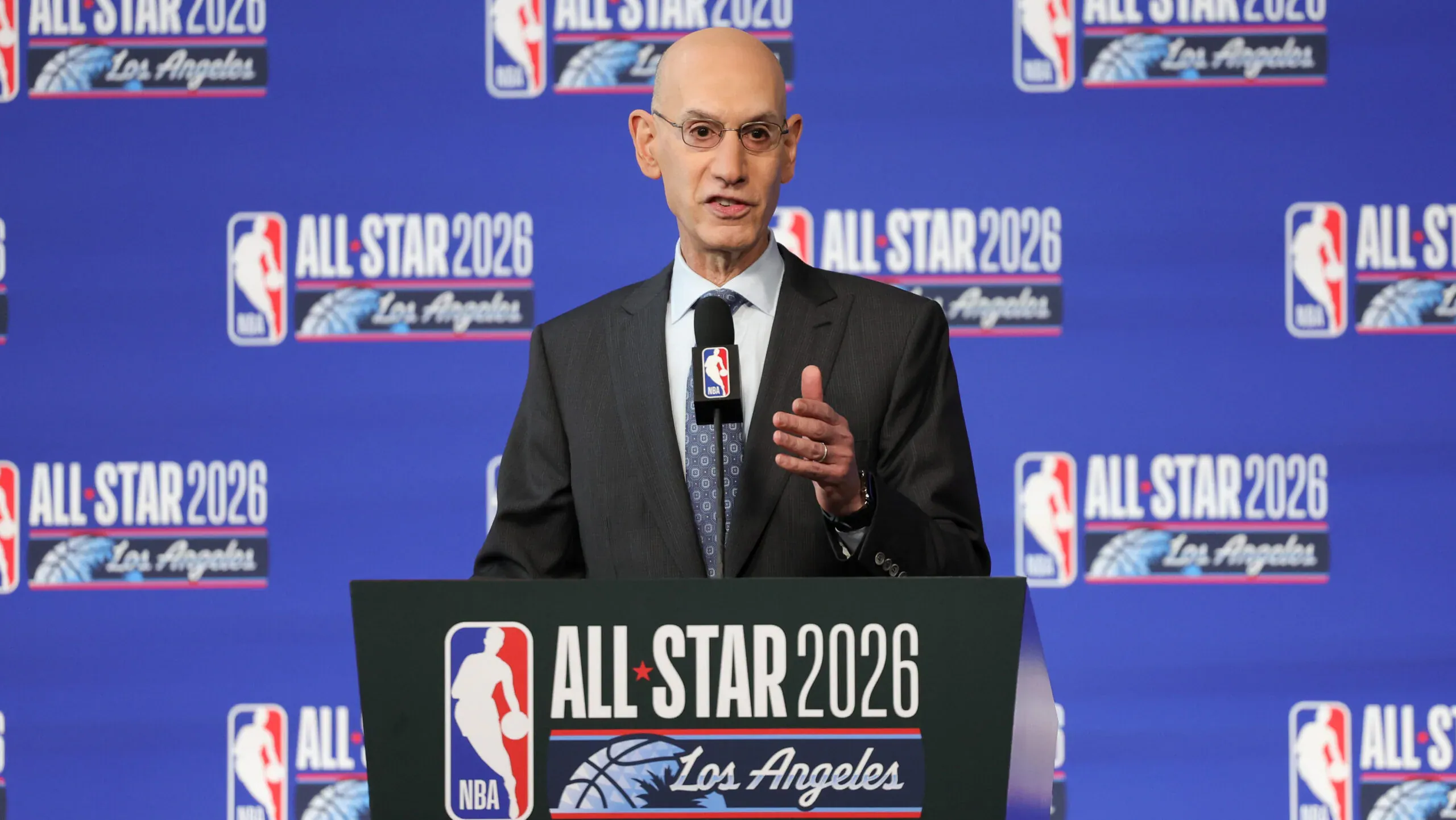
When a buyer agrees to purchase an NBA franchise, the deal does not close until the league completes a multi-month review under Article 5 of the NBA Constitution and By-Laws. The Commissioner’s office and the Advisory/Finance Committee first audit the buyer’s finances, personal background, and debt structure. Finally, the NBA must approve the team ownership sale through an affirmative vote from at least three-fourths (23 of the 30) of its Board of Governors.
Who qualifies to buy an NBA franchise?
Before an application ever reaches a vote, the buyer’s cap table has to follow strict equity and debt limits designed to keep control in the hands of a single decision-maker. Every franchise must name one controlling owner, officially called a Governor, who represents the team at league meetings.
According to 2023 reporting from SportsPro, the league requires that controlling Governor to hold at least 15 percent of the franchise’s total equity. Under ownership rules reported by NBC Sports in 2015, an ownership group can include no more than 25 individual investors, and every minority partner must hold at least a 1 percent stake. If a prospective buyer already owns a minority slice of another NBA team, they must sell that stake first to avoid a conflict of interest.
As franchise valuations climbed into the billions, the league opened the door to institutional capital while keeping individuals in charge. Under NBA institutional investment rules adopted in December 2022, private equity firms and sovereign wealth funds can buy passive minority stakes with zero governance control. A single fund cannot hold more than 20 percent of a franchise, and all institutional funds combined cannot own more than 30 percent of a single team.
The league also limits how much money a buyer can borrow against the team itself. As of 2025, the NBA caps traditional franchise-level debt at $475 million per team.
What happens during the NBA ownership sale approval process?
Once the current owner and buyer sign a binding purchase agreement, the formal league review follows five steps from filing to closing:
- The current owner and prospective buyer sign a purchase and sale agreement structured around the league’s 15 percent Governor minimum, 25-owner cap, and $475 million debt ceiling.
- The buyer divests any existing equity in competing NBA franchises.
- The parties submit a formal written transfer application to the NBA Commissioner under Article 5 of the Constitution, turning over tax returns, financing agreements, and personal background disclosures. The buyer must also sign an agreement to be bound by the NBA Constitution, which under Article 43 waives outside court review of internal league governance decisions.
- League lawyers and accountants audit the paperwork, then pass the file to the Advisory/Finance Committee (a subcommittee of current team owners), which interviews the prospective Governor and checks the financing structure.
- The Advisory/Finance Committee issues its recommendation to the full Board of Governors, which holds a formal meeting to vote on the transfer.
Under Article 18 of the NBA Constitution, the Board of Governors includes one representative from each of the 30 member teams. Article 5 requires an affirmative vote from at least three-fourths of all Governors to approve a new owner. In a 30-team league, at least 23 Governors must vote yes.
How long does the Board of Governors vote take, and what do fans get wrong?
The biggest misconception among fans is that a billionaire takes over basketball operations the day a sale is announced. In reality, the selling owner retains control until the Advisory/Finance Committee finishes its audit and the Board of Governors casts its vote.
According to 2026 data from NDTV Sports, clearing that vetting pipeline typically takes four to eight months. When the families of Miriam Adelson and Sivan and Patrick Dumont agreed to buy a controlling stake in the Dallas Mavericks from Mark Cuban, they had to complete a financial review and sit for an interview with the Advisory/Finance Committee before the Board of Governors voted 29-0 to approve the deal in December 2023, as reported by WFAA. Other high-profile sales followed that multi-month timeline: the $6.1 billion Boston Celtics sale to Bill Chisholm took five months to earn league sign-off, the Portland Trail Blazers sale to Tom Dundon took seven and a half months, and the 2025 Los Angeles Lakers sale at a $10 billion valuation took four and a half months (Forbes, 2025; NDTV Sports, 2026). Buyers who already hold vetted minority stakes in another NBA team often clear background checks near the faster end of that window.
Fans also frequently mix up the voting rules for buying a team and moving one. While admitting a new owner demands a three-fourths supermajority of the Board of Governors, approving a franchise relocation to a new city requires only a simple majority vote after review by the league’s Relocation Committee.
Financing rules vary across North American pro sports rulebooks as well. While the NBA allows a single private equity fund to hold up to 20 percent of a team with a $475 million team debt cap, Major League Baseball caps a single private equity firm at 15 percent and ties debt limits to earnings, while the NFL caps private equity stakes at 10 percent alongside a $700 million debt limit (as of 2025). Inside the NBA, minor ownership pledges or liens for debt that stay within the league’s secured borrowing limits do not need a full Board of Governors vote; the Commissioner can approve those directly under Article 5.
Frequently asked questions
Can the NBA force an existing owner to sell their team?
Yes. Under Articles 13 and 14 of the NBA Constitution, the Board of Governors can terminate an owner’s membership for willful violations of league bylaws or failing to meet contractual obligations. Forcing an exit requires formal written charges, a hearing, and a three-fourths affirmative vote from the Board of Governors.
Can a sovereign wealth fund be a team’s controlling owner?
No. Sovereign wealth funds and private equity firms are restricted to passive, non-governing minority investments capped at 20 percent for a single fund and 30 percent across all institutional funds in one franchise. The controlling Governor must always be an individual holding at least 15 percent of the team’s equity.
What law governs NBA ownership disputes?
Under Article 2.16 of the NBA Constitution and By-Laws, the governance agreement is governed by New York State law, and Article 43 requires owners to resolve internal membership and sale decisions within the league rather than in outside courts.