
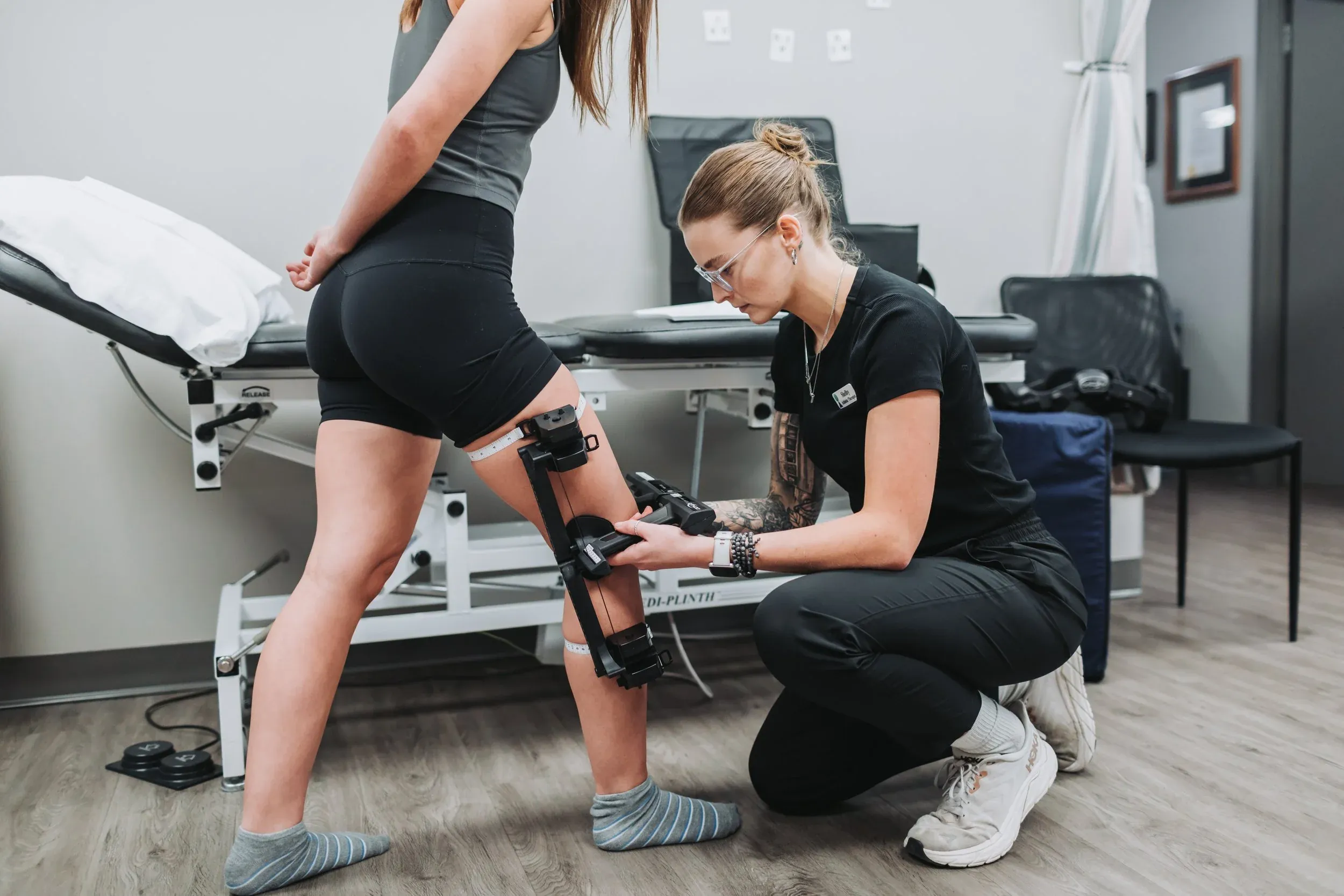
An anterior cruciate ligament tear halts a professional athlete’s career for roughly nine to thirteen months and requires complex surgical reconstruction, but it rarely ends their playing days permanently. The vast majority of elite competitors return to their pre-injury level of play. The extended rehabilitation process, rather than the initial injury, dictates the long-term trajectory of their career.
How the ACL Injury and Reconstruction Actually Works
The anterior cruciate ligament sits deep inside the knee joint. It connects the thigh bone to the shin bone and prevents the shin from sliding too far forward. It also provides rotational stability. When a fan watches a football player plant their foot and cut sharply up the field, the ACL absorbs that immense twisting force.
Most fans assume these injuries happen during violent collisions. A large majority of these tears actually occur without any direct physical contact. They happen when a player suddenly decelerates, lands off-balance from a jump, or pivots sharply to change direction on the court or field.
The inside of the knee joint receives extremely poor blood flow. Because of this lack of circulation, a completely torn ligament cannot heal on its own through simple rest and ice. For a professional athlete to return to the high-impact demands of their sport, surgeons must physically rebuild the ligament using a tissue graft.
Recovery starts immediately after surgery. Physical therapy begins within days. By the end of the first week, trainers want the athlete to achieve 70 degrees of knee bending and regain the ability to completely straighten their leg. Missing these early mobility benchmarks creates severe complications for the rest of the recovery process.
The Phased Rehabilitation Timeline
A sports rehabilitation program follows a strict, phased approach. Athletes do not simply rest for a year and then jog back onto the field. They must rebuild the mechanics of their leg from scratch.
The Foundation Phase (Weeks 0-6): The immediate focus is surviving the surgical trauma. Trainers work to reduce severe swelling and restore basic movement. Athletes practice wall squats. The primary goal is walking normally without the assistance of crutches.
The Strength Building Phase (Weeks 6-16): Before the athlete attempts any heavy dynamic movements, the surgically repaired leg needs to catch up to the healthy leg. Trainers demand the injured leg reach at least a high percentage of the baseline strength of the uninjured leg. This phase involves relentless single-leg exercises and heavy lunges.
The Return to Running Phase (Months 4-6): Once foundational strength and knee stability criteria are met, the athlete gets back on their feet. They alternate between walking and jogging before eventually progressing to sustained, straight-line running. They still avoid sudden stops or changes in direction.
The Sport-Specific Phase (Months 6-9): The controlled environment of the gym ends here. Athletes start single-leg jumping. They run cutting drills and pivot aggressively. Trainers simulate the unpredictable, chaotic movements required in an actual professional game.
Why Teams Apply Extended Return Timelines Today
Historically, athletes and coaches aimed for a six-month return timeline. Players routinely rushed back to the field the moment they could run without pain. Sports medicine teams eventually realized this accelerated approach caused a massive spike in secondary knee injuries.
Modern sports science demands patience. Current medical guidelines push elite athletes to wait nine to thirteen months before stepping into a competitive game. This extended timeline gives the surgical graft more time to integrate into the bone. A comprehensive review shows a strong majority of elite athletes successfully return to their original level of sport when following these longer, disciplined timelines.
Passing physical readiness tests matters more than counting months on a calendar. Athletes must clear a battery of strength, balance, and agility tests. Rushing the process is dangerous. Players who return to the field without passing all key clinical criteria face a drastically higher reinjury rate. Those who pass all the tests see their reinjury risk plummet to a fraction of the rushed group.
The type of sport also dictates the risk level. Young, highly competitive athletes playing sports that require constant jumping and pivoting face severe risks of a second knee injury if they return to play without thoroughly rebuilding their neuromuscular reaction times.
Famous Examples from Major Sports Data
Instead of looking at isolated anecdotal cases, broad league data paints a very clear picture of career longevity after knee reconstruction.
Soccer demands constant running, sudden stops, and aggressive tackling. A dedicated study tracking Major League Soccer players revealed that a very high percentage of those who tore their ACL successfully returned to their pre-injury level of competition. More importantly, these players did not immediately retire. They went on to play an average of four additional years in the professional ranks following their surgery.
Some athletes actually hit their career peak after the injury. The French Alpine Ski Team provides one of the most fascinating examples in sports history. Downhill skiing places extreme stress on the knee joints. Yet, team data showed that skiers who suffered an ACL tear actually achieved more than three times the number of podium finishes after their injury compared to before it. Many of these skiers also enjoyed longer overall careers than their teammates who never tore a ligament.
Common Misconceptions
Misconception: It is a career death sentence. Fans often write off players immediately after the injury announcement. While the recovery is grueling, the vast majority of professionals return to the field. Surgical techniques and physical therapy protocols improve every year, making the injury a serious delay rather than an automatic retirement.
Misconception: The knee is the only problem. A successful surgery fixes the mechanical tear, but the athlete still faces a steep uphill battle. They must overcome intense psychological hurdles. Trusting a surgically repaired knee during a high-speed collision requires immense mental fortitude. Many athletes report feeling physically fine but mentally hesitant for months after their official return.
Misconception: The risk ends once they are cleared to play. The long-term health consequences stretch far beyond the athlete’s playing days. Athletes who tear this ligament face a ten-fold higher risk of developing post-traumatic knee osteoarthritis later in life compared to people who never suffered the injury. To protect themselves during their active careers, players must adopt multi-faceted preventive exercise routines. Consistently performing these post-rehab exercises greatly reduces the chance of future injuries.
Frequently Asked Questions
Is an ACL tear career-ending for a professional athlete?
No. Advancements in surgical reconstruction and physical therapy mean it is increasingly rare for an ACL tear to force an early retirement. Research indicates that an estimated 83 percent of elite athletes successfully return to their preinjury level of sport.
How long does it take for an athlete to recover from an ACL tear?
The traditional recovery timeline sat around six to nine months. Modern sports medicine heavily recommends elite athletes take nine to thirteen months to fully rebuild their neuromuscular strength. Allowing the graft extra time to heal significantly reduces the risk of a secondary injury.
Can an ACL tear heal on its own without surgery?
A complete tear cannot heal on its own due to poor blood supply inside the knee joint. People with sedentary lifestyles might manage the injury through physical therapy alone. Professional athletes absolutely require surgical reconstruction to restore the heavy joint stability needed for high-impact sports.
What are the chances of tearing the ACL again after surgery?
General retear rates hover around 10 to 14 percent for the broader population. The risk changes based on age and activity level. Competitive athletes returning to high-intensity, pivoting sports face a much higher risk, sometimes reaching a 29 to 40 percent chance of suffering a subsequent knee injury.