
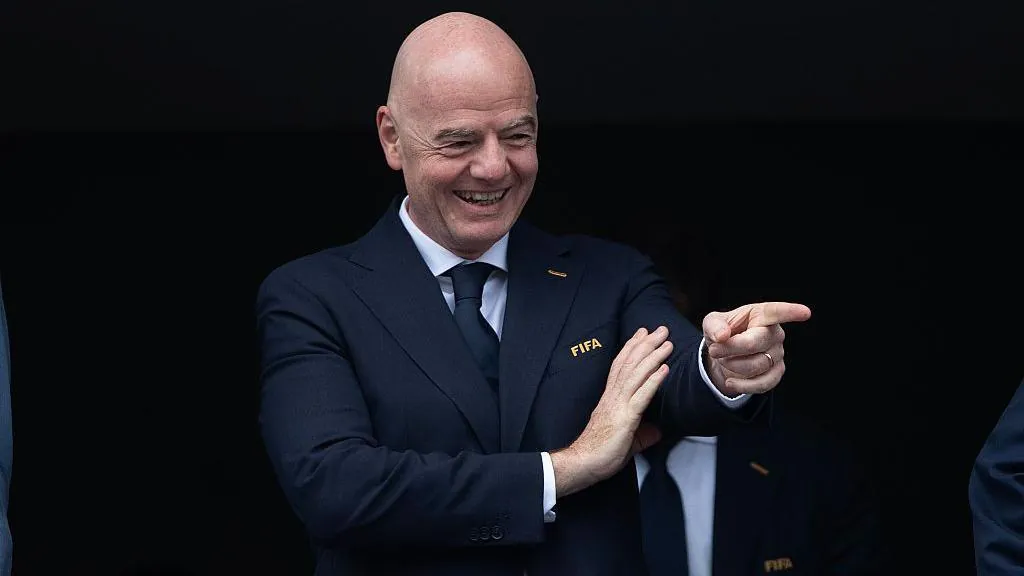
FIFA is officially looking at expanding the 2030 World Cup to an unprecedented 64 teams. Following the conclusion of the 2026 tournament, President Gianni Infantino confirmed the governing body will formally examine the drastic structural change. He wants the entire world involved.
The pitch centers on global incentive. Speaking to Swiss outlet Bluewin, Infantino argued that shutting smaller nations out of the tournament destroys their motivation to improve. He pointed directly to the current 48-team experiment in North America, which he branded a “huge success.” That confidence is backed by the performance of African nations this summer, with nine out of ten qualifying teams advancing to the knockout stages.
A 64-team field would encompass over 30% of FIFA’s 210 member associations. Logistically, it triggers a colossal 128-match schedule. But the math actually simplifies the group stage. According to a detailed logistical breakdown, the tournament would shift to 16 groups of four. The top two advance directly to a Round of 32. That completely eliminates the controversial “best third-placed teams” mathematics dragging down the 48-team format.
Internal resistance is already severe. UEFA President Aleksander Ceferin publicly dismissed the expansion as a “bad idea” that threatens the quality of European qualifying. CONCACAF President Victor Montagliani offered similar pushback, calling the concept “not a great idea” during early discussions, as highlighted in a report on regional slots.
The 64-team concept isn’t entirely new. Uruguayan official Ignacio Alonso initially pitched the framework during a March 2025 FIFA Council meeting. Now, the 2030 tournament—already a sprawling logistical puzzle shared by primary hosts Morocco, Portugal, and Spain alongside opening matches in Uruguay, Argentina, and Paraguay—could become the largest sporting event in human history. Infantino is making it clear. He intends to push the discussion forward.