
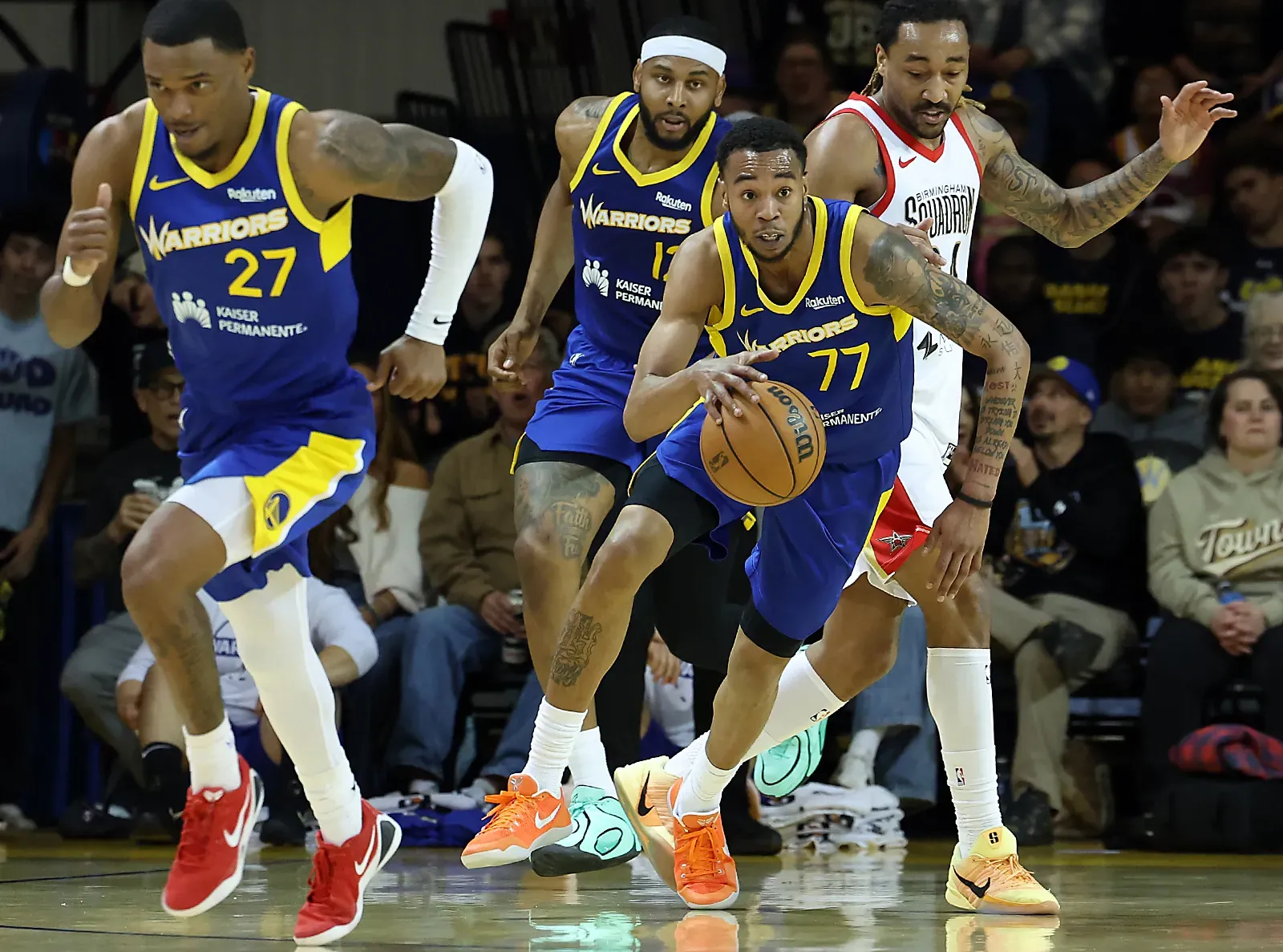
An NBA two-way contract is a highly specific roster agreement. It allows a professional basketball player to split their playing time between a main NBA franchise and its minor league affiliate in the G League. Teams rely heavily on this structure to develop young talent. They do this while simultaneously providing the parent club with easily accessible bench depth. Instead of forcing an organization to choose between gluing a developing player to the end of the NBA bench or cutting them entirely, this mechanism bridges the gap. The system permits players to earn a steady paycheck while moving back and forth between leagues as needed. Players get paid a flat rate, and teams get to expand their standard roster to evaluate talent during a grueling 82-game regular season.
How the Two-Way Roster Rule Works
The core mechanics of this system operate by explicitly expanding the standard team size. Every NBA team is permitted to carry up to three players on these specific contracts at any given time. These three spots exist entirely in addition to the standard 15-man active roster limit. This gives head coaches a total pool of 18 players to utilize throughout the regular season.
The league places strict caps on how often these athletes can play at the highest level. Currently, two-way players are permitted to be active for a maximum of 50 NBA regular-season games. The history of this specific limit is rooted in logistical frustration. Previously, the league enforced a much stricter 45-day limit. That older rule counted practice days and travel days against the player’s total allowance. Because travel burned eligibility, teams would frequently tell players to stay home rather than fly with the team. The rule was eventually changed to the current 50-game active limit. This dramatically increased roster flexibility and allowed athletes to practice with the main roster normally.
The entire system targets youth and active development. The eligibility rules dictate that only players with three or fewer years of credited NBA service can sign these agreements. Players entering their fourth season or beyond age out of the system and must seek standard contracts. These agreements can be signed for either one or two seasons. But a player with exactly three years of NBA experience can only sign a one-year deal. A two-year deal in that scenario would push them over the service-time limit during the second year, violating the strict experience cap set by the league.
To prevent front offices from perpetually stashing a player in the minor leagues, the league instituted franchise limits. A player cannot spend more than three total seasons on these specific contracts with the exact same NBA franchise. They must eventually move up or move on.
Why Teams Use This Roster Strategy
Front offices leverage these three roster spots as crucial financial tools. Under older minor league structures, a player’s compensation fluctuated constantly based on which league they were physically assigned to on any given day. Modern agreements eliminated that volatility. They pay a flat rate equal to exactly 50% of the standard NBA minimum salary for a player with zero years of service. For the 2025–26 season, this flat salary was established at $636,435, according to official G League guidelines.
The financial benefits for the organization are massive. Salaries attached to these contracts do not count against the NBA salary cap. More importantly, they do not count toward the luxury tax aprons. With the harsh financial penalties introduced in recent Collective Bargaining Agreements, wealthy teams use their three minor-league slots to artificially deepen their bench. They do this without triggering catastrophic luxury tax bills. They function essentially as free roster spots for cap management purposes. When rebuilding franchises attempt to restructure their entire organization and select new head coaches, they routinely use these cheap, cap-exempt spots to evaluate hungry young players.
If a player signs one of these agreements mid-season, their salary is prorated daily based on how many days are left in the regular season. This makes late-season roster additions incredibly inexpensive for the franchise.
Beyond the finances, the system grants exclusive farm system rights. Standard G League players are treated as free agents who can be poached by any rival NBA team at any moment. But a two-way player’s NBA rights belong exclusively to their parent club. This legal framework protects the team from rival poaching, as analyzed by legal contract experts. Because the team retains exclusive rights, they invest heavily in coaching and developing these specific athletes. Over a grueling schedule, coaches routinely use these players for strategic load management. They bring them up to provide fresh legs during back-to-back games or to cover minutes when veterans suffer minor injuries.
Famous Examples from Major Games
The system consistently produces high-level success stories. Austin Reaves is frequently cited as the modern blueprint for this career trajectory. After going undrafted, Reaves signed one of these developmental deals with the Los Angeles Lakers. He quickly adapted to the professional pace and earned a standard contract conversion. From there, he ultimately signed a multi-year, multi-million dollar extension to remain a starting player for the franchise.
Lu Dort followed a highly similar path. He started his professional career as an undrafted player for the Oklahoma City Thunder. Dort’s relentless defense quickly made him indispensable to the team’s rotation. The Thunder converted his contract to a standard deal, and he evolved into a highly paid, permanent starter.
Both of these examples highlight the critical conversion mechanism. When a minor-league player outperforms their contract, teams will convert them to standard deals. They do this to make the player playoff-eligible. They also do it to prevent the athlete from entering restricted free agency entirely unprotected at the end of the year.
Common Misconceptions
A major point of confusion for casual fans involves postseason play. Many people assume these players can simply stay on the active roster through the playoffs if they have not hit their 50-game limit. This is false. Players on these specific agreements are strictly prohibited from participating in the NBA Playoffs. To use one of these players in the postseason, the team must officially convert their contract into a standard NBA deal before the league’s designated playoff eligibility deadline.
Another common misconception is that these contracts provide guaranteed financial security. By default, these agreements are rarely fully guaranteed. Teams can waive the player at any point during the season without being on the hook for the full year’s salary. While small partial guarantees are sometimes negotiated—often tied to Exhibit 10 bonuses from training camp—the underlying nature of the contract allows teams to cut a player loose at almost any time with minimal financial consequence.
Key Takeaways
- Teams are permitted to carry three players on these developmental agreements in addition to their standard 15-man roster, allowing each player to participate in up to 50 regular-season NBA games.
- The financial structure provides a flat rate equal to 50% of the rookie minimum salary, which crucially does not count against the team’s salary cap or luxury tax apron limits.
- Players on these deals cannot participate in the NBA Playoffs, forcing front offices to officially convert their contracts to standard deals if they want to use them in the postseason.