
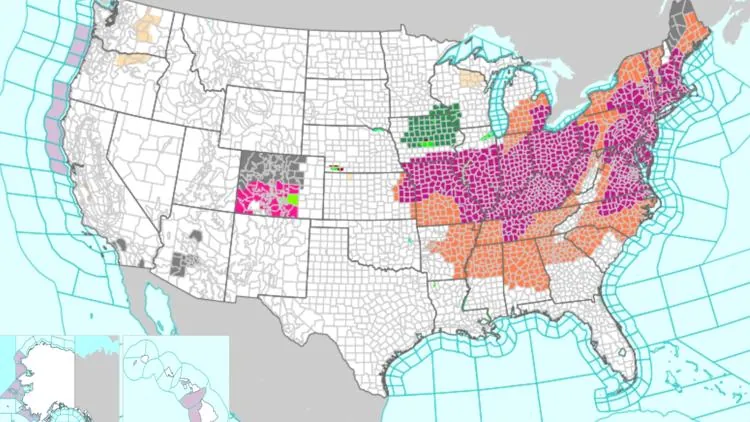
If you were planning to line Independence Avenue this morning, you need to change your itinerary. Organizers officially canceled America’s National Independence Day Parade late Friday evening due to severe safety concerns. The event was scheduled to kick off at 10:30 a.m. today in Washington, D.C., but the National Weather Service intervened with an Extreme Heat Warning. Peak heat index values are projected to reach a dangerous 110 to 115 degrees.
That kind of heat isn’t just uncomfortable. It is actively hazardous. The decision to call off the parade came after extensive late-night consultations between the National Park Service, the D.C. City Government, and Freedom 250 organizers. They confirmed on the event’s official website that there will be no alternative time or date. The 2026 parade is simply gone.
The heat stretches far beyond the capital. A sprawling, high-pressure heat dome is currently hovering over the eastern United States. It is trapping a giant layer of hot air and pushing temperatures past the century mark from the Midwest all the way to the East Coast. Right now, more than 197 million Americans are under extreme heat warnings, completely upending holiday travel and forcing out-of-state marching bands like Iowa’s Pella Marching Dutch to scrap their highly anticipated performances.
The physical infrastructure is struggling to keep up with the demand. Amtrak proactively canceled several Northeast corridor trains due to the very real risk of heat warping the steel tracks. The prolonged scorcher has also put severe stress on regional utilities, forcing the PJM power grid operator to issue emergency conservation protocols for its mid-Atlantic customers.
With the Great American State Fair on the National Mall also temporarily shut down, the traditional federal spectacle is taking a back seat to public safety. Some residents are using the forced downtime to rethink their holiday entirely. Instead of braving the dangerous heat for crowded outdoor events, many are looking indoors, finding that local state commissions counter the usual federal pomp with quieter, climate-controlled historical reflections.