
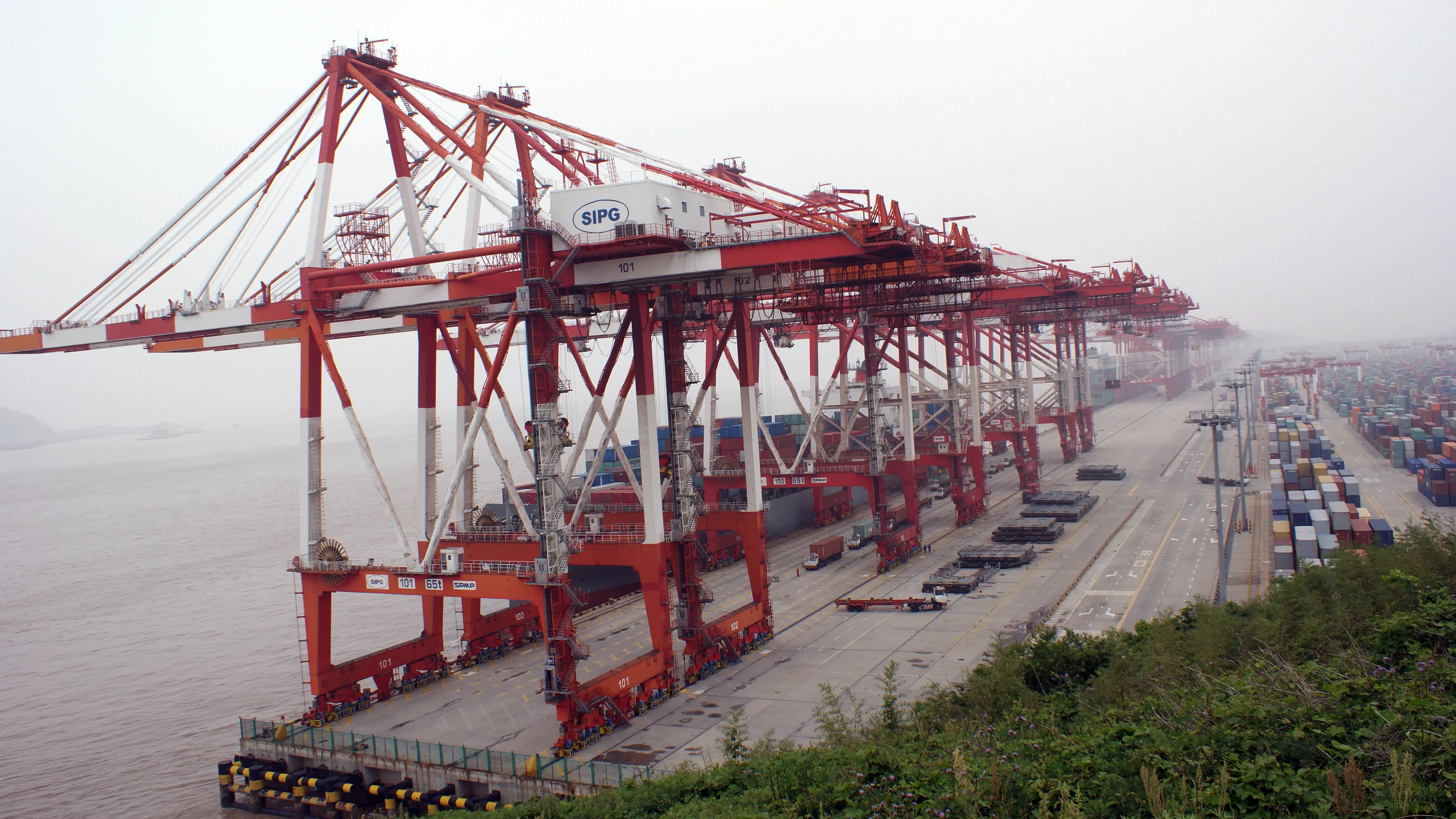
China rejected U.S. claims of industrial overcapacity on Wednesday, November 25, 2026, after the Trump administration proposed new tariffs on 14 major trading partners, including a reported 20% additional duty on Chinese goods. Several outlets, including Financial Express and Ada Derana, report that proposed maximum rates could reach up to 40% for China if no agreement is reached, though official product-by-product schedules still await publication in the U.S. Federal Register.
For American importers and manufacturers buying covered industrial goods, a 20% duty adds $200 in import taxes on every $1,000 of Chinese shipments if finalized after public hearings. The proposals also test the temporary U.S.-China trade truce weeks before key tariff suspensions expire in January 2027.
At a regular Chinese Foreign Ministry briefing in Beijing on Wednesday, spokesperson Guo Jiakun warned Washington against escalating import taxes. “A tariff war or a trade war serves no party’s interests,” Guo said in remarks translated by the Associated Press. Guo also said, “The so-called overcapacity is a false narrative, and China opposes using it as a pretext for political manipulation.”
Which economies and tariff rates are proposed
The Office of the U.S. Trade Representative (USTR), led by Ambassador Jamieson Greer, issued the proposals under Section 301 of the Trade Act of 1974, a U.S. law allowing tariffs against foreign trade practices deemed unfair. Reuters and the Associated Press reported the proposal was announced Wednesday after an eight-month probe into structural excess capacity (subsidized factory output that exceeds domestic demand and undercuts American producers), while The Washington Post reported the levies were proposed Tuesday.
Reuters and The Washington Times report the targeted group covers 14 economies: China, the European Union, Bangladesh, Cambodia, India, Indonesia, Japan, South Korea, Malaysia, Singapore, Switzerland, Taiwan, Thailand, and Vietnam. Two other countries investigated in the probe, Mexico and Norway, were left out of the proposal and remain under review.
Reported rate figures differ ahead of the official Federal Register filing. The Associated Press reported plans for an additional 20% tariff on China and 10% to 18% import taxes on other trading partners, while Financial Express and Ada Derana reported maximum ceilings of up to 40% for China, up to 35% for Vietnam, up to 25% for India, and 20% or 25% for other economies, subject to earlier bilateral caps agreed by President Donald Trump.
| Economy | Reported Proposed Rate | Reported Cap or Status |
|---|---|---|
| China | Additional 20% (AP, Washington Times); up to 40% ceiling (Financial Express, Ada Derana) | Subject to public comment and Federal Register schedule |
| Vietnam | Up to 35% ceiling (Financial Express, Ada Derana) | Subject to prior bilateral tariff caps if applicable |
| India | Up to 25% ceiling (Financial Express) | Trade talks ongoing for lower duties |
| EU, Japan, South Korea, Taiwan | 10% to 18% range (AP) or up to 20% to 25% ceiling | Capped at 15% under prior trade deals (The Next Web) |
| Malaysia | Part of 14-economy Section 301 proposal | Capped at 19% under prior trade deals (The Next Web) |
| Mexico and Norway | Not included in current tariff proposal | Still under USTR review (Reuters, Washington Post) |
According to The Washington Post, the new excess-capacity levies would supersede existing 10% to 12.5% forced-labor Section 301 tariffs wherever the excess-capacity rate is higher, rather than stacking on top of them. The Associated Press also reported the new duties will not stack on top of separate U.S. tariffs covering cars, steel, and aluminum.
How Washington rebuilt its tariff plan
The Section 301 rollout follows a February 2026 U.S. Supreme Court decision that struck down Trump’s earlier sweeping global tariffs imposed under emergency economic powers, ruling the president could not bypass Congress. USTR then launched the 16-economy excess-capacity probe in its March 11 initiation notice and held public hearings in May.
A separate Section 301 forced-labor action took effect on July 24, 2026, imposing 10% to 12.5% duties on 60 countries, though those levies are currently being challenged at the U.S. Court of International Trade. In another separate move on Wednesday, USTR invited public comment on modifying a July 15, 2026 Section 301 action against Brazil to cover currently exempt out-of-quota sugar and finished aircraft.
Trading partners have called for negotiations rather than new barriers. In remarks translated by SBS News, Guo said, “China and the United States should jointly implement the important consensus reached by the two heads of state and maintain the momentum of stable development in China-U.S. economic and trade relations,” while India’s Union Commerce Minister Piyush Goyal said on November 15 that Washington had agreed during talks to give Indian goods lower duties than competing countries.
What happens next for the trade truce
None of the proposed excess-capacity tariffs are final yet. USTR is expected to publish detailed product lists and exact rates in the Federal Register, opening a mandatory public comment period and hearing that The Washington Times reported could push implementation into January 2027.
That schedule overlaps directly with major U.S.-China trade deadlines. Following a November 6 extension, U.S. tariff exclusions on 178 Chinese product categories run through January 9, 2027, and China’s suspension of its 24% retaliatory tariff expires January 10, 2027, according to tariff compliance records tracked by NAMM.
A U.S. administration official told the Associated Press the proposed duties would not surprise Beijing and are unlikely to undermine the trade truce. Trump met Chinese President Xi Jinping last week in Shenzhen and plans to host Xi next month at the G20 summit in Florida, while USTR’s pending reviews of Mexico and Norway remain open.