
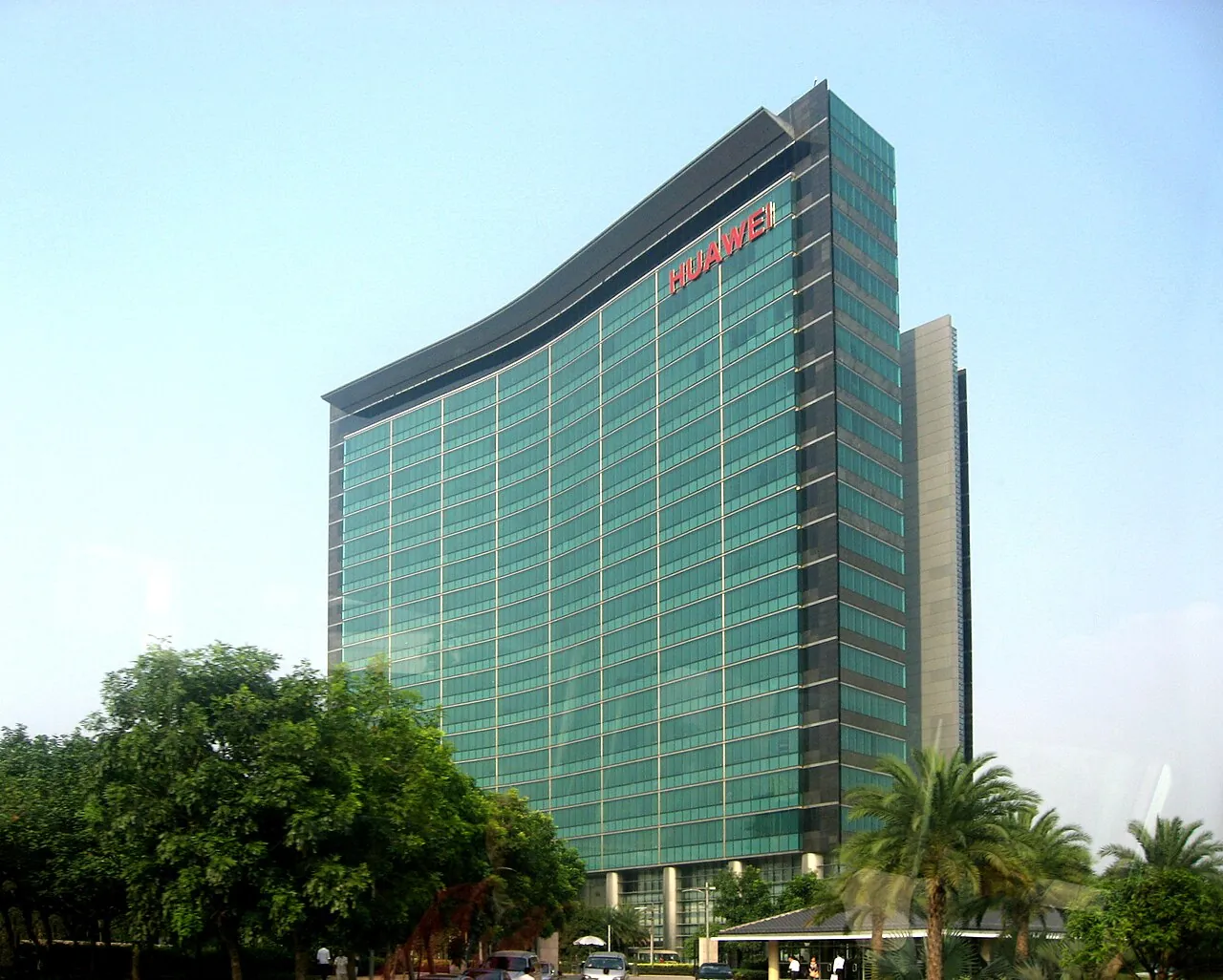
A federal jury in Brooklyn convicted Huawei Technologies Co., Ltd. and three of its subsidiaries on Tuesday, November 24, 2026, on 10 criminal counts including bank fraud and conspiracy to steal U.S. trade secrets. Jurors acquitted the Chinese technology giant of the top charge of racketeering conspiracy, sparing it from a sweeping finding that it operated as a criminal enterprise.
The split verdict in the U.S. District Court for the Eastern District of New York hits Huawei’s Chinese subsidiary, Huawei Device Co. Ltd., along with two U.S. units, Futurewei Technologies Inc. and Huawei Device USA Inc., according to a Justice Department press release. U.S. mobile users and wireless carriers will not see an immediate shift in available network gear, since Washington already barred Huawei from U.S. carrier networks and placed the company on a trade blacklist in 2019, while Canada and the U.K. also enacted bans.
Still, the convictions leave Huawei and its U.S. subsidiaries facing federal criminal sentencing on September 14, 2027, before U.S. District Judge Ann M. Donnelly. The exact financial or corporate penalties the company could face are not yet clear.
What the jury decided
Jurors reached their verdict after five days of deliberations that began shortly before 3 p.m. on Wednesday, November 18, following a trial where prosecutors called more than 60 witnesses and Huawei’s defense called 15. Outlets differed slightly on the trial’s length: the Justice Department described it as a three-month trial, Reuters and Courthouse News Service put it at more than two months, and the BBC called it a two-month trial.
| Outcome | Charges |
|---|---|
| Guilty (10 counts) | Bank fraud, wire fraud, conspiracy to steal U.S. trade secrets, money laundering conspiracy, and conspiracy to violate U.S. Iran sanctions under the International Emergency Economic Powers Act |
| Not guilty (2 counts) | Racketeering conspiracy (RICO) and conspiracy to obstruct justice |
The International Emergency Economic Powers Act is the federal law governing U.S. economic sanctions, while the racketeering count was brought under the Racketeer Influenced and Corrupt Organizations Act, which required proving Huawei acted like a criminal enterprise. Courthouse News Service and Reuters reported that conspiracy to obstruct justice was the second acquittal, a count the BBC did not name in its summary of the 10-of-12 split.
Inside the trade secrets and Iran evidence
Prosecutors argued Huawei spent two decades breaking rules to gain a technical and commercial edge over competitors. During the trial, Reuters reported, jurors saw video prosecutors said showed a Huawei employee slipping part of a T-Mobile testing robot into a backpack, along with evidence that a Huawei engineer snuck into a Fujitsu trade-show booth to photograph a device.
On the sanctions and bank fraud charges, prosecutors introduced a statement attached to former chief financial officer Meng Wanzhou’s deferred prosecution agreement acknowledging Huawei illegally conducted business in Iran. Meng did not testify at trial, though an HSBC banker she met with in 2013 took the stand.
In closing arguments, Assistant U.S. Attorney Meredith Arfa told jurors Huawei lied to banks about its Iran operations and stole rivals’ technology secrets to grow. “After the media started questioning Huawei’s operations in Iran, so did Huawei’s banks,” Arfa said, according to Reuters.
Defense attorney Brian Heberlig countered that prosecutors “cherry-picked” separate episodes to build a 20-year conspiracy and argued banks already knew about Huawei’s Iran business. He told jurors the company expanded to more than 200,000 staff across roughly 170 countries through “hard work, innovation, and investment in research and development.”
Reactions and business impact
U.S. Attorney General Todd Blanche welcomed the convictions in the Justice Department statement, saying, “No person or company is above the law,” In its own response reported by the BBC, Huawei said the racketeering acquittal “confirms that these allegations lack factual basis and vindicates our consistent position over the past eight years”
Huawei also said the convicted counts lacked legal merit and vowed to “take all necessary legal actions to defend our rights and interests.” Outside the Brooklyn courthouse, Heberlig called the racketeering acquittal “a profound rejection of the United States narrative about what Huawei is.”
“The RICO count that alleged that Huawei was a corrupt organisation, with a corporate culture and policy of committing crime. That was, in our view, a significant overreach, and the jury soundly rejected it,” Heberlig told the BBC.
Heberlig added to the BBC, “Of course, we have mixed emotions about the rest of the verdict … [we] thought that Huawei was deserving of acquittals across the board.” Chinese officials have previously labeled the U.S. prosecution “economic bullying” and argued Washington used national security as a pretext against Chinese firms, according to the Associated Press.
Avoiding a racketeering conviction matters for Huawei’s global business outside Western telecom markets. Even under U.S., Canadian, and U.K. equipment bans, Huawei remains a major seller of smartphones and network gear worldwide and has pushed into domestic AI chipmaking in China as a rival to Nvidia amid the broader U.S.-China AI race.
How the case reached trial and what comes next
Federal prosecutors opened the case in 2018 and announced charges in early 2019, shortly after Canadian authorities arrested Meng Wanzhou, also known as Cathy Meng, in late 2018 on a U.S. warrant. Washington placed Huawei on its trade blacklist in 2019 to cut off access to U.S. technology and expanded the indictment in 2020 to add trade-secret theft charges.
Meng remained in Canada for nearly three years before a 2021 deferred prosecution agreement let her return to China and led U.S. prosecutors to drop charges against her. The corporate trial this fall also overlapped with a summit in Shenzhen, China, involving U.S. President Donald Trump, Chinese President Xi Jinping, and Russian President Vladimir Putin, the Associated Press reported.
Judge Donnelly is scheduled to sentence Huawei and the three convicted subsidiaries on September 14, 2027, according to Reuters, while the BBC noted sentencing is planned for September 2027. Heberlig said there will be “significant advocacy” to push for the lowest possible sentence and told the BBC he expects an appeal afterward.
“If I know Huawei, that fight will continue, and the company’s not going to rest until it’s pursued every last argument it can through appeal, and hopefully, ultimately toward vindication,” Heberlig said.