
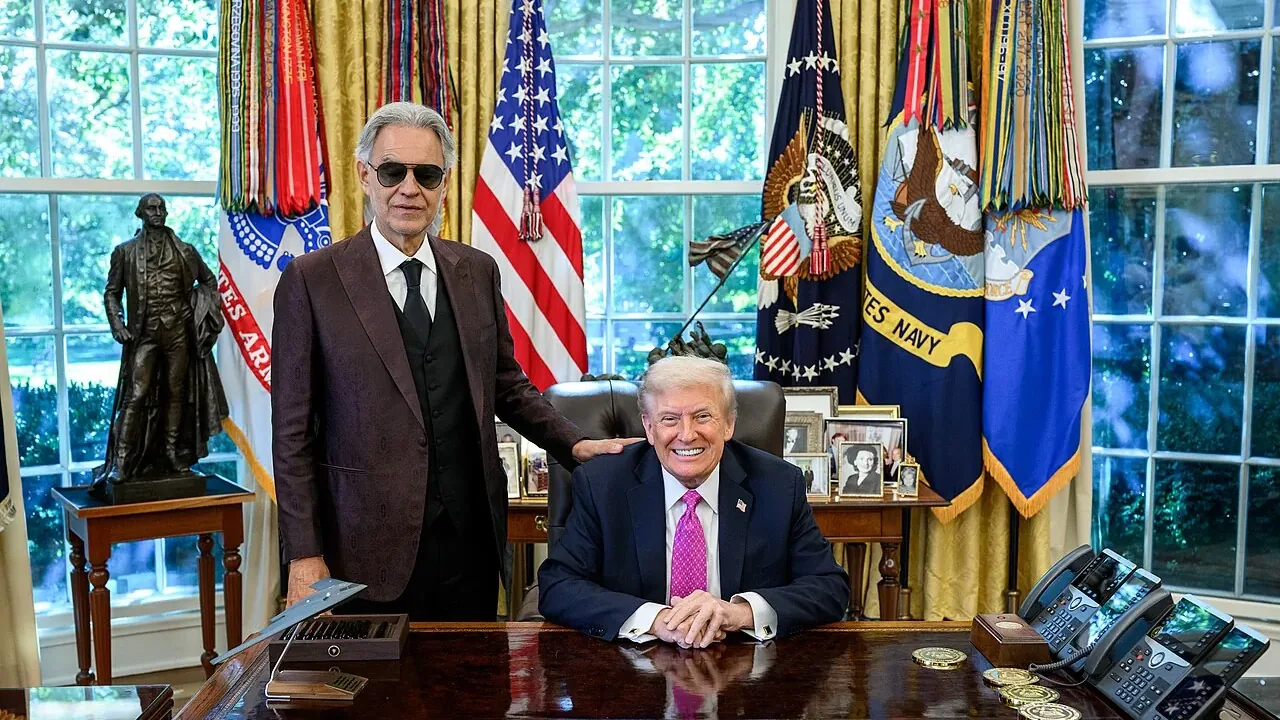
U.S. President Donald Trump will govern alongside a divided Capitol Hill starting January 3, 2027, after the Democratic Party won control of both the House of Representatives and the Senate in Tuesday’s midterm elections. While the house election results and Senate flips give Democrats the power to block new Republican legislation, reject judicial nominees, and subpoena White House officials, Trump retains unilateral authority over tariffs, executive orders, and presidential vetoes.
Under the 20th Amendment, the incoming 120th Congress takes office at noon on January 3, 2027, ending the unified Republican control held since January 2025. Trump, whose second term runs until noon on January 20, 2029, told CBS News that he is prepared to rely on executive authority and his veto pen to counter the new majority.
“The presidency, our presidency, is considered a strong presidency. You can do a lot,” Trump said in the interview. He added that he expects vetoes to bring lawmakers to the negotiating table: “Historically, you veto for a couple of months and then they come and say, ‘We’ve got to make a deal,'”
Trump also told The New York Times that he accepts the outcome of the midterms and expects to work out agreements with Democratic lawmakers.
How Congress election results affect vetoes and laws
With Democrats holding the gavel in both chambers, Trump will no longer be able to pass partisan bills on taxes, spending, or domestic policy without Democratic support. Carleton University political science professor Aaron Ettinger told Global News that the shift sets up two years of legislative gridlock.
“It is now harder for the president of the United States to enact legislation to pursue his agenda,” Ettinger said. “Now that we have a divided government, with Congress being controlled by Democrats and the White House — the executive branch — being controlled by a Republican, you have two fiercely oppositional, antagonistic parties who are probably going to be at loggerheads. So it’s going to be very difficult to pass laws.”
At the same time, Democrats lack the numbers required to pass laws over Trump’s objection. Overriding a presidential veto requires a two-thirds supermajority in both chambers: 67 votes in the Senate and 290 in the House. As of Wednesday afternoon, NBC News projected Democrats winning 54 Senate seats, including Troy Jackson’s win in Maine, with races in Alaska and Mississippi still uncalled, alongside 258 House seats. Democratic House Leader Hakeem Jeffries projected his caucus would hold at least 255 House seats.
Because both totals fall short of the two-thirds threshold, Democrats will need Republican votes to override a veto. Senate Republican Leader John Thune stated on X that Senate Republicans would oppose Democratic attempts to undo the party’s legislative record. In the House, Republican Speaker Mike Johnson told his staff on a call that he will not run for minority leader when the new term begins.
Tariffs and planned executive actions
Because U.S. trade duties were enacted through executive authority using existing statutory delegations, Congress cannot easily repeal them without a veto-proof majority. ING economist James Smith told Euronews that trade, like foreign policy, remains an area the president can direct unilaterally.
“The power of tariffing still resides within the executive branch of the U.S. government, and certainly in Donald Trump’s presidency. He is still using a legislative foundation from Congresses yonks ago to impose the kind of tariffs that are afflicting Canadians right now,” Ettinger told Global News. “Canadians, unfortunately, can’t just say, ‘Team Blue won the election yesterday, everything is going to be better.’ We’re still in for a really hard ride over the next two years.”
Ontario Premier Doug Ford also stated after the results that the U.S.-Canada trade dispute is “not done.” Earlier in Trump’s term, the U.S. Supreme Court blocked certain emergency tariffs after ruling they exceeded the president’s statutory authority, leaving federal courts as the main avenue for challenging trade actions.
According to ABP Live and Nacionale, Trump’s aides have prepared a slate of executive actions designed to bypass Congress over the next two years:
- Imposing new import duties on critical minerals and wind turbines.
- Tightening visa regulations for international students and temporary foreign workers.
- Issuing executive measures aimed at housing costs.
- Reclassifying federal civil servants under Schedule F (a policy rule that strips job protections from policy-related roles) to make them easier to dismiss.
The White House has also requested legal opinions from the Justice Department on the scope of presidential power without congressional approval and on asserting executive privilege against lawmakers.
Oversight, confirmations and budget disputes
While Trump can veto bills, the Constitution does not allow a president to veto congressional investigations, Senate confirmation votes, constitutional amendments, or impeachment proceedings.
Controlling the majority gives Democrats the chairmanships of every standing committee in the House and Senate. Committee chairs can issue subpoenas for documents and testimony from administration officials and conduct oversight hearings. However, Jeffries said that no one in the Democratic caucus has raised the idea of impeaching Trump.
In the Senate, the new Democratic majority will control the confirmation process for federal judges, Cabinet secretaries, ambassadors, and any Supreme Court vacancy, giving the party the ability to block nominees before they reach a floor vote.
Democrats will also control federal appropriations bills, setting up clashes over government funding. In September 2026, the Government Accountability Office (GAO), a congressional watchdog agency, reportedly found that Trump’s effort to withhold $810 million in congressionally approved funds violated the Impoundment Control Act.
Voter frustration over living costs
The shift in Washington follows nearly two years of voter dissatisfaction over inflation, trade disputes affecting states such as Maine and Michigan, and gasoline price spikes tied to the Iran war. CBS News exit polling showed Trump’s approval rating at 38%, with 89% of voters citing the cost of living as a factor in their vote.
“Those who had the courage to stand against the Trump administration’s policies were vindicated by the checks and balances of the U.S. political system that ultimately pushed American voters to issue their bold verdict on less than two years of Trump 2.0,” Derek Holt, vice president and head of Capital Markets Economics at Scotiabank, wrote in a note to clients. “Voters saw this period as marked by inflamed deficits, unwise trade policies, overstimulation of growth and capacity pressures that sparked affordability challenges, broken promises about ending forever wars, attacks on public institutions, a revenge agenda and overly harsh immigration policy.”
Before the new majority takes over in January, Trump and congressional Republicans will hold a post-election lame-duck session through the end of December.