
An NBA team governor is the controlling owner or designated chief representative who holds final decision-making authority over an NBA franchise and occupies its single voting seat on the NBA Board of Governors. Inside the franchise, you can think of the governor as the person who sets the overall budget, hires top executives, and approves arena investments. At the league level, all 30 governors vote together on on-court rule changes, tournament formats, franchise sales, and the appointment of the NBA Commissioner.
While fans and broadcasters still casually call these executives team owners, the league’s governing documents give them a specific legal role. Under Article 18 of the NBA Constitution and By-Laws, each of the 30 member franchises must appoint one Governor to represent the club at league meetings and cast its vote.
How does an NBA team governor differ from a regular team owner?
Modern professional basketball franchises are rarely owned by a single person. A team’s ownership group often includes dozens of minority partners, institutional investors, or private equity funds, and anyone holding equity in that group is technically a co-owner. However, a franchise gets only one vote at the league table, and only one person can be its primary Governor.
Under NBA ownership and investment rules (2023), the controlling owner who acts as a franchise’s primary governor must hold at least a 15% equity stake in the team and maintain operational control. Passive minority investors and institutional funds hold financial stakes, but they have no seat on the Board of Governors and cannot override the primary governor’s decisions.
Each franchise also appoints one or more Alternate Governors under Section 1 and Article 18 of the NBA Constitution (2019). An Alternate Governor is usually a minority partner, team president, or general manager who is legally authorized to act and vote on the Board of Governors only when the primary Governor is absent.
You will see this title used differently across other major North American sports leagues (Sports Acquisition Capital, 2025). The NBA and the NHL both use the title “Governor” and legislate through a Board of Governors. By contrast, the NFL refers to its primary franchise stakeholders as Principal Owners sitting on the NFL Executive Committee, and Major League Baseball requires each club to designate a Control Person.
Why did the NBA move away from the term owner?
A common misconception is that the league invented the title in 2019. In reality, “Governor” and “Alternate Governor” have been the formal legal titles in Article 18 of the NBA Constitution for decades. What changed in 2019 was how the league talked about the role in public.
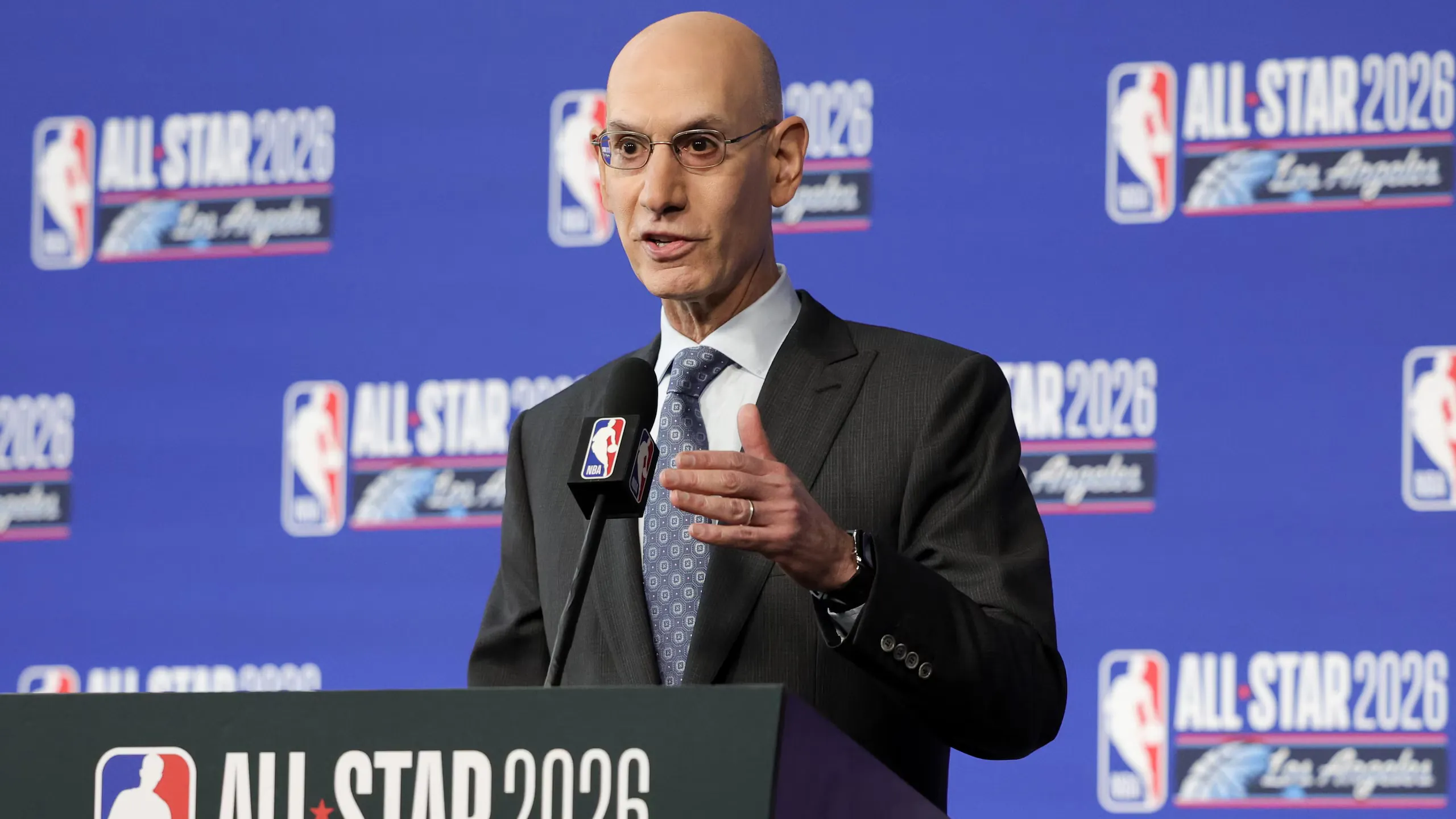
Following discussions with players and team stakeholders about the racial sensitivity of using the word “owner” in a league with predominantly Black players, NBA Commissioner Adam Silver confirmed in June 2019 that the league officially shifted its public language to match its rulebook. Speaking about the word “owner” in 2019, Silver noted that the league “moved away from that term years ago” and instead uses “Governor of the team” and “Alternate Governor.”
Beyond addressing player concerns, using the constitutional title solves a practical problem. Because modern basketball franchises are run by large syndicates of investors, calling one person the “Governor” makes it clear who actually holds the operational control and voting power among a crowd of shareholders.
What powers do governors hold inside their franchise and on the Board of Governors?
Inside their own building, a governor runs the franchise like a board chair overseeing a corporation (Cheddar Flow, 2023). Rather than scouting college prospects or negotiating player trades themselves, governors normally delegate day-to-day roster management to a President of Basketball Operations or General Manager, while a Team President or CEO handles ticket sales, sponsorships, and arena operations. The governor still holds the ultimate sign-off on hiring or firing those executives, setting the player payroll budget, deciding whether to pay the league’s luxury tax, and funding arena or practice facility upgrades.
Governors also carry strict financial and operational obligations to the rest of the league. Under the NBA Constitution (2019), a member franchise and its governor must follow league-wide debt limits and arena standards. A franchise can be fined up to $5,000,000 for certain constitutional violations or up to $250,000 per game if its arena fails to meet league standards.
When all 30 governors gather for regular or special sessions of the NBA Board of Governors, they exercise what Article 18 of the NBA Constitution (2019) calls “general supervision of the affairs of the Association.” Their league-wide voting powers cover four main areas:
- Approving on-court rule changes recommended by the Competition Committee, such as voting to reduce the maximum number of game timeouts from 18 to 14 in 2017, introducing the transition take foul penalty in 2022, and in-game flopping penalty rules made permanent in 2024.
- Authorizing competition formats and league expansion, including voting to establish the NBA Play-In Tournament in 2021 and 2022 and approving WNBA and NBA expansion explorations in 2026.
- Reviewing and voting on franchise relocations and team ownership transfers whenever a controlling stake in a club is sold.
- Hiring and overseeing the league’s top executive, which under Article 24 of the NBA Constitution (2019) requires an affirmative three-fourths (3/4) vote of all Governors to elect the NBA Commissioner, the same three-fourths threshold required under Article 16 to dissolve the Association.
Who leads the NBA Board of Governors and how are governors held accountable?
Another frequent point of confusion is who works for whom at the top of the league. The NBA Commissioner is not the boss of the 30 governors; the governors collectively hire the Commissioner and set the league’s strategic direction. At their annual meeting, the 30 governors also elect one of their peers as Chairman of the Board of Governors. Under Article 18 of the NBA Constitution (2019), the Chairman is an ex-officio member of all league committees, acts as the main liaison between the Commissioner’s Office and the team governors, and presides over Board meetings if the Commissioner is absent.
For a real-world example of how this leadership works, look at the Board’s 2026 transition. On July 14, 2026, the league announced in an NBA Board of Governors release that “Heat’s Micky Arison unanimously elected Chairman of the NBA Board of Governors,” taking office after the September 2026 Board meeting to succeed Toronto Raptors Governor Larry Tanenbaum, who had held the chairmanship since 2017.
Even though the Commissioner reports to the Board as a whole, the 30 governors grant the Commissioner broad policing power over individual governors to protect the integrity of the league. Under Article 35A of the NBA Constitution (2015, 2019), the Commissioner has the authority to fine any Governor or Alternate Governor up to $1,000,000 for conduct prejudicial or detrimental to the Association. For severe violations—such as failing to pay league obligations, rigging games, or breaking constitutional rules—the Board of Governors and the Commissioner can initiate formal termination of ownership proceedings under Articles 13 and 14 of the NBA Constitution (2019).