
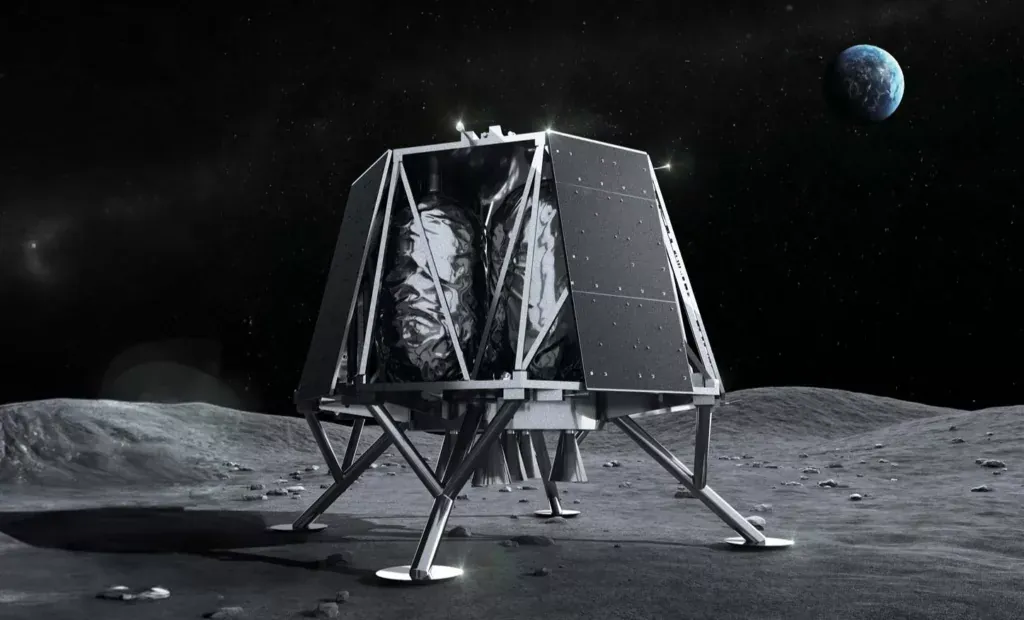
NASA and Draper Laboratory mutually agreed to terminate the Commercial Lunar Payload Services (CLPS) task order CP-12 on July 15. The $73 million contract, initially awarded in July 2022, tasked a Draper-led team with delivering three science payloads to the lunar far side’s Schrödinger Basin.
The cancellation directly impacts primary subcontractor ispace technologies U.S. (ispace-U.S.), which was building the APEX 1.0 lunar lander for the flight. Both Draper and ispace-U.S. expect to mutually dissolve their associated subcontract. NASA is dropping this specific mission to clear the operational deck for a revamped framework dubbed CLPS 2.0.
In April, the space agency announced the CLPS 2.0 transition. This structural shift is designed to increase the cadence of task order awards and lay the groundwork for a sustained human and robotic Moon presence.
ispace-U.S. CEO Elizabeth Kryst confirmed that the company is pivoting immediately to collaborate with NASA under the new framework, according to an official statement released on Wednesday. The company intends to submit fresh proposals for upcoming CLPS 2.0 requirements.
The parent company, ispace, inc., moved quickly to reassure investors regarding the sudden loss of the task order. The Tokyo-based firm issued a financial disclosure confirming the termination will not affect their consolidated earnings forecast for the fiscal year ending March 31, 2027, stabilizing the market reaction.
Why NASA is Restructuring the Commercial Lunar Payload Services Program
NASA’s decision to scrap the CP-12 mission is not an isolated incident. The agency previously lost a high-profile CLPS mission in 2022 when Masten Space Systems filed for bankruptcy. By terminating the Draper task order now, NASA avoids sinking further resources into a legacy contract while shifting focus entirely to the new CLPS 2.0 structure.
This updated operational model aims to create a more resilient supply chain of private lunar landers. The new framework ensures that the failure, delay, or restructuring of a single contractor does not stall the broader push to establish a permanent lunar base.