
The Mechanics Behind the Dates
How do you figure out the exact dates for Ramadan and other Islamic fasting periods? It all comes down to tracking the Hilal, the first faint crescent of the new moon. The Islamic calendar, known as the Hijri calendar, is a pure lunar system. It operates entirely on the cycles of the moon, rather than the sun.
A full lunar year consists of 12 distinct months. Each of these months lasts either 29 or 30 days depending on the specific lunar cycle. When you add up these months, a complete lunar year totals 354 or 355 days.
This structure creates an interesting timeline. The 354- or 355-day lunar year is roughly 11 days shorter than the standard 365-day Gregorian solar calendar we use for secular dates. This 11-day discrepancy causes fasting months to migrate backward through the solar seasons over time. If you fast during the long, hot summer months one year, the dates will slowly shift until you are fasting during the short days of winter decades later.
This shifting schedule affects daily life and business routines around the world. Predicting the exact fasting dates has immediate economic impacts. Local businesses and national institutions alter their operations to match the shifting lunar schedule. For example, the Pakistani Stock Exchange routinely adjusts its daily trading hours to accommodate the local population during the fasting month of Ramadan.
The Traditional Method: Sighting the Crescent Moon
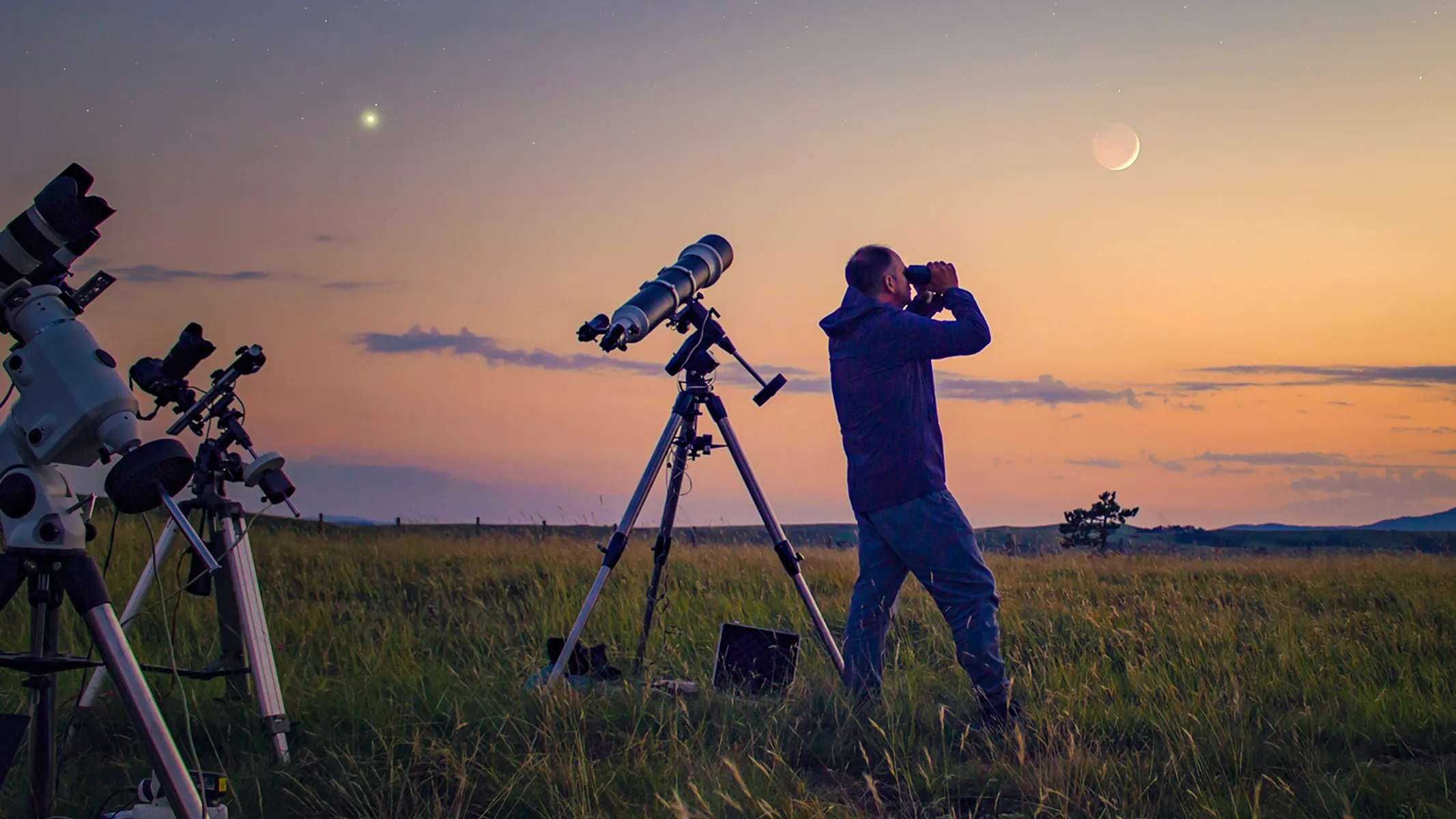
To start a new month, observers must visually spot the new crescent moon. This visual confirmation happens shortly after sunset on the 29th day of the current month. People gather in open areas to watch the horizon as the sun goes down.
Sometimes the weather gets in the way. If the sky is overcast or the moon is blocked by heavy smog on the 29th day, tradition steps in. The traditional rules state that the current month is automatically completed as a full 30-day cycle. The new month simply begins the following day, removing the guesswork from bad weather.
Astronomers look at specific physical variables to confirm the visibility of the new moon. They measure the moon’s altitude, which is its exact height above the horizon. They check the arc of vision at sunset. They also track the “lag time” between when the sun sets and when the moon sets.
The moon also needs to reach a certain “age” before anyone can physically see it. This age refers to the time elapsed since the conjunction, or the “birth” of the new moon. Once the moon reaches this specific age, the sunlit portion becomes wide enough to be seen from Earth.
Regional Methods and Determining the Start
Different countries use completely different methods to declare the new month. Methodologies vary wildly depending on where you live.
In Malaysia, local communities and religious authorities historically rely on direct visual observation. They use strict standard criteria to verify a sighting. Their rules require the moon to be at least 18 degrees above the horizon. The moon must also be at least 30 hours old to be considered a valid sighting.
Turkey takes a different approach. They largely rely on predetermined astronomical computing to dictate the start of the fasting month. They often add a specific buffer time to align their mathematical models with the traditional principles of physical sighting.
These different criteria frequently lead to fragmented fasting schedules across the globe. In Indonesia in 2008, overlapping and conflicting methodologies resulted in religious holidays being observed across different days within the same country.
The Push for Unity and Modern Technologies
A major, ongoing debate exists in the Islamic world regarding how to predict these dates. It comes down to two primary methodologies: rukyat and hisab.
Rukyat is the practice of naked-eye observation. Classical Islamic jurisprudence heavily favors rukyat. This preference comes from literal interpretations of historical texts that instruct adherents to begin fasting only upon physically seeing the crescent in the sky.
Hisab relies on astronomical computing and mathematics. Many modern scholars and astronomers advocate for hisab. They argue that relying on highly accurate astronomical data fulfills the foundational objectives of providing certainty to the public. They believe it helps unify global calendars in an era of advanced science.
Efforts to synchronize the global lunar calendar are ongoing. At the 2016 International Congress of Hijri Unity Calendar in Turkey, participants tried to find a practical solution. They advocated for unified astronomical thresholds to establish a single global calendar, attempting to move away from disparate local sightings. They discussed using mathematical parameters like imkān al-ru’yat to build this unified system.
New technologies are changing how researchers forecast the dates. Scientists now successfully apply machine learning algorithms to historical atmospheric and astronomical data. This allows for highly accurate predictions of crescent moon visibility that surpass traditional forecasting methods. These algorithms analyze complex, non-linear weather and space data to pinpoint exactly when the crescent will appear.
Common Mistakes to Avoid
People often misunderstand how the pure lunar calendar works in daily life. Here are a few common pitfalls to avoid when planning your schedule.
- Assuming a fixed date on the Gregorian calendar: The 11-day annual shift means Ramadan and other observances move steadily backward through the solar seasons. A summer fast will eventually become a winter fast. You cannot mark the same Gregorian date every year.
- Expecting global uniformity: Because countries use different criteria like rukyat or hisab, your friends or family in other parts of the world might start fasting on a different day than you do.
- Ignoring local weather variables: If your local community relies on visual sighting, a cloudy evening on the 29th day will push the start of the fasting month back by one day.
Frequently Asked Questions
How many days are in the Islamic lunar calendar year?
The Islamic calendar consists of 12 lunar months. The total year lasts either 354 or 355 days. This makes it roughly 11 days shorter than the standard Gregorian solar calendar.
What happens if the crescent moon is not visible due to clouds?
If observers cannot visually confirm the crescent moon on the 29th day of the month due to cloud cover or poor visibility, a traditional rule applies. The current month is automatically counted as having a full 30 days, and fasting begins the following day.
Why do Muslims in different countries start fasting on different dates?
Countries use varying methodologies to declare the new month. Some rely strictly on local naked-eye observation (rukyat). Others use precise astronomical computing (hisab). Because the moon’s visibility depends heavily on geographic location and local weather patterns, these different criteria often lead to differing start dates around the world.
Can artificial intelligence predict the start of lunar fasting months?
Yes. Researchers actively utilize machine learning algorithms to analyze complex astronomical data. They look at the moon’s altitude, azimuth, and local weather patterns to predict crescent moon visibility with high accuracy. This aims to reduce uncertainty regarding fasting dates.