
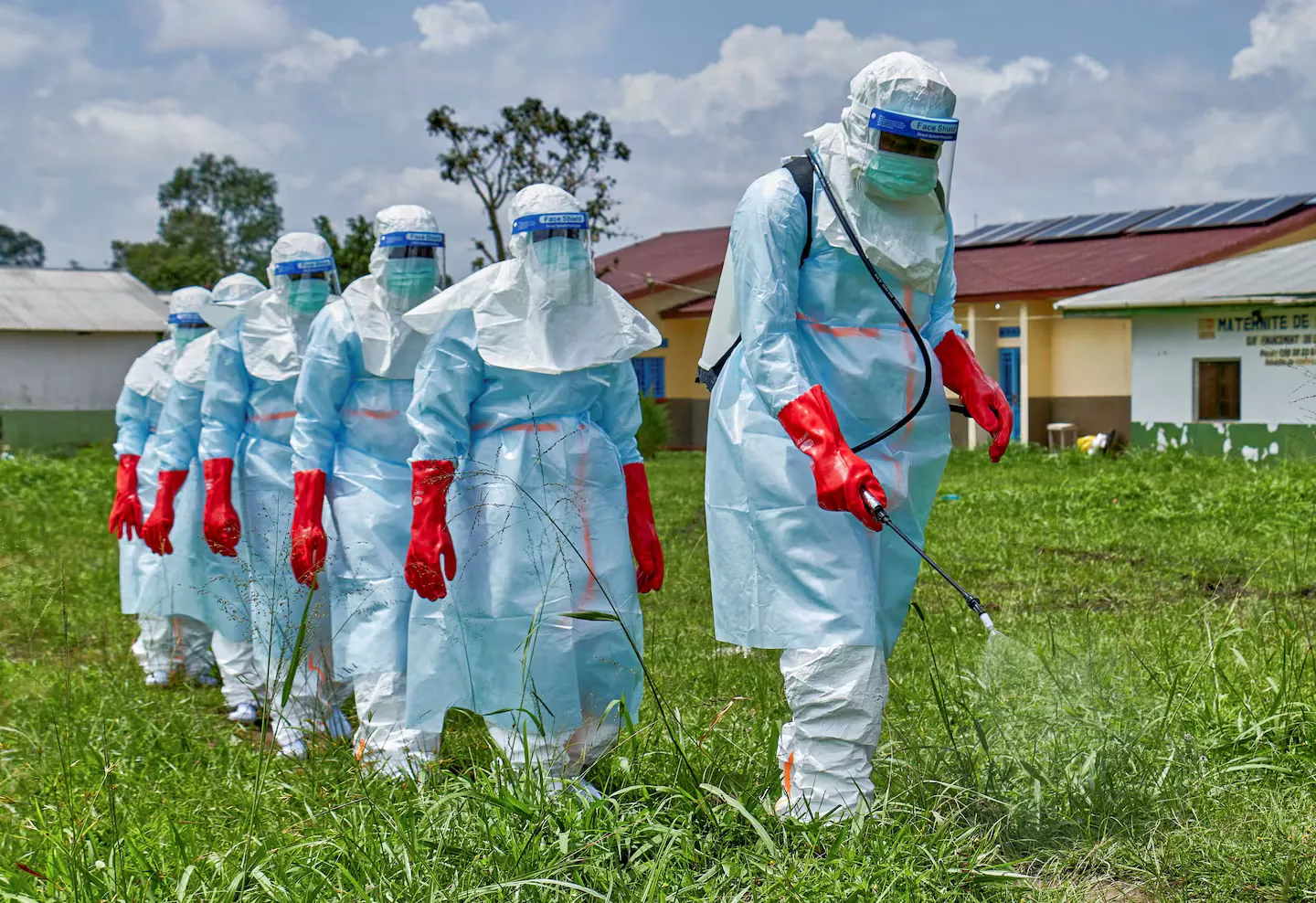
Global health authorities are managing a complicated situation right now. As armed conflict continues to disrupt medical access in the Democratic Republic of the Congo, two rare viral outbreaks are moving across borders. Officials are tracking the Bundibugyo ebolavirus in Africa and the Andes hantavirus linked to an international cruise ship.
Both of these viruses are far less familiar to doctors than the standard strains we usually hear about. The Bundibugyo species currently has no approved vaccines or specific therapeutic treatments, while the Andes virus is the only known hantavirus capable of human-to-human transmission.
The Ebola situation in the DRC’s Ituri province is escalating quickly. As of May 27, 2026, health teams report nearly 1,000 suspected cases, with 101 laboratory-confirmed infections and at least 220 suspected deaths. The virus recently crossed into Kampala, Uganda, resulting in seven confirmed cases and one death.
Uganda responded immediately. On Wednesday, a national task force led by Vice President Jessica Alupo closed the sprawling border with the DRC to stop further spread, according to a situation update from the Associated Press. This border closure directly defies guidance from the World Health Organization, which frequently warns that shutting official crossings simply pushes exposed individuals toward unmonitored routes.
Halfway across the world, authorities are isolating a completely different threat. A cluster of Andes hantavirus cases originated on the Dutch-flagged wildlife expedition cruise ship MV Hondius in April. Medical teams have tracked 11 confirmed and two probable cases, along with three deaths linked to the vessel.
Passengers from 23 different countries were evacuated and repatriated under strict infection-control protocols, details the WHO confirmed in a recent disease outbreak news report. In the United States, the government is enforcing mandatory quarantines for exposed American passengers at the Nebraska biocontainment facility, denying their requests to quarantine at home.
Why Our Current Ebola Vaccines Cannot Stop the Bundibugyo Outbreak
This is the third time the Bundibugyo strain has caused a regional health crisis, following earlier outbreaks in Uganda during 2007 and the DRC in 2012. While scientists developed highly effective medical advancements and vaccines during the 2018–2020 Ebola epidemic, those treatments were exclusively tailored to the Zaire strain. They offer no protection against the Bundibugyo variant.
Tracking the disease is becoming almost impossible. WHO Director-General Tedros Adhanom Ghebreyesus recently demanded an immediate ceasefire in eastern DRC. He explained that a collision of disease and conflict, combined with active attacks on health facilities by armed rebel groups, is preventing doctors from doing their jobs safely.