
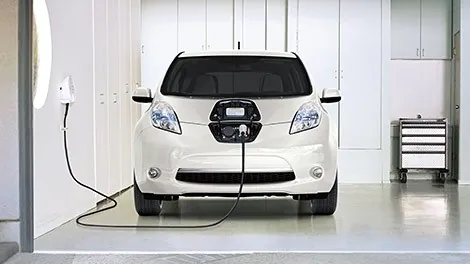
Vehicle-to-grid (V2G) technology turns an ordinary electric vehicle into a two-way energy storage system. Instead of simply pulling electricity from the wall to charge a battery, a V2G-enabled car can push that stored power right back into the electrical grid when demand peaks. In a recent real-world demonstration, researchers at energy platform provider Virta hooked up multiple charging stations at their headquarters to prove that parked cars can actively power a surrounding building.
Think about your electric car sitting in the driveway. Most of the time, it just sits there. But underneath the floorboards is a massive battery. V2G is the software and hardware combination that unlocks that dormant capacity.
The Core Mechanics: How Power Flows Backward
Standard electric vehicle chargers only go one way. They pull alternating current (AC) from the grid and convert it to direct current (DC) to fill up the vehicle’s battery. Bidirectional chargers flip this process entirely. They take the DC power sitting in the car and convert it back to AC. That power then flows back into the house or out into the wider electrical grid.
Analysts at energy company Iberdrola point out that this hardware relies heavily on an intelligent Battery Management System. This internal computer constantly monitors battery temperature and overall cell health. It authorizes exactly when the car is allowed to charge or discharge, ensuring the physical battery avoids unnecessary wear and tear.
A Three-Step Breakdown of a V2G Cycle
To understand how this actually operates in the real world, we can track a standard V2G cycle during a typical workday.
- The Morning Charge: The car plugs into a bidirectional charger. Because it is early morning and wind turbines are spinning fast, renewable energy is abundant and cheap. The car pulls this cheap power and fills the battery.
- The Idle Window: Software takes over. Automated communication programs track wholesale electricity prices and local grid demand. You simply tell the mobile app what time you need to leave for work and how much driving range you need. The software handles all the complex routing in the background.
- The Evening Discharge: At 6:00 PM, everyone comes home and turns on their ovens and air conditioners. Grid demand spikes. The bidirectional charger recognizes the strain on the network and reverses the flow. The car pushes a portion of its stored wind energy back into the grid, stopping exactly when it hits your pre-set driving limit.
The Grid Security Bonus
A decentralized network of thousands of car batteries makes national electrical systems much harder to disrupt. When power generation is locked into a few giant coal or nuclear plants, a single point of failure causes rolling blackouts. A neighborhood full of bidirectional cars creates a localized safety net.
If a central plant trips offline, the cars can instantly bridge the gap to keep the lights on while utility workers fix the problem. Plus, it solves the biggest flaw in renewable energy: the sun goes down. Wind and solar power are completely weather dependent. V2G allows ordinary drivers to soak up all that excess solar energy at noon and slowly release it back into the grid after sunset. Energy experts at charging provider E.ON Next point out that this directly reduces our reliance on fossil fuel plants that utility companies normally turn on during the evening rush.
Real-World Trials and Campus Experiments
This is not just a laboratory concept. Real trials are happening right now. During Project Sciurus in the United Kingdom, a consortium that included Nissan and OVO Energy installed bidirectional hardware across hundreds of residential homes. A detailed report published by energy regulator Ofgem found that flexible grid capacity increased noticeably during lockdown periods when cars stayed plugged in. Participating homeowners actually earned a small fee per kilowatt-hour for the energy they exported.
Big parking lots offer even better testing grounds. A scientific study published in the MDPI journal examined the Rome Tor Vergata campus. Researchers realized that university campuses are perfect V2G environments. Cars stay parked for long, predictable stretches of the day. The campus successfully used those idle electric vehicle batteries to balance the localized solar energy generated on site.
In Germany, analysts at Siemens projected that V2G integration in Munich could eventually supply hundreds of megawatts of power from private cars during the workday and commercial fleets at night. That kind of distributed capacity easily offsets peak power demands without ever requiring a city to construct a new power plant.
The Hardware Hurdle Keeping V2G in the Garage
So why isn’t every electric vehicle doing this today? The hardware costs real money. The Ofgem report noted that bidirectional chargers initially cost thousands of pounds more than standard one-way smart chargers. Manufacturers expect mass production to bring that premium down over time, but the upfront financial barrier is steep for the average driver.
And then we have the plug problem. Right now, V2G functionality relies almost exclusively on the CHAdeMO charging connector standard. But the auto industry is largely moving away from CHAdeMO in favor of the CCS connector. Engineers at charging provider Pod Point note that establishing a universal bidirectional protocol across all car brands remains a stubborn industry hurdle.
Because of this connector bottleneck, only a small handful of vehicles—like the Nissan Leaf and the e-NV200 van—currently support mass-market V2G out of the box. You cannot just plug any new electric SUV into a bidirectional wall box and expect it to power your neighborhood.