
We always want faster internet. But the next generation of wireless connectivity is pulling a historic bait-and-switch. Wi-Fi 8, officially designated as IEEE 802.11bn, won’t actually increase your maximum download speeds. It caps out at the exact same 46 Gbps limit as Wi-Fi 7.
And that is completely by design. For the first time since Wi-Fi 4, engineers are ignoring the vanity metrics of peak throughput to fix a very real problem: dropping connections when you walk behind a thick wall. The entire standard is built around a philosophy called Ultra-High Reliability. The goal is near-lossless connectivity, promising sub-1ms latency for 99.999% of transmissions.
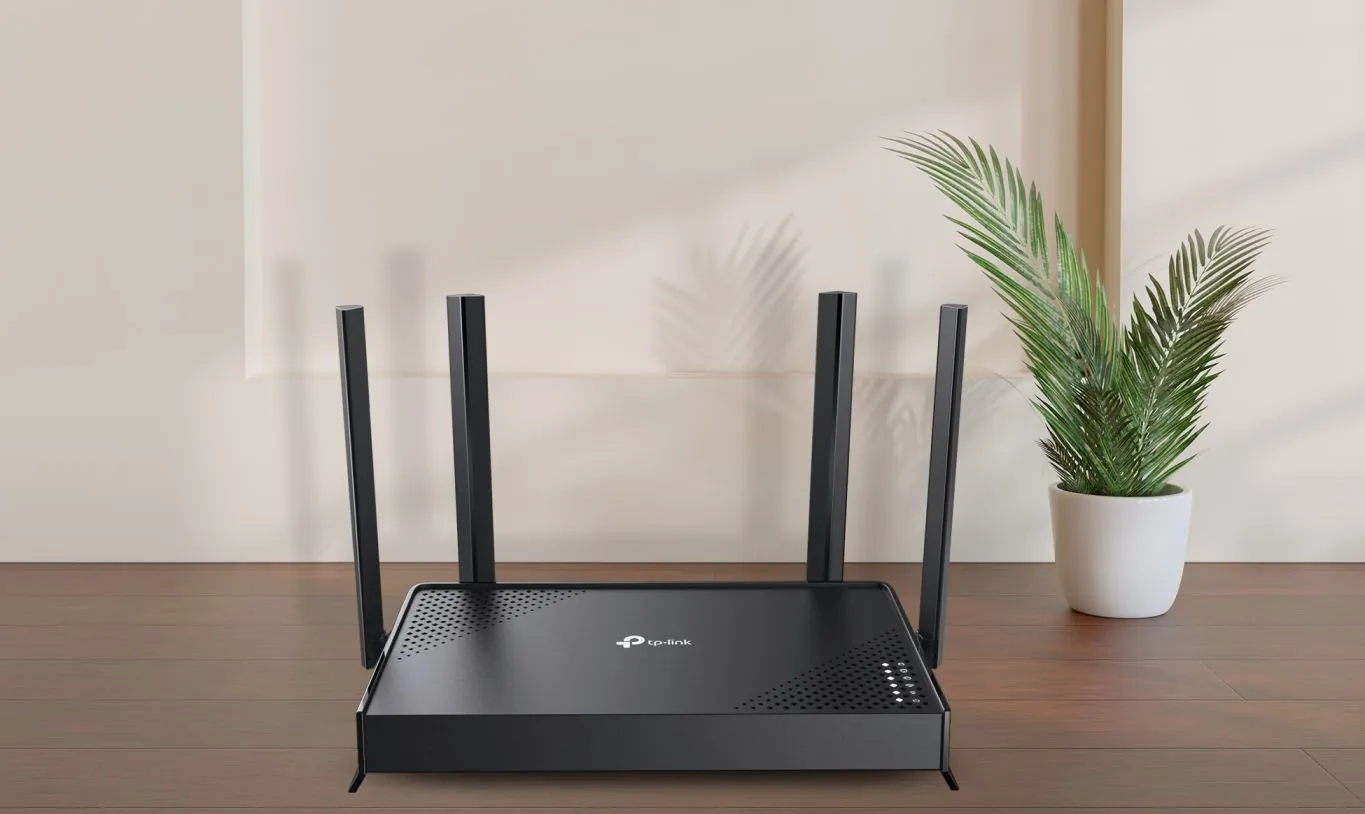
Hardware makers are already moving. Final standard ratification isn’t scheduled until 2028. But early draft hardware is hitting shelves right now in 2026. TP-Link is preparing the Archer 8 consumer router for an October release, fresh off an early TP-Link Wi-Fi 8 Live Demo at CES 2026 showing off that shift to ultra-high reliability.
So how does it work? The new standard introduces Multi-AP Coordination and Coordinated Spatial Reuse. Basically, routers talk to each other to intelligently split spectrum and cut out interference in crowded apartment buildings. They also added Enhanced Long Range to specifically boost uplink coverage. Dynamic Sub-Channel Operation can boost throughput by up to 80% when the network is under heavy pressure.
Qualcomm and Broadcom are churning out the base silicon right now. Early testing is impressive. According to Qualcomm’s outline of Wi-Fi 8 performance metrics, networks are hitting 25% lower latency at the 95th percentile.
Not everything is settled yet. There is an intense technical fight happening behind the scenes over the 42.5–71 GHz frequency range. This mmWave integration could unlock theoretical 100 Gbps speeds at very short distances. But the governing body is split on how devices find these signals, creating an active 60 GHz mmWave architectural dispute over whether access points can transmit their own beacon frames.
How Ultra-High Reliability Replaces the Speed Race
ASUS and TP-Link rushing consumer concepts like the NeoCore and Archer 8 into the 2026 market proves a core industry shift. We simply do not need more peak speed for smart home devices. We need stability. Previous Wi-Fi generations threw raw bandwidth at the problem of network congestion. Wi-Fi 8 treats spectrum like a highly managed transit system.
This alters the baseline purchasing advice for consumers. Buying a Wi-Fi 8 router won’t make a single large file download noticeably faster than it would on a Wi-Fi 7 network. Instead, the upgrade will make your entire house stop lagging when four people are streaming video, taking video calls, and gaming simultaneously.