
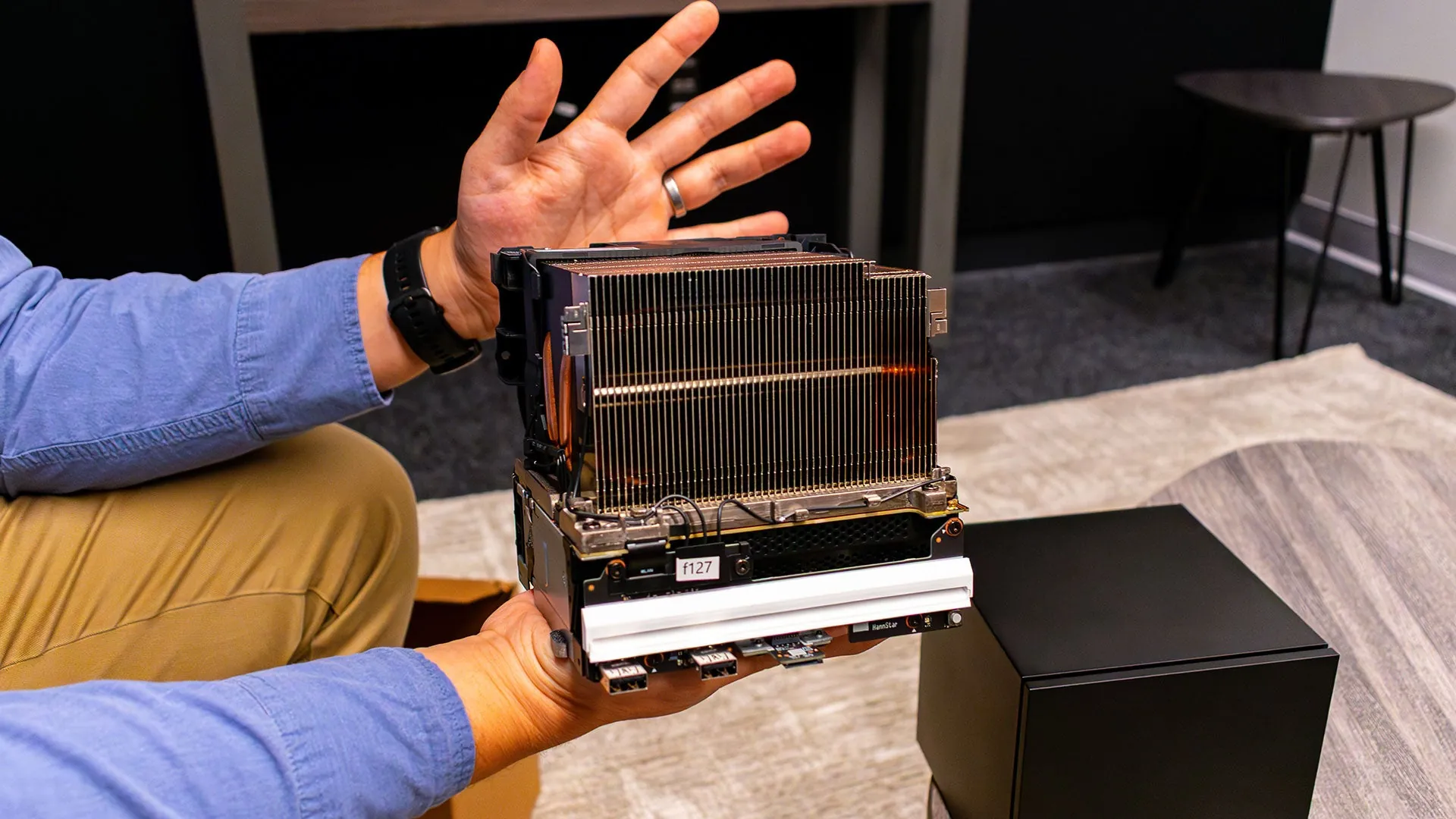
Valve officially launched the Steam Machine on June 29, 2026, and the sticker shock was immediate. The base 512GB model demands $1,050. Want the 2TB version? That climbs to $1,350. Next to a standard $500 PlayStation 5, those numbers look absurd. But the reality of PC hardware tells a completely different story.
Jasmine at XDA Developers published a review calling the system an “engineering marvel.” This isn’t just a basic console. Valve managed to pack a semi-custom AMD RDNA3 GPU and a Zen 4 CPU into a shockingly tiny chassis. Attempting to build a PC of the exact same size with equivalent off-the-shelf parts is currently just as expensive.
Hardware outlet GamersNexus ran the numbers on a component breakdown and found that sourcing comparable mini-ITX parts—like the AMD Ryzen 5 7400F and Radeon RX 7600—would cost roughly $979 for a 512GB setup. Squeezing desktop-class performance into a living room box carries a steep premium, neutralizing the argument that Valve is overcharging for the hardware itself.
How the AI Hardware Boom Destroyed Budget PC Gaming
The Steam Machine was originally intended to hit the market around the $750 to $800 mark. That plan evaporated due to the ongoing enterprise AI boom. Surging demand for AI data center components has severely constrained global memory supplies.
As a direct result, the cost of DDR5 memory quadrupled, heavily inflating the manufacturing cost for consumer hardware across the board. The $1,050 price tag reflects one of the most volatile eras for PC hardware in recent history, where consumer electronics are directly competing with server infrastructure for the exact same silicon.