
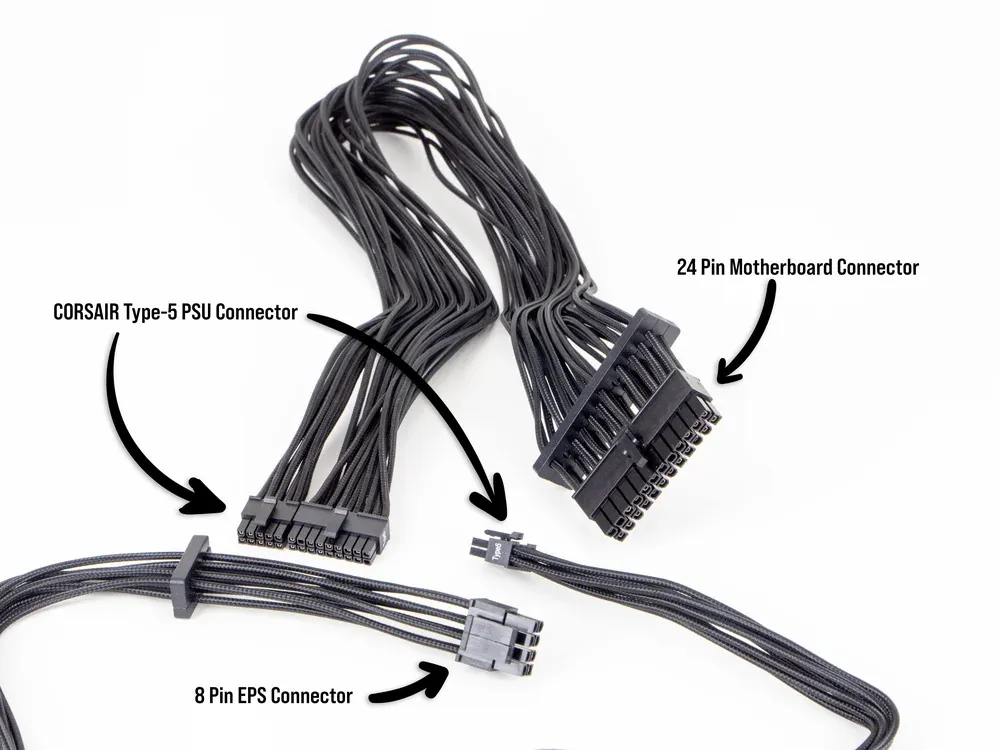
Upgrading a power supply feels like a straightforward swap. You unplug the old brick, slide in the new one, and leave the existing cables plugged into the components to save time. But taking that shortcut with modular power supply cables will instantly destroy your graphics card, motherboard, and storage drives.
While the component-side connectors are universal across the PC industry, the pinouts on the power supply side remain entirely proprietary. Manufacturers wire those internal connections however they prefer for engineering convenience. Plugging an old cable into a new power unit routes 12-volt currents straight down lines meant for 5V or 3.3V inputs, causing immediate and catastrophic electrical damage.
What We Know
- No Universal Standard: Power supply manufacturers have no industry-wide agreement for the pin layouts on the modular power brick side.
- Deceptive Fits: Physical compatibility does not equal electrical compatibility. A cable that snaps perfectly into the PSU socket can still cause a fatal short.
- Manual Verification: Hardware testers recommend using a digital multimeter to map pinouts via continuity testing if loose cables get mixed up in storage.
Builders routinely fall into this trap because the cables look physically identical to the naked eye. The industry provides zero built-in safety nets or physical blocks to prevent users from mixing cables across different brands. In a recent editorial breakdown, experts confirmed that reusing these cords is a potentially fatal hardware error precisely because those proprietary pinouts are completely unregulated.
The danger exists even if you purchase from the exact same manufacturer. Corsair currently warns builders on its official website that its older Type 3 modular cables feature a completely different 24-pin layout than its Type 4 cables. Furthermore, neither of those older generations is compatible with Corsair’s newest Type 5 power supplies. A detailed hardware guide confirms that maintaining brand loyalty offers zero protection against electrical failure if the cable generations mismatch.
Why Intel’s ATX12VO Standard Won’t Fix the Modular Cable Trap
The PC hardware industry is actively trying to simplify power delivery, but hardware makers are ignoring the modular cable problem. Intel’s ATX12VO standard pushes the industry toward a single 12-volt rail for the motherboard, eliminating the older 5V and 3.3V lines from the main bundle entirely. That timing couldn’t be better for overall efficiency.
And yet, this push for efficiency does not address the lack of cable interchangeability at the power supply box itself. Because manufacturers still dictate the pinouts on the PSU end to fit their internal designs, builders will always face a permanent hardware hazard when upgrading legacy systems. Until the industry mandates universal pin mapping for the actual power brick interface, tossing out old cables remains the only guaranteed way to protect a new computer build.