
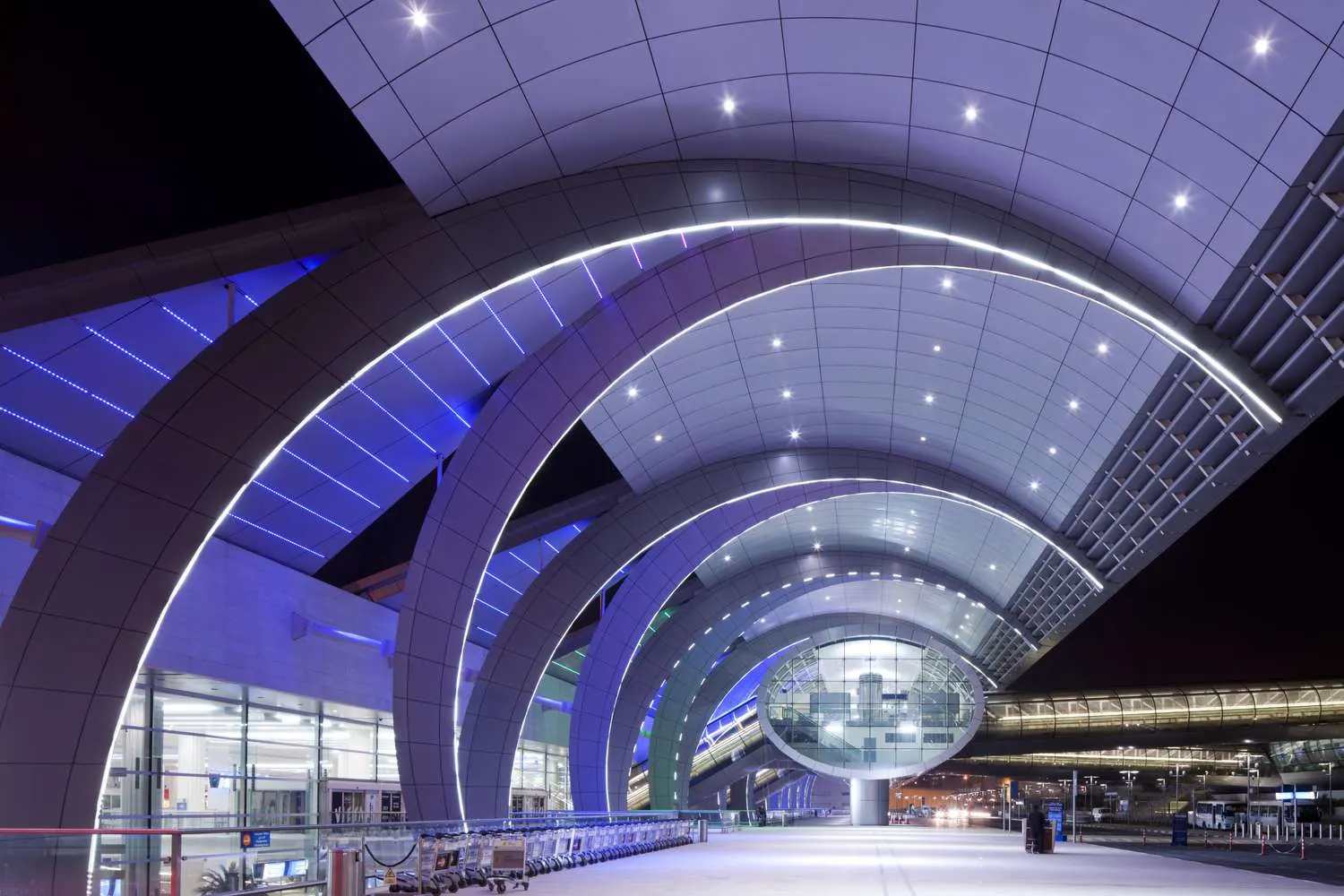
If you’ve flown through the Middle East recently, chances are you’ve walked the crowded concourses of Dubai International Airport. But the world’s busiest international transit hub is officially on borrowed time. Driven by an impending capacity crisis and aging infrastructure, Dubai Airports CEO Paul Griffiths has confirmed that all operations will transition entirely to the new Al Maktoum International Airport by 2032.
The current DXB site is projected to hit its absolute maximum capacity of 114 million passengers by 2031. Expanding the current footprint is no longer economically viable, especially as older assets near the end of their useful lifespans. Once the move is complete, the iconic DXB airport will permanently close its doors to commercial aviation.
To replace it, the Dubai government is pouring $35 billion into a sprawling expansion of Al Maktoum International Airport. This ambitious project will create a facility five times the size of DXB, stretching across 70 square kilometers. Planners say it will feature five parallel runways and, upon its expected full completion around 2057, become the highest-capacity airport on the planet, capable of handling 260 million passengers annually.
The transition involves relocating operations for major carriers like Emirates, which recently had to manage complex logistics while operating reduced flight schedules during regional tensions. Moving an entire airline network of that size is a monumental task. Aviation executives are already calling this the largest airport transition in history, likening it to the legendary relocation of Hong Kong’s Kai Tak Airport in the 1990s.
Operating two competing airport hubs within 70 kilometers of each other just doesn’t make logistical sense once the new facility reaches full capacity. So what happens to the enormous plot of land DXB currently occupies near the Sharjah border? Real estate developers are actively eyeing the space. City officials expect the old runways and terminals to be transformed into new residential and commercial districts. This redevelopment is intended to spread the city out and help alleviate the chronic traffic congestion that plagues central Dubai.