
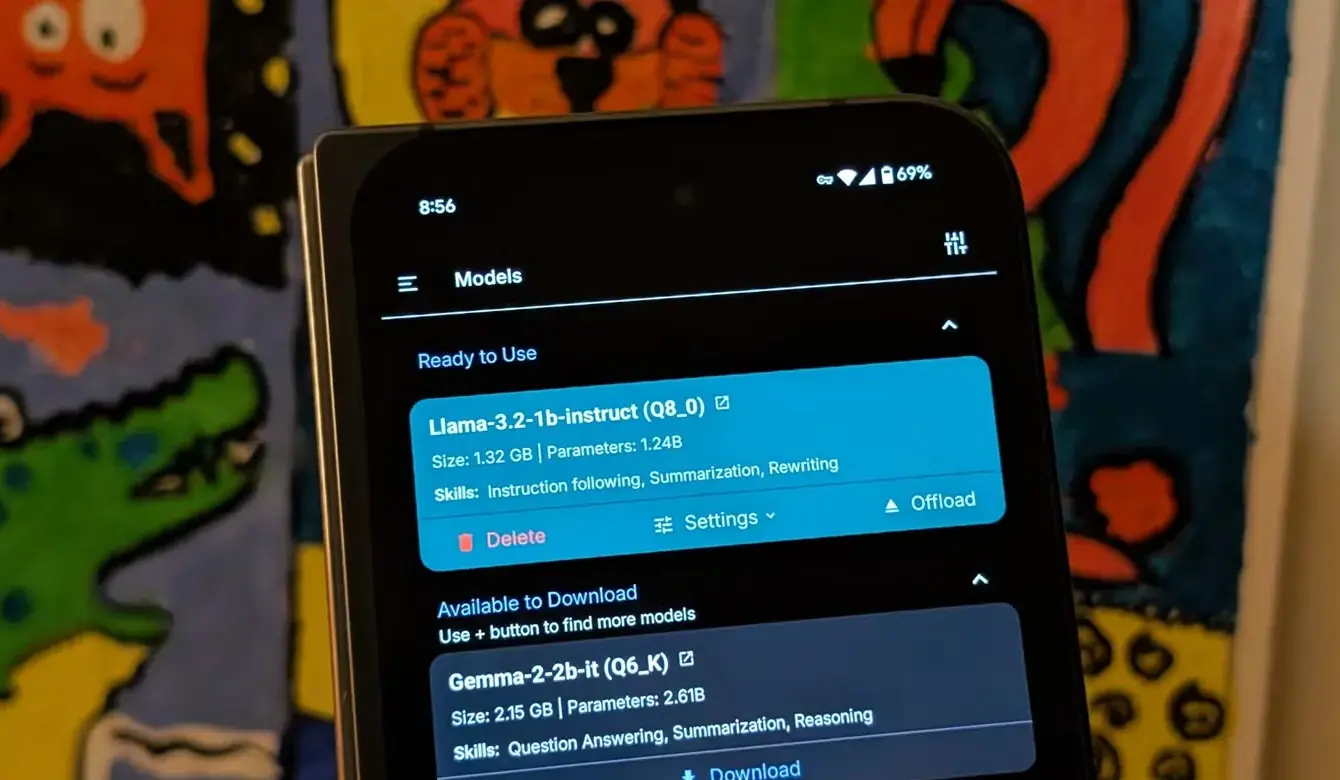
The tech industry is rapidly moving away from cloud-based subscriptions toward edge computing and completely offline hardware. Consumers are actively pushing back against the data collection policies of remote servers, sparking a sudden adoption of Small Language Models that run natively on personal devices. To test how capable these offline models have become, a recent hardware experiment pitted a dedicated gaming desktop directly against a standard mobile phone to see which platform handles daily artificial intelligence tasks better.
The final outcome completely flips standard computing expectations. An Nvidia RTX 3070 PC running LM Studio was tested against an iPhone 16 using the open-source PocketPal application. While the desktop predictably dominated heavy computing tasks, the mobile device completely won the daily rotation battle, effectively eliminating the user’s need for remote services like ChatGPT or Claude.
Key Details
- The desktop environment utilized heavier models like Qwen 3.5 9B and Gemma 4 E4B, which proved superior for heavy document analysis and Retrieval-Augmented Generation.
- The iPhone 16 setup relied on smaller engines like Qwen 3.5 4B and Gemma 4 E2B to process text locally.
- The mobile device excelled primarily at on-the-go vision capabilities, allowing the user to photograph product labels and outdoor surroundings for instant offline analysis.
- A recent software update to PocketPal AI on June 8, 2026, introduced HTML rendering and neural text-to-speech to the mobile client.
The experiment highlights exactly how hardware acceleration features, specifically iOS Metal and Android NNAPI, are transforming ordinary smartphones into completely private computing hubs. The desktop PC remains a strict requirement for analyzing dense PDFs or running complex coding environments. But for the vast majority of regular human queries, booting up a desktop machine is simply too much friction.
The pure convenience of pulling a phone out of a pocket to dictate private notes or ask quick questions easily won out, allowing the mobile device to replace cloud apps for everyday tasks. The user maintained total parameter control over the models without transmitting a single byte of data to a third-party server. PocketPal’s version 1.15.2 update further improved this workflow by integrating strict context limit warnings directly into the interface.
How Offline Hardware Threatens Cloud Query Volume
The shift toward mobile edge computing presents a direct threat to the current business operations of major AI providers. Local, offline applications are actively cannibalizing the casual, daily query traffic that previously flowed exclusively to titans like OpenAI, Anthropic, and Google. As mobile processors become increasingly optimized for neural network tasks, the incentive to pay monthly subscription fees for remote computation is quickly disappearing for regular consumers.