
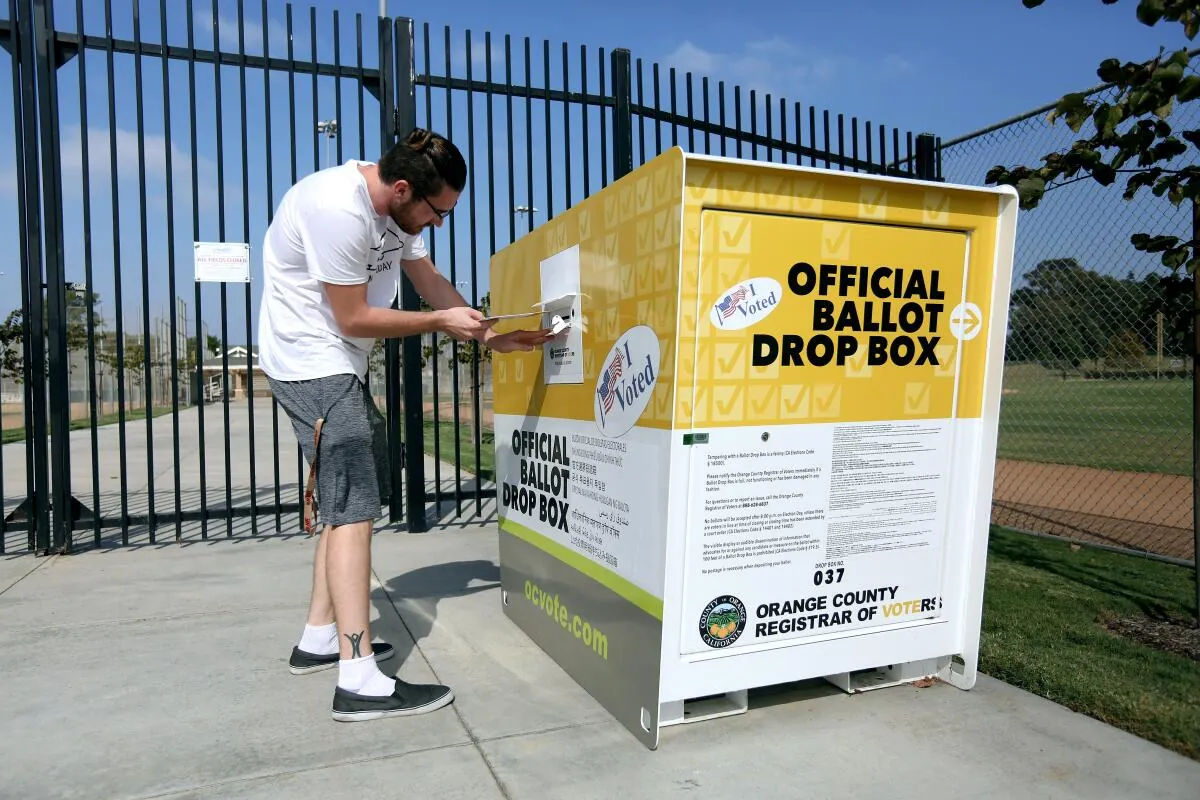
California county election officials have until July 2, 2026, to finalize their primary election results, and the California Secretary of State will officially certify the statewide results on July 10. But you likely won’t have to wait that long to find out who won. Under a newly enacted state law, county officials must process and report the results for the vast majority of ballots by June 15, which is exactly 13 days after the June 2 election. A clear picture of the advancing candidates generally forms well before the final legal certification takes place.
Waiting for election results in California often frustrates voters who are used to Election Night victory speeches. With tens of millions of registered voters, the state runs an election system on a scale larger than many countries. The state relies heavily on universal mail-in voting. This system pushes the actual counting timeline out for weeks.
Ballots are considered valid as long as they are postmarked by Election Day and arrive at county election offices within seven days. For the 2026 primary, that meant late-arriving ballots were accepted up until June 9. And because officials must individually verify the signature on every single return envelope, the volume of paper slows down the entire operation.
Background: How We Got Here
California did not always take a full month to count its votes. The shift happened gradually as the state moved toward universal mail-in voting, sending a ballot to every registered voter by default. This method increased overall voter participation but fundamentally changed the speed of the count. People drop their ballots in the mail at the last possible minute.
Election officials can begin processing mail-in ballots up to 29 days before the election. This early processing involves running envelopes through sorting machines, verifying signatures, opening the mail, flattening the paper, and running the ballots through secure scanners. However, they are strictly forbidden from hitting the tally button or sharing any results until the polls officially close at 8:00 p.m. on Election Day.
The first results reported on Election Night are mostly a mirage. They consist of those early voting location ballots and mail-in ballots that arrived days or weeks in advance. These initial numbers rarely reflect the final outcome, especially in tight races. Democratic voters in California historically wait until the final days to cast their ballots.
Late-arriving mail-in and drop-box votes tend to skew heavily in their favor. Leads can flip multiple times in the days following the election as these subsequent batches are counted.
To address public complaints about the slow timeline, lawmakers passed Assembly Bill 5 (Chapter 250, Statutes of 2025). This new legislation established a firm halfway point for the counting process. It requires county election officials to report the results for most normal ballots within 13 days.
For the 2026 primary, that deadline fell on June 15. The law created an earlier benchmark for determining most election outcomes, effectively shortening the window of uncertainty for candidates, the media, and the public.
Still, AB 5 grants practical exceptions for complicated ballots. Provisional ballots, conditional voter registration ballots, signature cure ballots, ballots requiring duplication because they are torn, and ballots forwarded from other counties are exempt from the 13-day rule. Counties still get the full 30 days to process these specific categories.
They must report their final tallies by July 2, and the official certification happens, according to the California Secretary of State, on July 10.
Key Players and Stakeholders
The 2026 gubernatorial primary to replace term-limited Governor Gavin Newsom featured an unusually crowded field of 61 candidates. Every single vote mattered in a race this fractured. Early, uncertified returns showed Republican Steve Hilton and Democrat Xavier Becerra leading the pack, with Democrat Tom Steyer trailing in third, as detailed by CalMatters. Because so many candidates split the electorate, margins of just a few thousand votes determined who moved forward out of the preliminary round.
Candidates running modern statewide campaigns know they have to wait. The days of making a definitive call on Election Night are gone for close races. Political teams now build legal and observer operations that last an entire month to monitor the canvass period.
Candidates spend the weeks following Election Day watching the daily updates from the state’s 58 counties. The frequency of these updates varies wildly. Large counties like Los Angeles might report daily, while smaller rural counties might update their numbers only once or twice a week depending on staffing levels.
California Secretary of State Shirley N. Weber oversees the entire reporting structure. Her office acts as the central clearinghouse for data sent in by individual counties. Following the closure of the polls on June 2, 2026, Weber clearly set expectations for the public.
“On Election Night, we will have a good picture of the outcome of most contests, but it will take weeks to know the final results. This is normal,” Secretary Weber said.
County election workers handle the actual physical labor. They are the ones feeding paper through scanners, checking signatures against Department of Motor Vehicles records, and contacting voters to fix mistakes. When a signature is missing from an envelope, or if it does not match the one on file, the ballot is put on hold.
Election workers are required by law to mail a notification to that voter and give them an opportunity to “cure” their signature by returning a signed affidavit. This extra step prevents eligible voters from being disenfranchised due to a messy or rushed signature, but it adds several days of postal transit time to the final tally.
What’s at Stake
For the candidates, everything rests on surviving the primary vote. California utilizes a top-two primary system. All candidates, regardless of their political party affiliation, run on a single primary ballot.
The two individuals who receive the most votes advance to the general election on November 3. It is entirely possible for two Democrats or two Republicans to advance, completely shutting the other party out of the general election. This structure makes the exact vote count highly important.
For the state, the integrity of the election system is the primary focus. A common misconception suggests that a slow vote count means something is wrong or broken within the election infrastructure. In reality, the delay is intentional by design.
California officials process millions of pieces of paper while maintaining strict verification standards. They prioritize the accuracy of the final tally over producing a fast result for cable news networks.
“Accuracy comes before speed,” said Secretary Weber. “California is the nation’s largest voting state, with millions of ballots to process and count. Taking the time to do this work correctly protects voters’ rights and ensures the integrity of our elections.”
The state also allows same-day conditional voter registration. If a person misses the standard 15-day registration deadline, they can still show up at a voting center, register conditionally, and cast a ballot. These ballots cannot be counted immediately.
Election workers must first verify that the person is eligible to vote in California and ensure they have not already mailed in a ballot from another county. This exhaustive cross-referencing happens during the 30-day canvass period, requiring database checks before the envelope is even opened.
Finally, state law mandates a strict post-election audit. Counties must conduct a manual, hand-counted tally of ballots from 1% of the precincts. Workers pull physical paper ballots and count them by hand to verify that the voting machines tabulated the results correctly.
This public process allows anyone to observe the counting floor. Only after the manual audit matches the machine count can the county finalize its official results and send them to Sacramento.
Frequently Asked Questions
When are the final results of the California primary election certified?
County election officials have until July 2, 2026, to finalize their local results. Once the counties submit their verified data, the California Secretary of State officially certifies the statewide results on July 10, 2026.
What is Assembly Bill 5 (AB 5) regarding California elections?
Assembly Bill 5 (Chapter 250, Statutes of 2025) is a state law that requires county election officials to count and report the results for the majority of ballots within 13 days of an election. For the 2026 primary, this deadline was June 15. The law aims to provide a clearer picture of election outcomes earlier in the process, though it grants a full 30 days for complex ballots like provisionals.
Who advances to the general election in California?
California uses a nonpartisan top-two primary system. All candidates, regardless of party affiliation, appear on the same ballot. The two candidates who receive the highest number of votes advance to the general election in November, meaning two candidates from the same political party can face off against each other.
Why do California elections take so long to count?
The state relies heavily on mail-in voting and prioritizes accuracy through strict verification laws. Ballots postmarked by Election Day are accepted up to seven days later. Furthermore, workers must individually verify the signature on every mail-in envelope and allow voters time to fix signature errors. Processing provisional ballots and same-day voter registrations also adds weeks to the final timeline.