
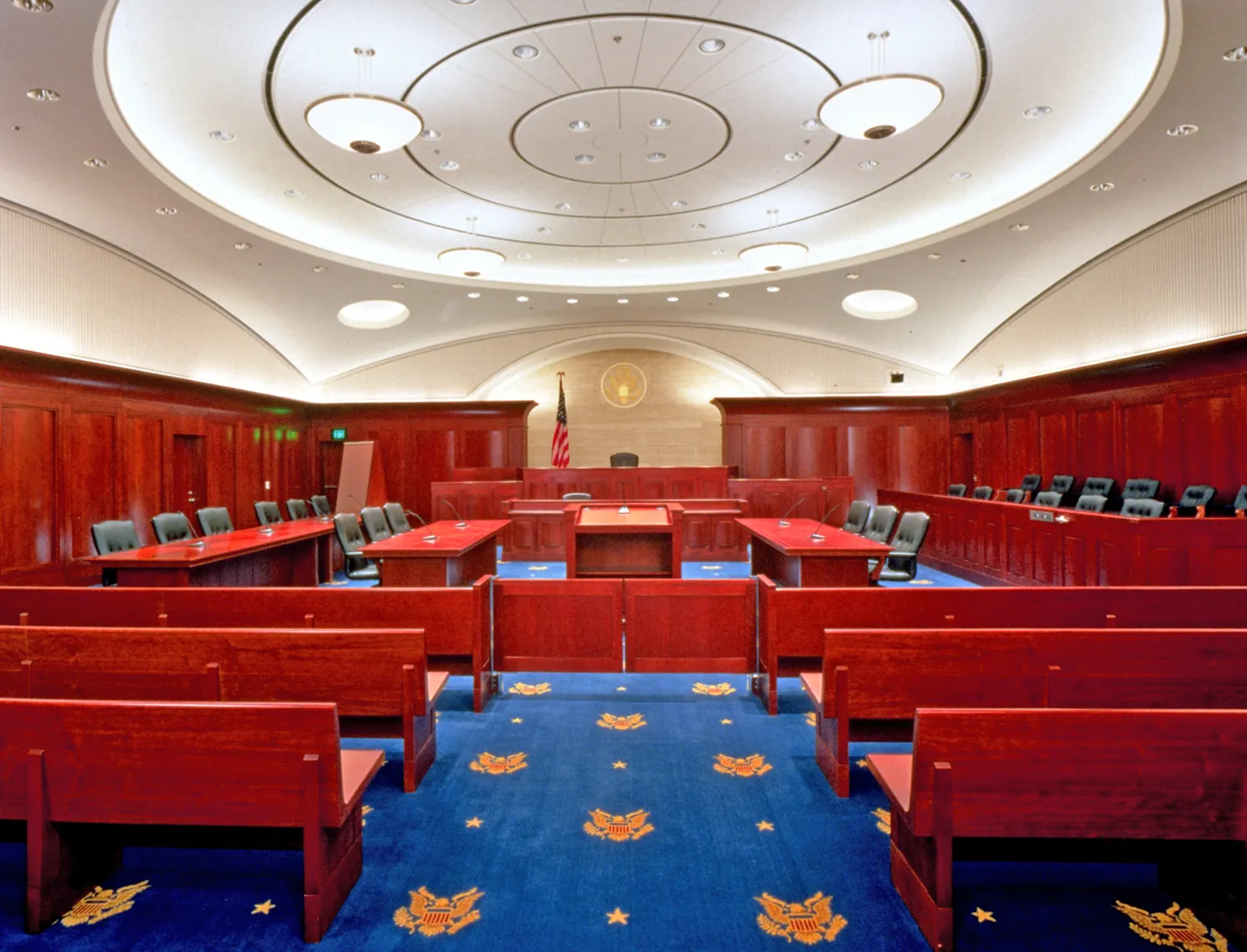
Understanding the Boundaries of Federal Court
Prosecutorial misconduct in a federal trial happens when a government attorney breaks ethical or legal rules in a way that violates a defendant’s constitutional right to due process. The trial process requires both sides to follow strict procedural guidelines. Federal prosecutors possess immense resources, including investigative agencies like the FBI and the DEA. Because of this power imbalance, the courts demand strict ethical standards from government lawyers.
Winning a legal claim based on these violations is incredibly difficult. The defense cannot simply point out bad behavior in the courtroom. They face a rigid legal standard known as a two-pronged test. Defendants must prove that misconduct actually occurred and that it caused prejudice, meaning the unfairness directly infected the trial’s outcome. A harmless mistake by a prosecutor will not overturn a conviction.
Misconduct takes several forms during litigation. Prosecutors might misstate the law to the jury during opening statements or closing arguments. They sometimes argue facts that the judge never formally admitted into evidence. Government attorneys are also forbidden from improperly vouching for a witness. A prosecutor cannot tell a jury that they personally guarantee a government informant is telling the truth. They are equally restricted from making inflammatory appeals to the passions and prejudices of the jurors.
The most serious infractions involve the handling of evidence. Evidence tampering and suppression ruin the foundation of a fair trial. This includes knowingly presenting false witness testimony on the stand. It also applies earlier in the justice process, such as misleading the grand jury to secure an initial indictment. Suppressing evidence that could prove the defendant’s innocence remains one of the most heavily scrutinized actions a federal prosecutor can take.
Background: How We Got Here
The modern rules for federal prosecutorial misconduct rely on a series of historical Supreme Court decisions. Before the 1960s, the regulations regarding what evidence the government had to share with the defense were less defined. The 1963 major ruling in Brady v. Maryland changed how federal trials operate across the country.
The Supreme Court established that prosecutors have a constitutional duty to disclose exculpatory evidence. Exculpatory evidence is any information that is favorable to the defense. It might point to another suspect, provide a solid alibi, or contradict the government’s theory of the crime. Under the Brady rule, prosecutors must hand this information over regardless of their intentions. Withholding this data violates the law whether the prosecutor hid it on purpose or simply made a clerical error.
The disclosure rules expanded nine years later. In the 1972 Giglio v. United States decision, the Supreme Court ruled that prosecutors must also turn over impeachment material. Impeachment material is evidence that the defense can use to damage the credibility of a government witness. Federal drug and conspiracy cases frequently rely on informants or co-conspirators who testify for the government. If a prosecutor strikes a deal promising not to charge a witness in exchange for their testimony, the defense has a right to know about that arrangement. The jury needs this information to decide if a witness has a personal motive to lie on the stand.
Appellate courts enforce these rules by overturning convictions or dismissing charges when violations occur. In 1993, the 6th U.S. Circuit Court of Appeals reviewed the conviction of John Demjanjuk. The court ruled that Demjanjuk was a victim of prosecutorial misconduct because federal prosecutors withheld critical evidence during a previous trial in 1986.
Modern courts continue to apply these exact standards. In the 2008 case United States v. Chapman, the 9th Circuit Court of Appeals took severe action against the government. The court completely dismissed federal drug charges against a defendant. They took this step because prosecutors intentionally kept hundreds of pages of favorable evidence away from the defense team. These specific rulings dictate exactly what prosecutors must disclose before a trial begins.
Key Players and Stakeholders
Monitoring federal prosecutors involves multiple overlapping agencies and organizations. The primary oversight mechanism operates internally within the Department of Justice itself. Following the Watergate scandal, the federal government recognized a need for stricter internal ethics enforcement. Created in 1975, the Office of Professional Responsibility investigates allegations of ethical violations by Department of Justice attorneys. This office reviews complaints from judges and citizens to determine if a federal prosecutor broke the rules during a case.
Federal prosecutors also answer to external authorities at the state level. Every federal attorney must maintain a valid law license in a specific state. Because of this requirement, they must adhere to the ethical guidelines of their respective state bar associations. The state bar sets the rules for professional conduct for all lawyers licensed in that jurisdiction, regardless of whether they work for private firms or the federal government.
The dual oversight system creates multiple layers of rules. A federal prosecutor might work in a federal courthouse in New York, but hold their law license in New Jersey. In that situation, the New Jersey state bar dictates their ethical requirements. This means a prosecutor must follow federal DOJ policies alongside state-level professional conduct rules.
If a federal prosecutor commits misconduct, the state bar has the power to discipline them independently of the federal government. Disciplinary actions vary based on the severity of the offense. A state bar might issue a private admonition or a public reprimand for minor infractions. Serious, intentional misconduct can lead to the suspension of a law license or permanent disbarment. Despite these systems, public punishment for federal prosecutors remains statistically rare across the country.
Defense attorneys are the final major players in this system. They carry the burden of discovering the misconduct in the first place. Defense lawyers must aggressively demand evidence during the discovery phase before the trial starts. During the trial, they must continuously monitor the prosecution’s arguments and object immediately on the record if the government attorney misstates the law or introduces unverified facts.
What’s at Stake
When a prosecutor violates trial rules, the consequences affect the entire justice system. Wrongful convictions are the most severe outcome of these infractions. Historical data tracking exonerations frequently links official misconduct to false convictions. Reports from national exoneration registries consistently show that official misconduct contributes to well over two-thirds of reported exoneration cases in recent years. Historical data directly links prosecutorial misconduct to nearly a third of all wrongful conviction exonerations on record.
Proving misconduct does not automatically mean a defendant gets a new trial. The legal system heavily favors finalizing convictions. The appellate system uses a legal standard called the harmless error doctrine to evaluate claims. Courts frequently apply the harmless error doctrine to uphold convictions, and prosecutors enjoy absolute civil immunity from lawsuits for acts undertaken while preparing for judicial proceedings.
Under the harmless error doctrine, an appeals court will acknowledge that prosecutorial misconduct actually occurred. However, they will uphold the guilty verdict if they decide the misconduct did not ultimately change the jury’s decision. This doctrine frustrates defense attorneys and legal scholars. They argue it gives prosecutors little incentive to follow the rules strictly, knowing their convictions will likely stand on appeal.
Holding a prosecutor financially liable is incredibly difficult. Citizens can file civil rights lawsuits under 42 USC § 1983 when their rights are violated by government officials. But the U.S. Supreme Court has decided that prosecutors possess absolute immunity from civil liability for their actions during a trial. A wrongfully convicted person cannot easily sue the prosecutor who withheld evidence against them. The immunity doctrine exists because courts believe prosecutors need to make difficult decisions without fear of constant lawsuits from angry defendants.
Professional accountability is also sparse. National research reviewing thousands of cases of alleged prosecutorial misconduct shows that only a tiny fraction of the involved attorneys ever face professional discipline from their state bars. The combination of absolute civil immunity, the harmless error doctrine, and low rates of bar discipline creates a system where prosecutors operate with immense power and limited external accountability.
Frequently Asked Questions
What is a Brady violation?
A Brady violation occurs when the prosecution fails to turn over evidence to the defense that is favorable to the accused and material to guilt or punishment. The term originates from the 1963 Supreme Court case Brady v. Maryland. This rule requires prosecutors to share exculpatory evidence regardless of whether they withheld it intentionally or accidentally.
What is Giglio material?
Giglio material refers to information that could be used by the defense to impeach the credibility of a government witness. This frequently includes deals struck between prosecutors and witnesses, such as offering immunity or a reduced sentence in exchange for testimony. The rule stems from the 1972 Supreme Court case Giglio v. United States.
Can a prosecutor be sued for misconduct?
Generally, no. Prosecutors possess absolute immunity from civil rights lawsuits for actions taken during the initiation and pursuit of criminal prosecutions. This legal shield protects their independence in the courtroom but acts as a heavy barrier to civil accountability for defendants who were wrongfully convicted due to misconduct.
Who investigates federal prosecutors for ethical violations?
Federal prosecutors who work for the Department of Justice are investigated internally by the DOJ’s Office of Professional Responsibility (OPR). They are also subject to disciplinary action by their respective state bar associations based on the state where they hold their active law licenses.