
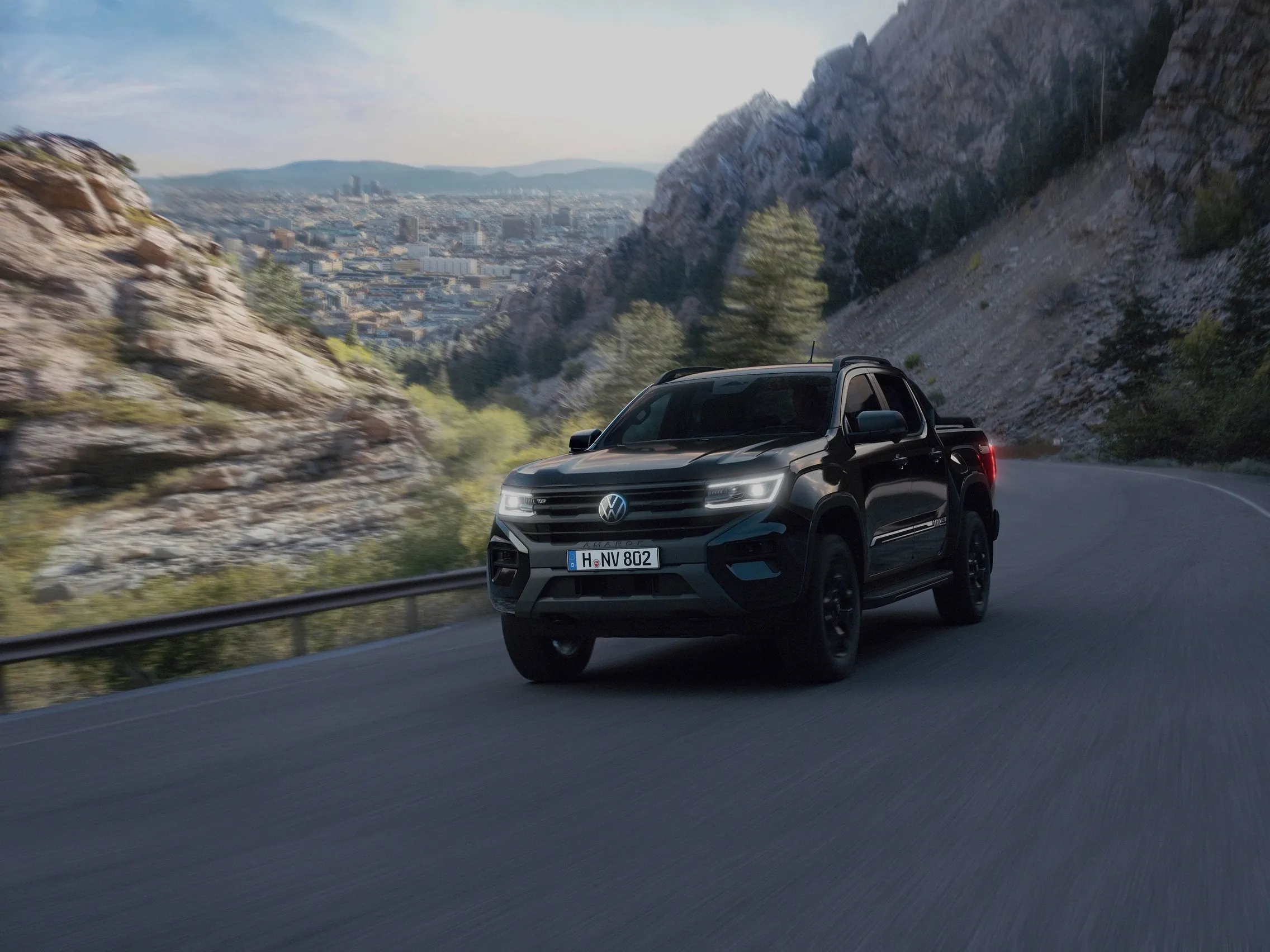
Volkswagen Commercial Vehicles officially acknowledged the existence of a fully enclosed, body-on-frame SUV prototype based on the first-generation Amarok pickup truck. The revelation ends a decade of speculation surrounding the automaker’s attempts to enter the rugged family wagon market. The prototype, known internally as the “Amarok wagon” or “closed pickup,” was physically constructed but ultimately canceled prior to production due to strict financial and scalability concerns from corporate executives.
Key Details
- The Lost Prototype: A physical version of the first-generation Amarok SUV exists today in Volkswagen’s internal corporate collection.
- Financial Roadblocks: The project was killed because projections indicated it would only be highly profitable in the Australian market, failing to meet global volume targets.
- Second-Generation Limits: The current Amarok, built in partnership with Ford, will not receive an SUV variant because the agreement excluded a competitor to the Ford Everest.
- Future Revival: Executives confirmed a heavy-duty SUV spin-off is actively being evaluated for the third-generation Amarok slated for the end of the decade.
Volkswagen Commercial Vehicles CEO Stefan Mecha disclosed the project’s history when he spoke with Australian media recently. The admission highlights a long-standing struggle within the division to secure board approval for a seven-seat utility vehicle. While internal data showed massive consumer interest in specific right-hand-drive markets, the Volkswagen Group board could not justify the massive architectural engineering costs required to convert the ladder-frame chassis for a single region.
The ambition survived into the current truck’s development cycle. Head of Design Albert Kirzinger previously sketched concepts for a second-generation Amarok SUV, according to an industry report detailing the design progression. That iteration was abruptly halted by the structure of Volkswagen’s commercial partnership with Ford. Because the current Amarok shares a platform with the Ford Ranger, introducing a closed-roof variant would create direct internal competition for Ford’s highly lucrative Everest SUV.
The Corporate Strategy Behind a Third-Generation Revival
The financial calculus preventing a Volkswagen-badged rugged SUV is currently undergoing a complete reassessment. As Volkswagen begins evaluating engineering and manufacturing partnerships for the upcoming third-generation Amarok, the corporate restrictions tying the brand to Ford’s specific product lineup may shift.
Mecha explicitly confirmed that if an SUV variant is greenlit for the next generation, it is being designed to directly target established ladder-frame heavyweights. This places the hypothetical vehicle in direct competition with the Toyota LandCruiser Prado, the Isuzu MU-X, and the Denza B5. The transition to hybrid and fully electric powertrains expected by the end of the decade provides Volkswagen with a new modular architecture, potentially lowering the isolated conversion costs that killed the first-generation prototype.