
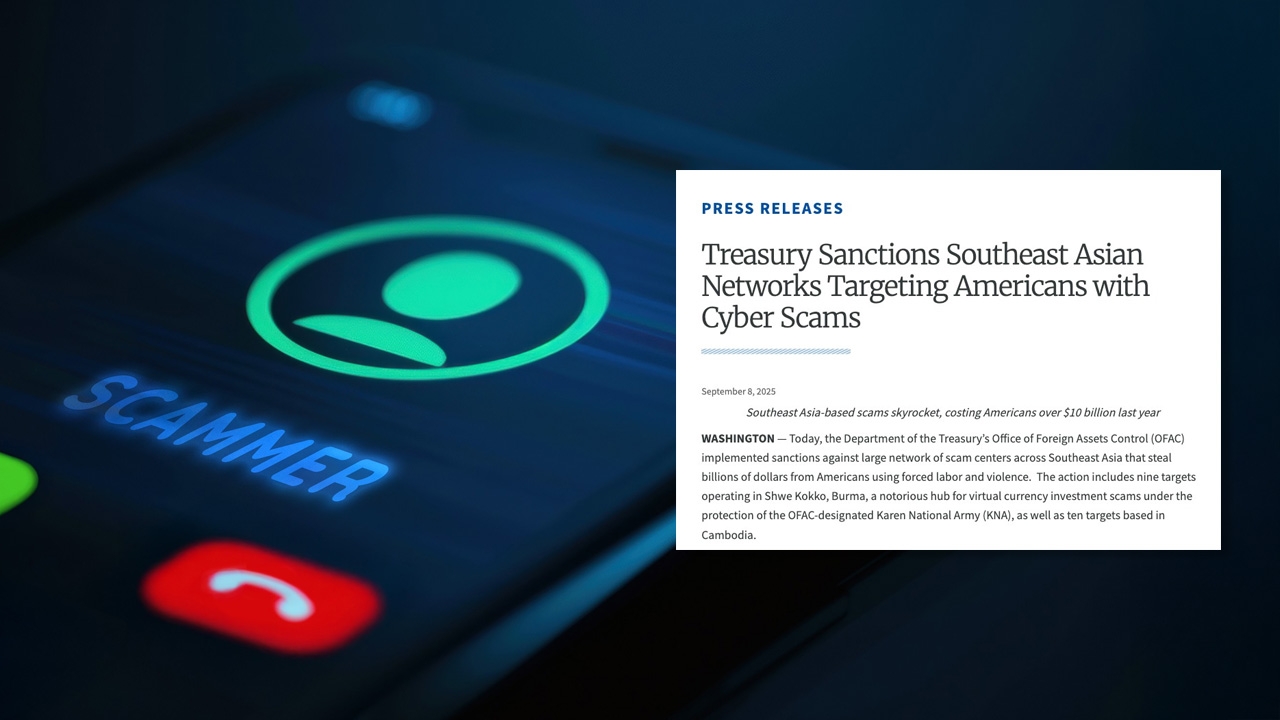
The United States has fired a stern warning shot at a shadowy world of online scams. These operations, hidden across Southeast Asia, have not only drained billions from American pockets but also rely on a chilling reality of modern-day slavery. In response, the U.S. Treasury Department recently announced tough new penalties.
The Office of Foreign Assets Control, known as OFAC, led this move. They targeted a large network of cybercriminals. These groups, mostly found in Myanmar and Cambodia, tricked Americans out of more than $10 billion in 2024 alone. This kind of theft often involves cruel human rights abuses, a terrible secret behind the scam calls and fake websites.
John K. Hurley, a top official for financial intelligence and terrorism at the Treasury, spoke plainly about the problem. He said these scam industries aren’t just a threat to people’s money. They are also fueled by forced labor, a dark practice that amounts to modern slavery. It’s a shocking truth that many victims of these scams are also victims of trafficking themselves.
Imagine losing your life savings to a scam. Now imagine being forced to run those scams, trapped in a foreign land. That’s the reality for many. These criminal groups use threats, violence, and debt to control their workers. Some are even forced into prostitution. They make these unwilling workers trick others online, often through fake cryptocurrency investment schemes or online romance scams. The criminals set up believable but fake investment websites. Victims put their money in, thinking they are making a smart move. But the money just vanishes.
The financial damage is growing quickly. The U.S. government estimates that losses from these scams jumped by a staggering 66% in just one year. This shows how quickly these criminal rings are expanding and how effective their cruel methods have become.
One major target of the sanctions is Yatai New City. This place is in Shwe Kokko, a town in Myanmar’s Karen State. A Chinese businessman named She Zhijiang built it with help from the Karen National Army (KNA), a group already blacklisted by the U.S. This isn’t just a regular town. It was turned from a quiet river village into a massive resort. But this resort serves a dark purpose. It’s a hub for illegal casinos, drug deals, human trafficking, and, of course, cyber scams. Reports show that many workers are lured there from other countries. Once they arrive, they are held captive, beaten, and forced to trick victims online.
Moving to Cambodia, OFAC also sanctioned several companies in Sihanoukville and Bavet. These places became centers for illegal casinos and crypto scam operations. Some Chinese and Cambodian businessmen were named. They are linked to money laundering, illegal online gambling, and the use of forced labor. It’s a messy web of crime where people are treated as tools for profit.
When OFAC adds someone or a company to its blacklist, it has serious consequences. Any assets they own in the U.S., or anything involving American citizens, gets frozen right away. Also, any businesses or banks that deal with these blacklisted entities could face big fines or even criminal charges.
The Treasury Department made it clear why they are doing this. The sanctions aren’t just about punishing bad actors. They want to put pressure on these groups. The goal is to force them to change their ways and stop their cybercrime and human rights abuses. It’s a global effort to fight a deeply cruel and damaging criminal enterprise.
Sources: US Department of the Treasury