
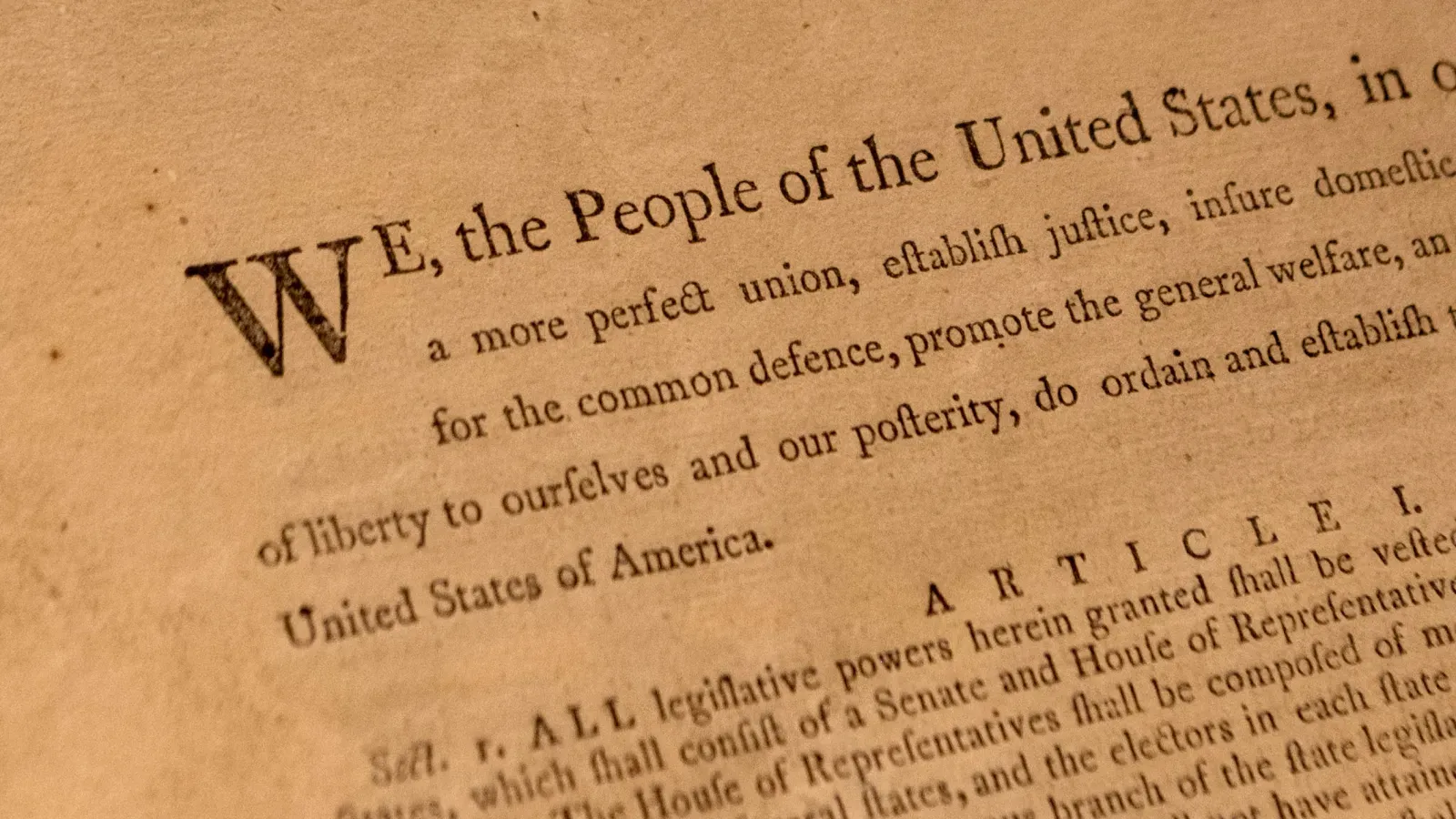
The ideological war over what exactly belongs on the decentralized Bitcoin network just gained its most historic artifact yet. An anonymous user permanently embedded the entire text of the United States Constitution directly into the blockchain via the Ordinals protocol. The 44.4-kilobyte file was confirmed on May 28 at 8:25 p.m. UTC.
The transaction hit the network late Tuesday, costing roughly $83.41 in fees and utilizing the recently updated OP_RETURN opcode to bypass previous storage boundaries. The data was processed by the SpiderPool mining pool and finalized in the public ledger. This places the foundational legal document of the United States securely inside a decentralized system where it cannot be altered or erased.
This large data dump is entirely new territory for the protocol. The mid-2025 release of Bitcoin Core v30 eliminated the old 80-byte data limit on output fields and stripped away the strict one-per-transaction restriction. Without those guardrails, a single user can now fit an entire foundational document into one unfragmented on-chain record.
We actually saw a much messier attempt at this early last year. Marathon Digital executed a highly branded political inscription in January 2025 that bundled the Constitution with the Bill of Rights and a portrait of Donald Trump for a hefty 1.244 BTC fee. This latest effort is entirely different. The new document sits perfectly clean inside block 951,492 as a pure, unbranded inscription without any corporate fundraising or political imagery attached.
Why the BIP-444 Proposal Threatens Future Document Inscriptions
The excitement around placing historical texts on a permanent digital ledger is crashing directly into Bitcoin’s scaling realities. The Core v30 update made these giant data insertions possible, but many developers are furious about the resulting network congestion. They argue the blockchain is fundamentally a financial system, not a limitless cloud storage drive for public archives.
This exact tension is fueling the pending BIP-444 proposal. If passed, the update will forcefully restore the old 83-byte cap on data fields to prioritize financial transaction speeds. That strict limit would immediately kill the ability to upload unfragmented documents like the Constitution in a single transaction. The community is now deeply divided over whether preserving human history permanently justifies bloating the global financial ledger.